Clouds over a Russian graveyard — History & Facts
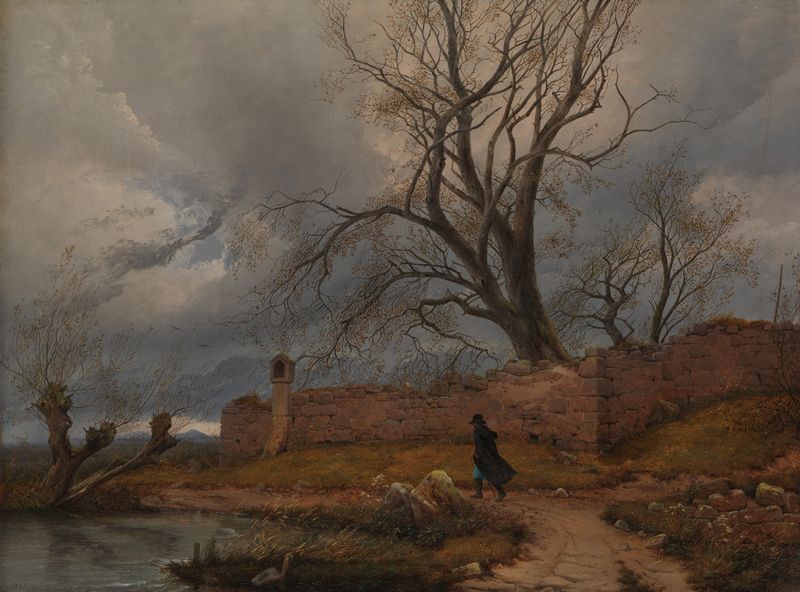
Is this a mirror — or a memory? The ethereal interplay of light and shadow invites contemplation on loss and remembrance, with each stroke speaking to the fleeting nature of existence. Focus first on the subtle hues of the sky, where varying shades of blue and gray meld seamlessly, evoking an atmosphere of impending change. Look closely at the gravestones, standing in solemn silence, each one bathed in the soft, muted light that adds depth to their weathered surfaces. Notice how the artist employs delicate brushwork to create a texture that mirrors the mournful yet serene mood of the scene, drawing you into the heart of this quiet homage. As you explore further, consider the juxtaposition of the ephemeral clouds against the permanence of the gravestones.
This tension between the transient and the eternal serves as a poignant reminder of life's fragility. The gloomy expanse above seems to cradle the resting souls below, suggesting a connection that transcends time — a bridge between memory and the present. Each element, from the wispy clouds to the aged stones, holds layers of meaning that evoke reflection on the passage of time and what it leaves behind. In 1830, while creating this piece, the artist was navigating a burgeoning interest in Romantic art, a movement that sought to express deep emotion and connection to nature.
Working in Germany, the artist likely felt the weight of contemporary societal shifts, prompting a desire to explore themes of mortality and memory, which resonate through this melancholic landscape.