Wanderer in the Storm — History & Facts
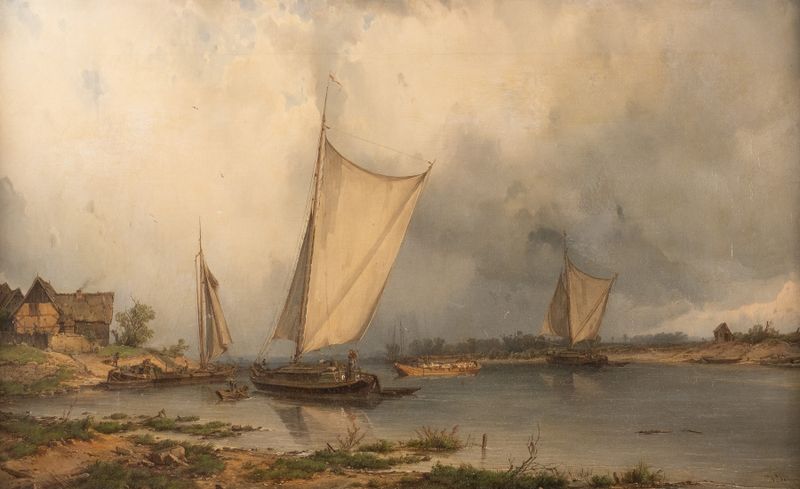
Can beauty exist without sorrow? In Wanderer in the Storm, a turbulent landscape unfolds, highlighting the emotional tempest within the human soul. Look to the center where a solitary figure stands against a chaotic backdrop of dark clouds and swirling winds. The figure, clad in a cloak that flutters dramatically, embodies both resilience and vulnerability. Notice how the muted earth tones contrast with flashes of white in the roiling sky, evoking a sense of dread that lingers as the viewer's eye travels along the horizon.
The brushwork is dynamic, the strokes capturing the volatile energy of the storm while drawing the viewer into a moment suspended between chaos and contemplation. Beneath the tumultuous exterior lies a profound emotional dichotomy. The wanderer’s stance is both defiant and introspective, suggesting a confrontation with fear and uncertainty. This tension between the beauty of nature's fury and the internal struggle of the lonely traveler speaks to the complexities of human experience.
The storm becomes a metaphor for life's unpredictable challenges, inviting reflection on the moments of clarity found amid confusion and despair. In 1835, Carl Julius von Leypold painted this work during a time when Romanticism burgeoned across Europe, a movement that emphasized emotion and individualism in the face of natural forces. Leypold, influenced by the turbulent currents of his era, sought to express the sublime beauty inherent in nature, particularly as it reflects the inner human condition. This painting captures not only the aesthetic ideals of the time but also a personal contemplation of existence amid chaos.