Landschaft mit aufziehendem Gewitter — History & Facts
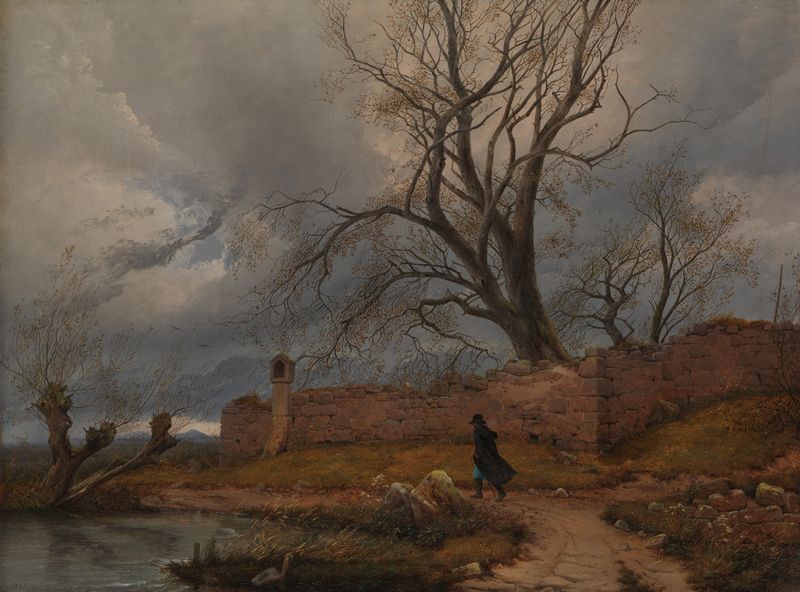
In the delicate interplay of light and shadow, creation becomes an act of defiance against impending chaos. Look to the foreground, where a gentle meadow stretches, lush yet vulnerable under the encroaching storm. The meticulous brushwork captures the wavering blades of grass, contrasting sharply with the darkening sky above. Notice how shades of green shimmer with life, while the ominous clouds loom heavy, threatening to engulf the tranquility.
The use of light is masterful, as faint rays break through the tempest—signifying hope amidst despair. Deeper meanings unfold through the juxtaposition of serenity and turmoil. The calmness of the landscape suggests a fleeting moment of peace before nature unleashes its fury, reflecting the tensions of human existence. The distant trees bend under the weight of the growing wind, symbolizing resilience in the face of change.
Each element in the composition resonates with a profound sense of anticipation, beckoning the viewer to confront their own fears and hopes. Carl Julius von Leypold painted this work between 1833 and 1834, during a period of personal and artistic exploration in Germany. As he grappled with the tensions of Romanticism, the artist sought to capture the sublime in nature, revealing the duality of beauty and chaos. This piece stands as a testament to his ability to evoke emotion through landscape, navigating the complexities of life with each stroke of his brush.