Farmstead in spring — History & Facts
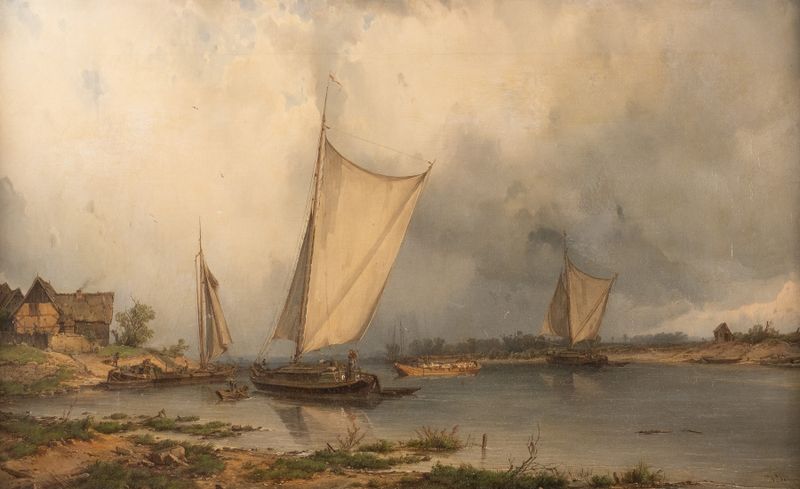
What secret hides in the quiet of the canvas? In the stillness of Farmstead in Spring, life takes on a whispering grace. Look to the left at the delicate blossoms framing the farmstead; their soft pinks and whites contrast beautifully with the earthy tones of the barn. The muted greens of the surrounding fields breathe life into the scene, urging the viewer's gaze toward the gentle rise of the horizon. Notice how light pours tenderly across the landscape, bathing everything in a soft glow, which speaks to rebirth and renewal. Beneath this tranquil exterior lies a profound tension between the beauty of nature and the solitude of rural life.
The farmstead stands as an emblem of human connection to the earth, yet its isolation hints at a deeper story of solitude and introspection. The silence enveloping the scene evokes an emotional resonance, inviting reflections on the simple yet profound rhythms of life and the passage of time. Created during a period when the Romantic movement was flourishing, the artist painted this piece in the 19th century, likely influenced by the burgeoning appreciation for nature and pastoral scenes in European art. At that time, he was exploring the boundaries of realism, seeking to capture not just the visual but also the emotional essence of the landscapes surrounding him.