Bush scene — History & Facts
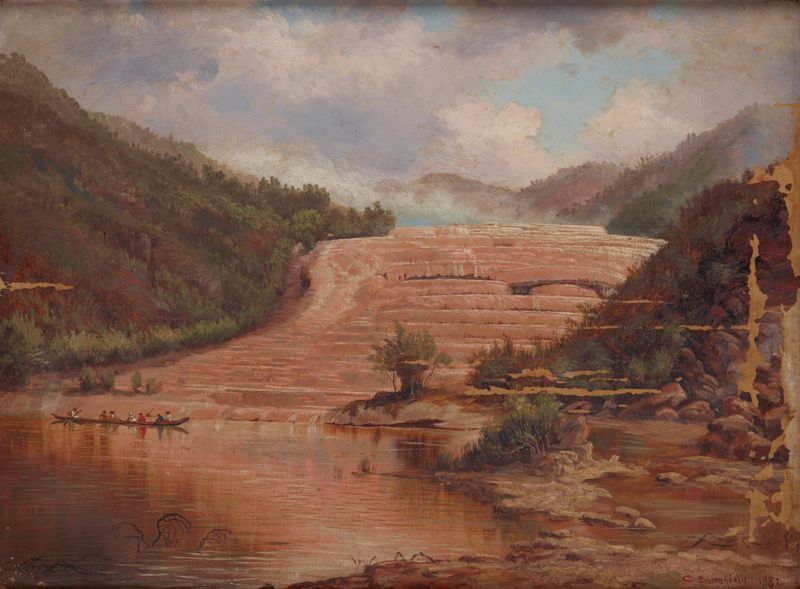
In the realm of memory, the shadows of the past mingle with the vibrancy of now, urging us to pause and reflect. Focus on the lush foliage in the center, where deep greens and earthy browns intertwine to create a tapestry of life. Notice how the delicate brushstrokes bring the leaves to life, each one distinct yet part of a harmonious whole. The scattered dashes of sunlight penetrate through the canopy, illuminating a hidden world of textures that invite your eye deeper into the scene.
The subtle play of light draws attention to the edges of the leaves, evoking a sense of both serenity and mystery. Hidden within this tranquil landscape are whispers of nostalgia; the way the colors blend suggests a fleeting memory, half-formed yet deeply felt. The juxtaposition of light and shadow speaks to our own emotional states, imbuing the scene with a sense of longing. As the viewer, you may find yourself pondering what moments linger just beyond the frame, trapped in the silence of the bush. Created in 1919, during a period marked by the aftermath of World War I, the artist found solace in the natural world as a counterpoint to the turmoil around him.
Blomfield, influenced by the tonal qualities of Impressionism, sought to capture the essence of the bushland in Australia, reflecting both personal and collective experiences of resilience and renewal. This work stands as a testament to the healing power of nature during a time of great upheaval.