Pink Terraces — History & Facts
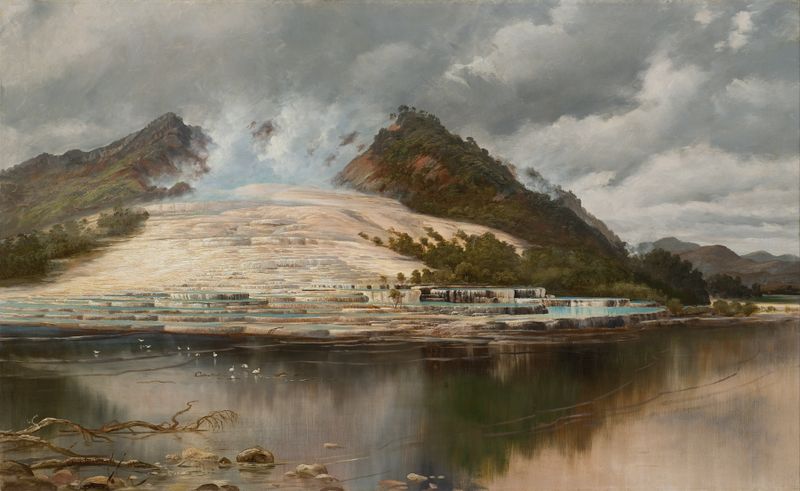
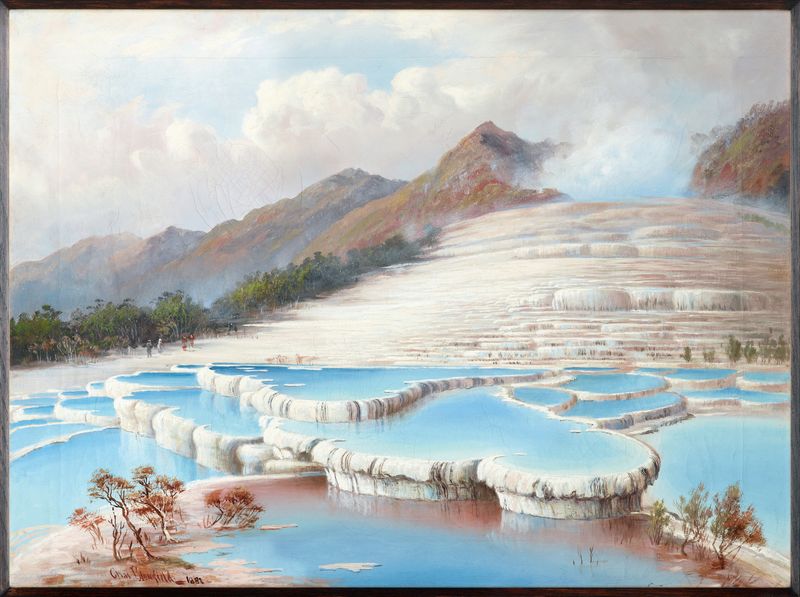
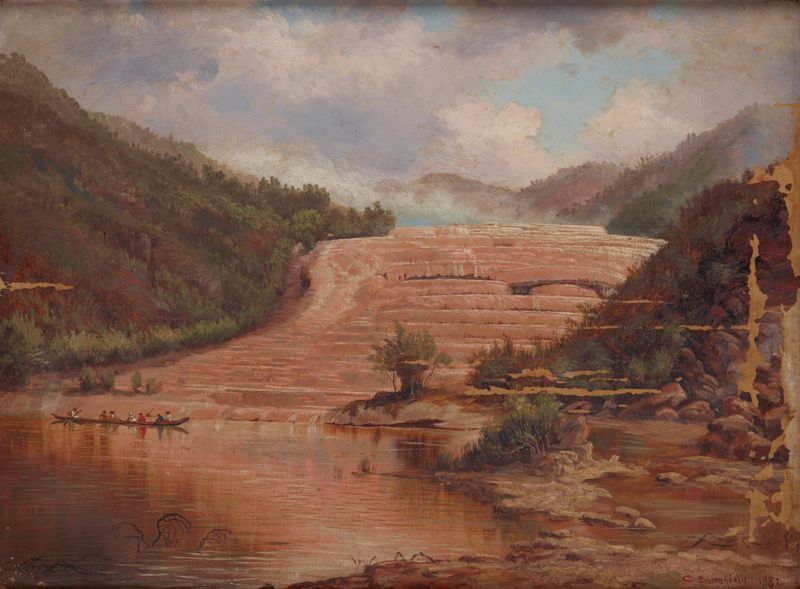
In the realm of art, longing often reveals itself through the interplay of light and shadow, as seen in this touching work. The layers of emotion within its scene resonate with anyone who has grappled with the bittersweet taste of yearning. Look to the soft, undulating forms of the terraces, where vibrant hues of pink and gold dance together in harmony. Notice how the light bathes the landscape, creating a dreamlike atmosphere that draws the eye across the canvas.
The gentle brushstrokes invite a sense of movement, enhancing the feeling of an eternal moment, while the rich colors evoke both warmth and nostalgia, as if each stroke carries the weight of unspoken desires. Within the painting, a dichotomy emerges: the beauty of the terraces stands in stark contrast with the ache of unattainable dreams. The delicate pinks may signify tenderness, yet they also cloak an underlying sadness, a reminder of the fragility of nature. This duality highlights the artist's intent to explore the complexity of longing, as each viewer becomes intertwined with their own personal narratives, extending the emotional depth of the work. Created during a time when the artist was deeply engaged in capturing the essence of New Zealand’s breathtaking landscapes, this piece reflects a period of exploration and inspiration.
Though the exact date remains unknown, Blomfield’s works emerged in the late 19th to early 20th century, a time when impressionism was taking hold, infusing a new sense of vibrancy and light into the art world. The painting embodies not only his technical prowess but also his deep connection to the land and its emotional resonance.