Scene of Kauri Bush, gumdiggers at work — History & Facts
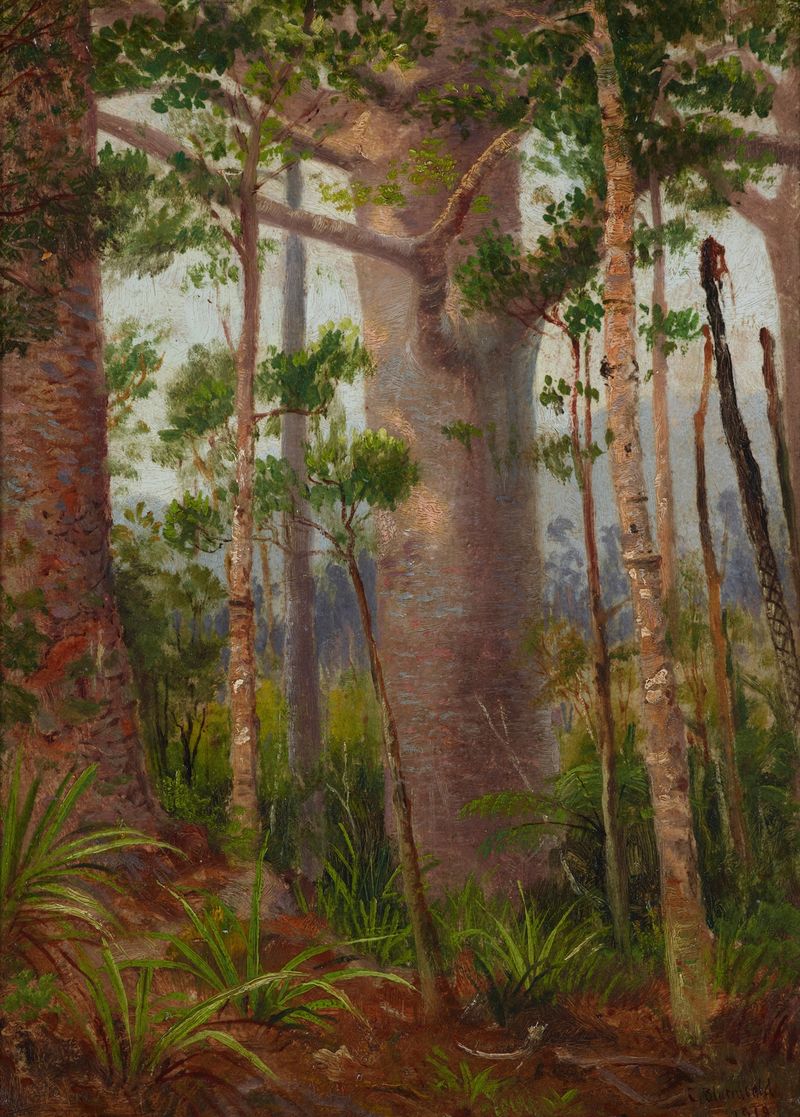
Can paint confess what words never could? In Scene of Kauri Bush, gumdiggers at work, a world of labor and aspiration unfolds, inviting us to explore the delicate relationship between human endeavor and nature’s bounty. Look to the left at the sturdy kauri trees, their gnarled roots entwined with the earth, a testament to time and resilience. The figures of the gumdiggers are laboriously bent over, their motions captured in dynamic poses that suggest both toil and determination. Notice how the warm ochres and deep greens contrast with the cool, shadowed underbrush, creating a sense of depth and pushing the figures into the foreground, almost beckoning the viewer to join in their quest.
The play of light filtering through the foliage illuminates the workers’ sweat-drenched brows, highlighting their grit against the elements. The emotional tension lies in the juxtaposition of the workers’ toil and the majestic, unyielding nature surrounding them. Each figure, while immersed in their labor, also carries an air of hope, a silent yearning for the riches buried beneath the earth. The gentle caress of sunlight suggests not just the warmth of the moment but also the promise of what could be—a future defined by both struggle and reward.
This subtle interplay between hardship and aspiration echoes through every brushstroke, inviting contemplation of the human spirit in the face of adversity. In 1892, Charles Blomfield created this piece during a time of great transformation in New Zealand. The gum industry was flourishing, attracting workers and shaping local economies. Amidst this backdrop, Blomfield sought to capture the essence of an emerging identity, blending the landscape with the lives of those who toiled upon it.
His work reflects both the historical context and the deep emotional currents of hope that run through the hearts of those depicted.