Pink Terraces — History & Facts
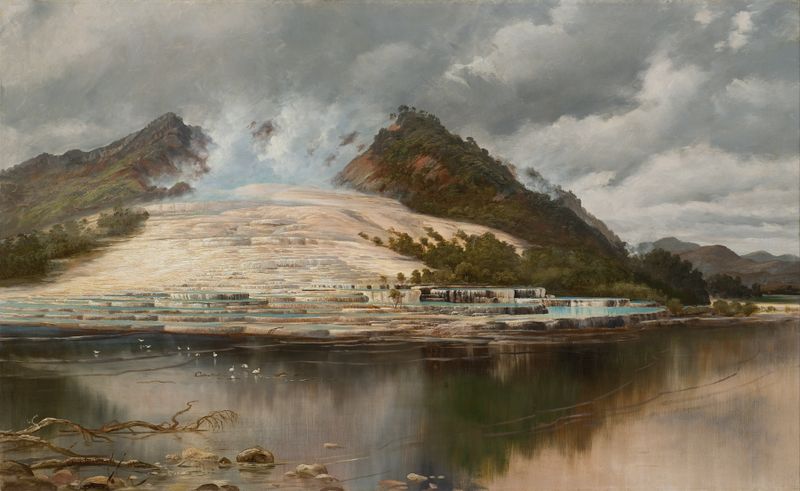
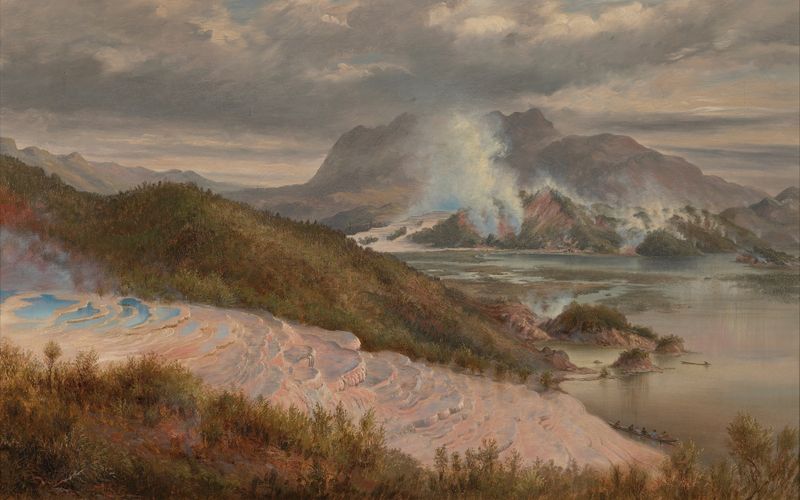
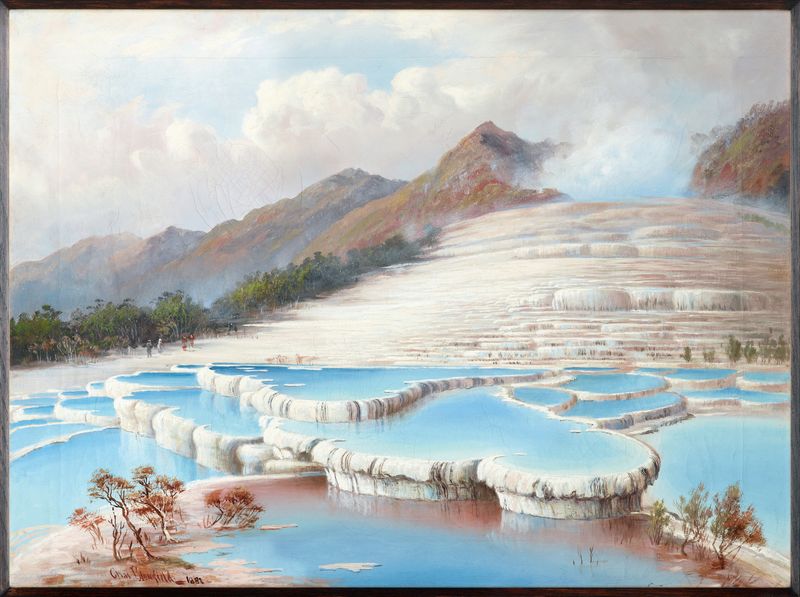
This reflection resonates deeply when confronted with the delicate layers of color and emotion present in this artwork. The interplay of tranquility and turmoil invites viewers to explore deeper truths beneath the surface. Look to the vibrant pink hues that saturate the terraces, emerging from a rich landscape that seems to breathe with life. Notice how the soft greens and deep blues provide a calming contrast to the warmth of the foreground, pulling the eye into a world where nature flourishes.
The brushwork, both meticulous and free, captures a moment of serene beauty, yet hints at the impermanence that lies beneath. It is an invitation to immerse oneself, to feel both the allure of the landscape and the unspoken stories it harbors. In this piece, contrasts abound—the vibrant color juxtaposes the stillness of the scene, evoking a sense of longing and nostalgia. The terraces, while aesthetically pleasing, symbolize the layers of time and memory, revealing that beauty often conceals complexities.
Each stroke of the brush becomes a testament to transformation, suggesting that what appears idyllic may harbor deeper sentiments of loss and revelation. The tension of light and shadow serves as a reminder that all beauty comes with its own burdens and histories. Charles Blomfield painted this work in 1882, during a period of significant artistic exploration in New Zealand, where the landscapes inspired many. As the country was transitioning socially and politically, his focus on the natural beauty of the land reflected a growing appreciation for local identity in art.
This painting not only captures the rich terrain but also speaks to a broader movement, emphasizing the importance of place in expressing human experience.