White Terraces, Rotomahana — History & Facts
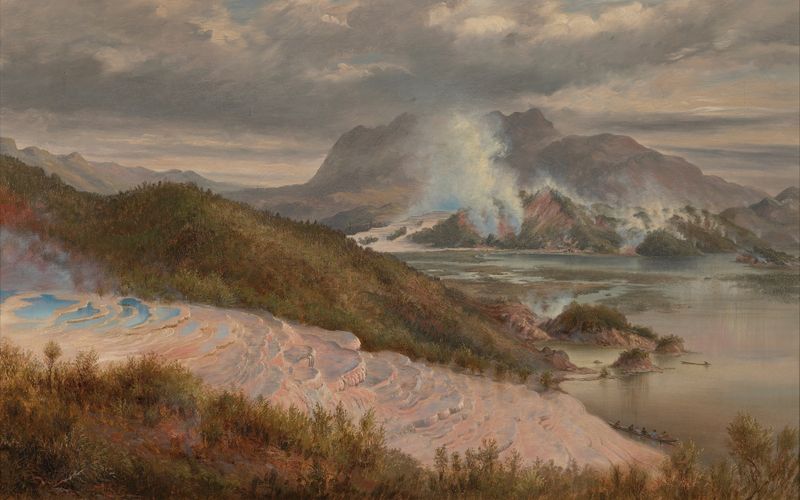
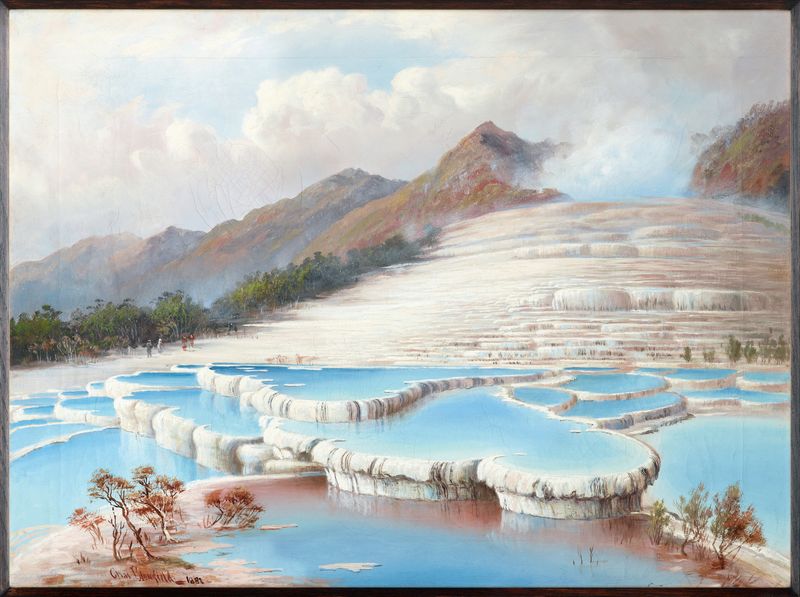
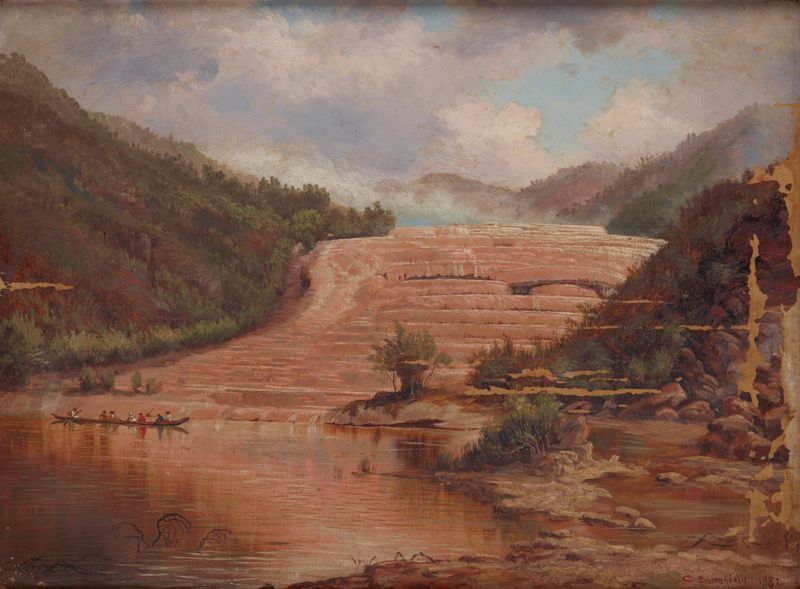
What if beauty was never meant to be finished? The ethereal allure of nature often hints at a divinity beyond our grasp, a fleeting moment caught in time. Focus your gaze on the delicate formations in the foreground, where cascading terraces of white merge with the soft hues of the surrounding earth. Notice how the painter’s brushwork brings life to the steaming waters, rendering them with a palpable warmth that contrasts against the cool, rigid structures. The play of light dances across the surface, creating a shimmering effect that invites the eye to wander over the landscape, echoing the tranquility of the scene. There exists a duality in this composition; the stark white terraces symbolize purity and serenity, yet they also evoke a sense of isolation against the rugged backdrop.
The gentle mist rising from the water embodies a spiritual essence, hinting at the longing for connection to nature's sublime beauty. This tension between the man-made form and the natural setting raises questions about humanity's relationship with the divine, challenging us to contemplate what it means to truly belong. Charles Blomfield painted this work during the late 19th century, a time when the exploration of New Zealand’s breathtaking landscapes was gaining prominence in the art world. As he captured these unique geothermal formations, he was also influenced by the burgeoning interest in Impressionism and the desire to depict the natural world with authenticity.
This piece not only showcases Blomfield's skill but also reflects the era's fascination with the sublime, resonating with viewers through both its beauty and complexity.