White Terraces — History & Facts
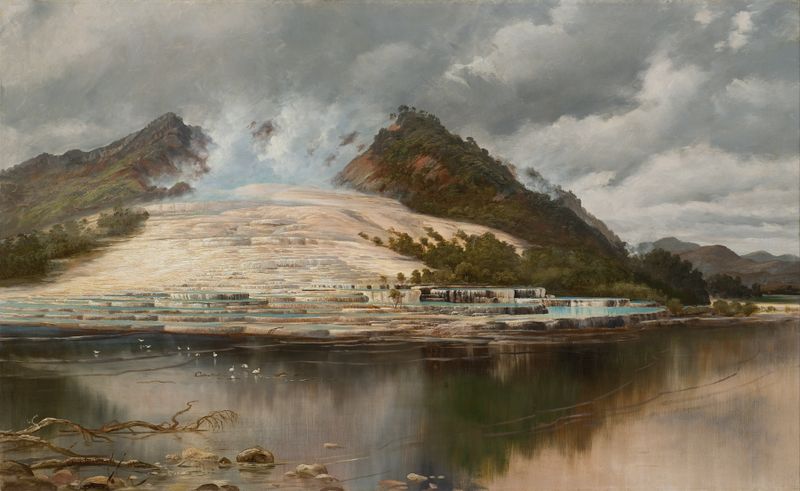
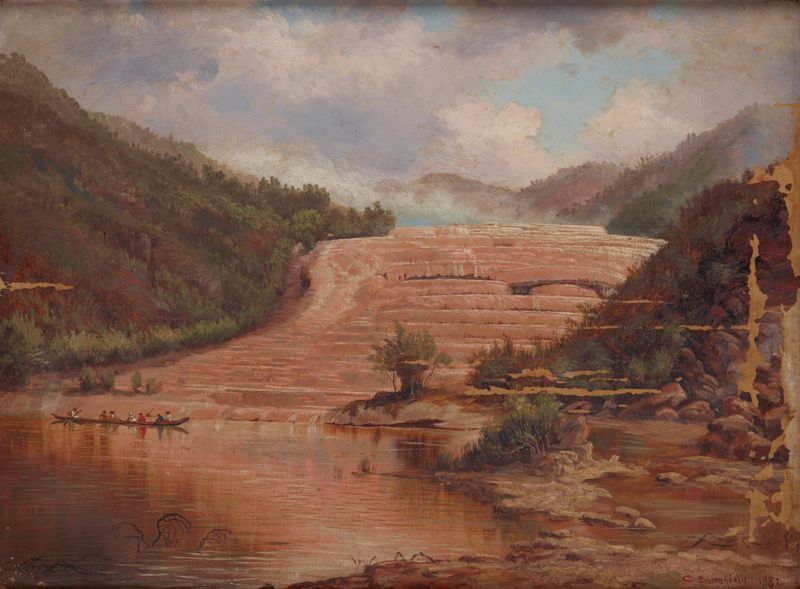
In the serene stillness of White Terraces, a moment of ecstasy captured in pristine, white hues invites the viewer to surrender to its tranquil beauty. Look to the foreground, where gentle undulations of the terraces rise, their soft contours bathed in a luminous glow. The smooth texture and contrasting shadows enhance the natural elegance of the landscape. Notice how the artist’s brushwork creates a sense of movement within the stillness, with delicate strokes suggesting the flow of water beneath the surface.
The composition draws your gaze upward, inviting you to explore the interplay of light and shadow that defines the terraces, compelling you to experience their majesty. Beneath the surface, the work captures the harmony between nature and artifice, embodied in the whiteness of the terraces which stir feelings of purity and transcendence. There is an emotional tension between the solid forms of the landscape and the ethereal qualities of light, evoking a sense of sublime ecstasy. The work hints at a deeper reflection on the relationship between humanity and the natural world, suggesting a sanctuary where the spirit can find solace and joy. Created in 1882, this piece emerged during a period of artistic exploration for Charles Blomfield, who was deeply influenced by the natural beauty of New Zealand, where he lived.
As one of the early painters to focus on the landscapes of this region, he sought to convey the sublime qualities of nature through his work, contributing to a growing appreciation for the country’s unique environment in the face of a rapidly changing world.