
Cabin Scene — History & Facts
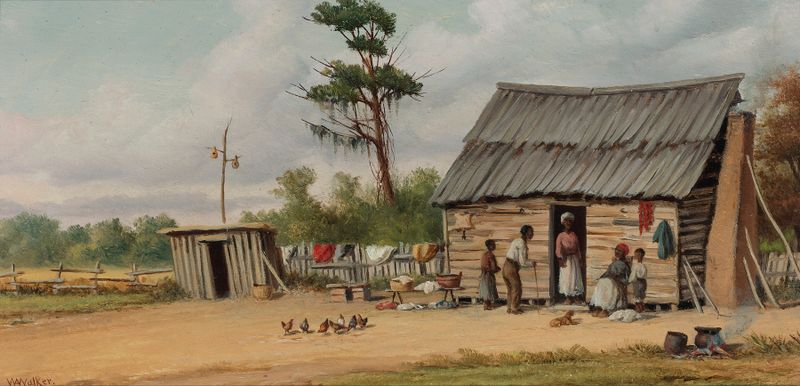
In the hands of a master, illusion transcends the canvas, inviting us to step into a world both familiar and enchanting. Look to the center of the painting, where a rustic cabin emerges from a vibrant landscape. The warm, wooden textures of the structure contrast against the lush greenery that envelops it, while dappled sunlight filters through the trees above. The artist employs a palette rich in earth tones, blending greens and browns that breath life into the scene, drawing the viewer’s eye and enveloping them in its serene embrace. Amidst this idyllic setting lies an emotional tension, a dichotomy between tranquility and the unseen struggle of daily life.
The cabin, a symbol of refuge, stands resilient against the encroaching wilderness; yet, the brush strokes convey a sense of fleetingness, suggesting the impermanence of peace. Closer inspection reveals details like a tattered curtain fluttering in the breeze or a single cloud casting a shadow, whispering of life's inherent ephemerality and the hidden narratives that dwell within stillness. William Aiken Walker painted this scene in 1880, during a period marked by the growing popularity of American genre painting. Living in the South, he sought to capture the rural experience, often focusing on the lives of ordinary people.
At this time, the art world was evolving, embracing realism while still yearning for the idealism of earlier movements, a tension that Walker adeptly navigated in his work.
More Artworks by William Aiken Walker
Browse all →
A South Carolina Cabin
William Aiken Walker

Louisiana Cabin Scene
William Aiken Walker
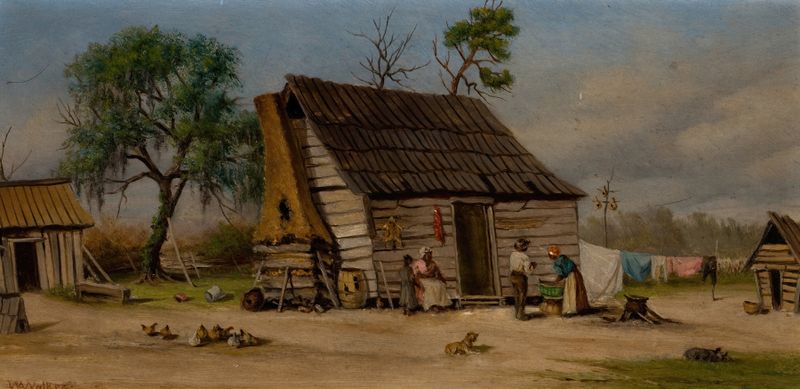
Cabin Scene
William Aiken Walker

Cabin Scene, Wash Day
William Aiken Walker

Sharecroppers Gathering in the Yard
William Aiken Walker
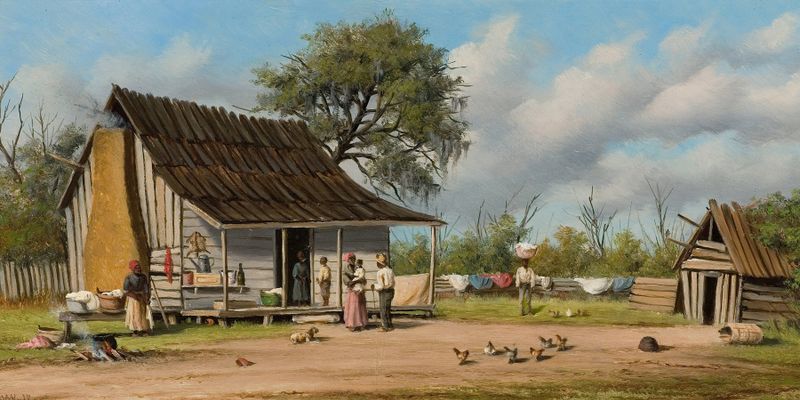
Cabin Scene
William Aiken Walker
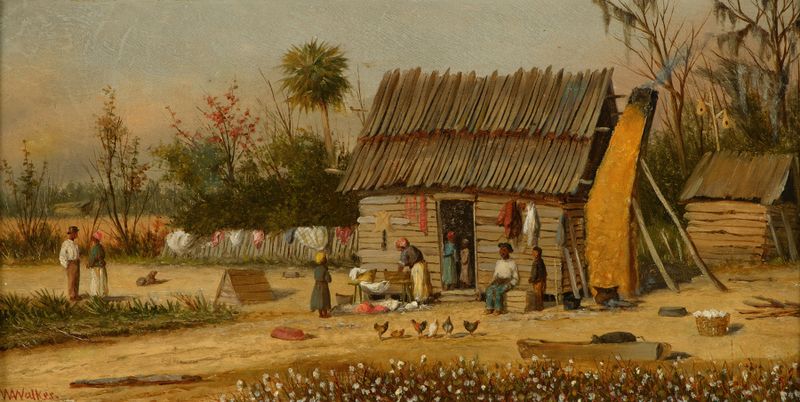
Wash Day
William Aiken Walker
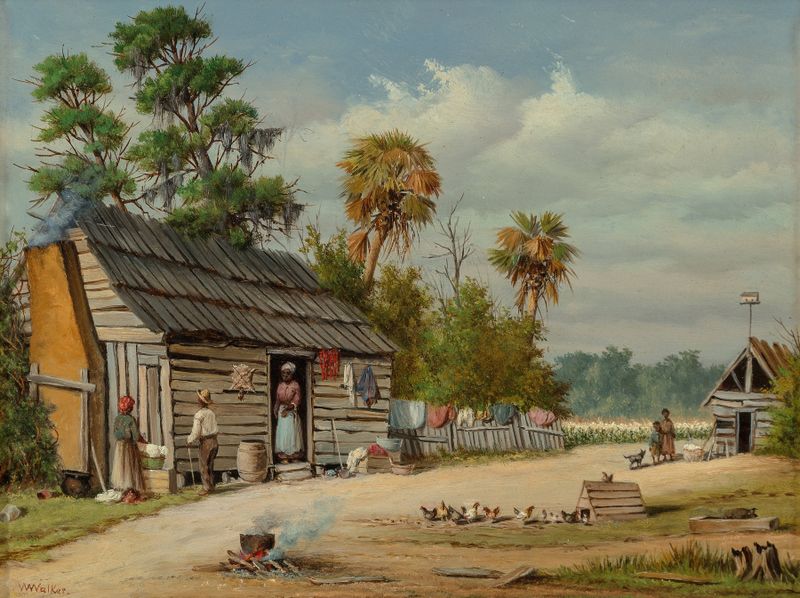
Cabin
William Aiken Walker
The Old Cabin
William Aiken Walker

Cabin Scene
William Aiken Walker





