Caique et voilier sur le Bosphore — History & Facts
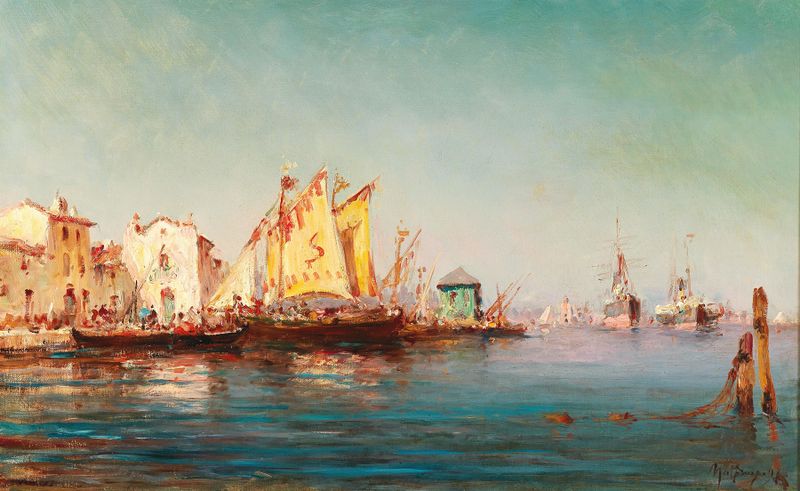
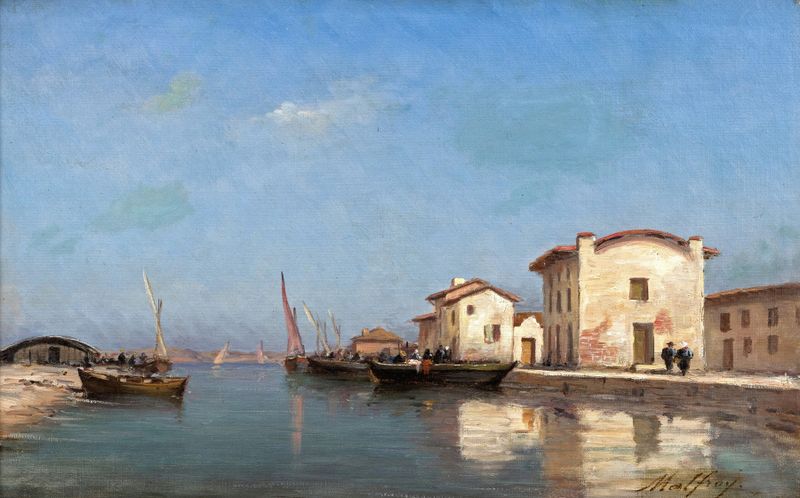
Where does light end, and longing begin? In the heart of Caique et voilier sur le Bosphore, one can almost taste the ecstasy suspended in the air, as if the very atmosphere vibrates with unspoken dreams. Look to the horizon where the sun drenches the water in golden hues. This is where your gaze should first rest — upon the tranquil waves that dance playfully under the boat's gentle wake. The colors — a gradient of blues and yellows — seamlessly interweave, creating a serene yet vibrant tapestry.
Notice the delicate brushwork in the sail of the voilier, capturing the breezy essence of its journey, while the caique, with its rich wooden tones, hints at a history steeped in stories untold. The composition speaks to contrasts, revealing the tension between the stillness of the water and the movement of the boats. The light, a luminous presence, reflects not just on the surface, but also on the deeper emotional currents — the joy of exploration, the nostalgia of travels past, and the bittersweet nature of departure. Each wave seems to echo a silent beckoning, while the vessels symbolize both freedom and the inevitable confines of time. Charles Malfroy created this enchanting piece during a period of artistic exploration in the late 19th century, likely as he embraced the Impressionist influences that were sweeping through Europe.
With a passion for capturing the delicate interplay of light and water, he found inspiration on the picturesque Bosphorus, a crossroads of culture and beauty. In his life, as in his art, he sought to illuminate the fleeting moments of joy found within the everyday.