
Camp 120, Eagle Lake, Sierra Nevadas — History & Facts
When did color learn to lie? In the ethereal realm of dreams, one can find truths masked by hues and shadows, whispering stories only the heart can decipher. Look to the left at the dense forest, where deep greens intermingle with patches of sunlight breaking through the canopy. The interplay of light and shade gives the tall pines a tactile quality, as if they are alive, swaying gently in an unseen breeze. Notice how the serene lake reflects the sky’s soft blues and whites, creating a mirror image that blurs the lines between reality and illusion.
Jenks employs a delicate brushstroke and a muted palette, evoking a sense of tranquility punctuated by bursts of color that beckon the viewer deeper into this enchanting landscape. In the painting, the juxtaposition of the idyllic natural scene with the uncharted territories of human emotion reveals layers of meaning. The calm water suggests serenity, yet it also hints at the vastness of dreams, inviting contemplation of the untamed wilderness within us all. Small details, like the ripples on the lake's surface, represent both disturbance and stillness, mirroring life's dualities.
Here, nature embodies a silent witness to human aspirations and fears, urging viewers to reflect on their own journeys. In 1860, while in the Sierra Nevadas, Jenks painted Camp 120, Eagle Lake at a time when the American West was both a canvas and a frontier, filled with the promise of exploration and discovery. This era was marked by a burgeoning national identity and an appreciation for the sublime beauty of nature, as artists sought to capture their experiences in a rapidly changing world. Jenks, influenced by the romantic ideals of his time, embraced the challenge of translating the wilderness into evocative imagery, bridging the gap between reality and the dreamlike qualities of the landscape.
More Artworks by Daniel A. Jenks
Browse all →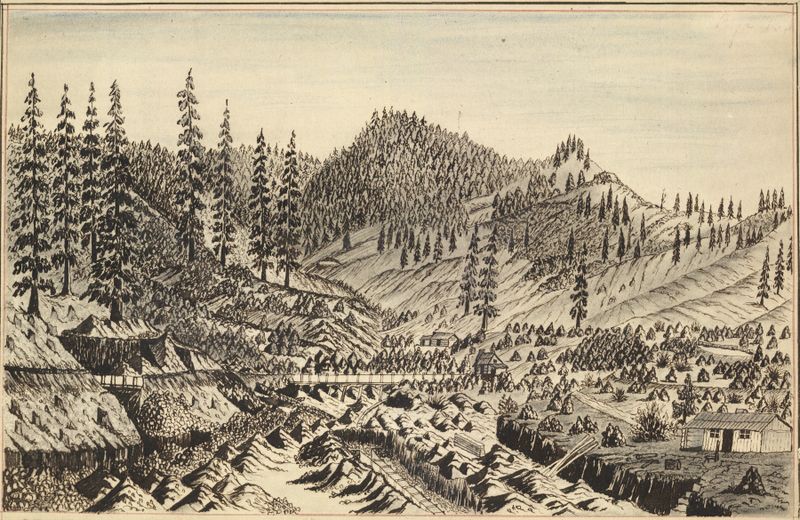
View of the mine at Long Gulch
Daniel A. Jenks
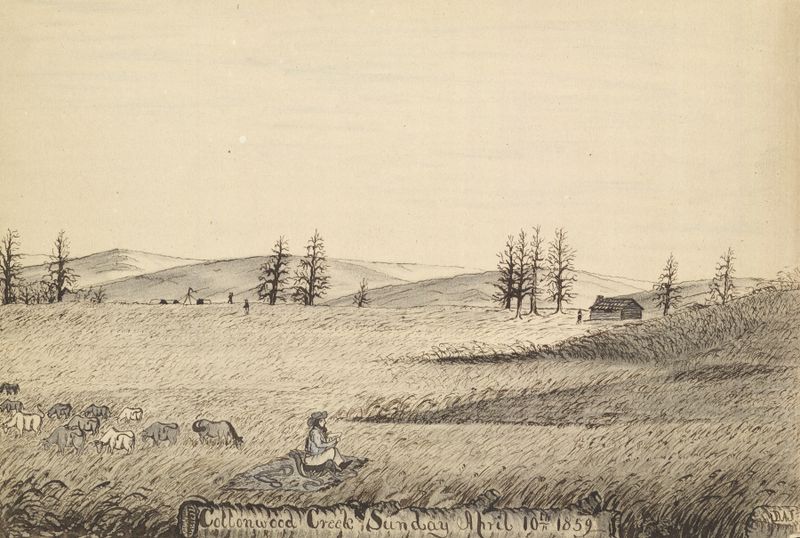
Cottonwood Creek, Sunday April 10th 1859
Daniel A. Jenks
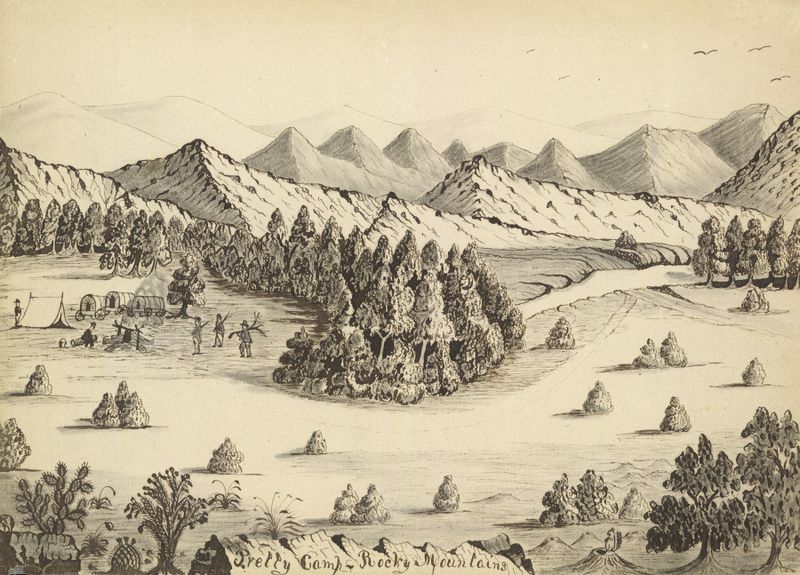
Pretty camp – Rocky Mountains
Daniel A. Jenks

Chavis Creek, camp 14th
Daniel A. Jenks
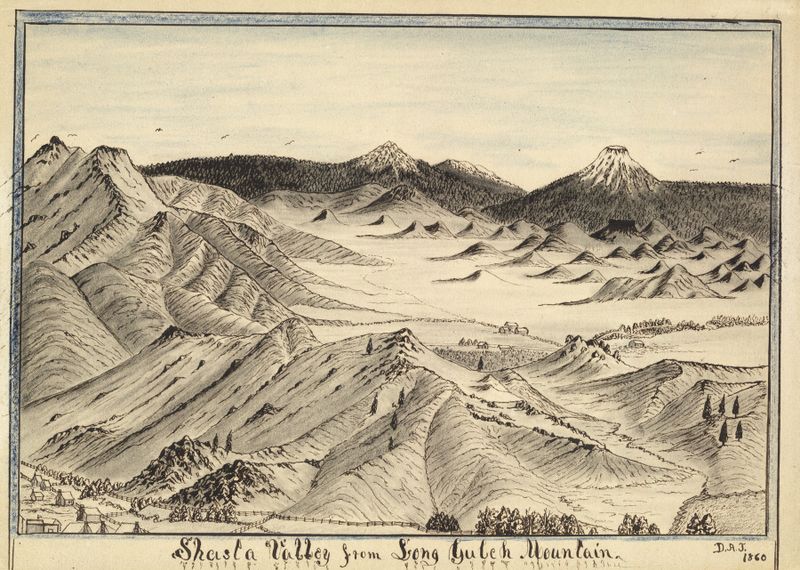
Shasta Valley from Long Gulch Mountain
Daniel A. Jenks
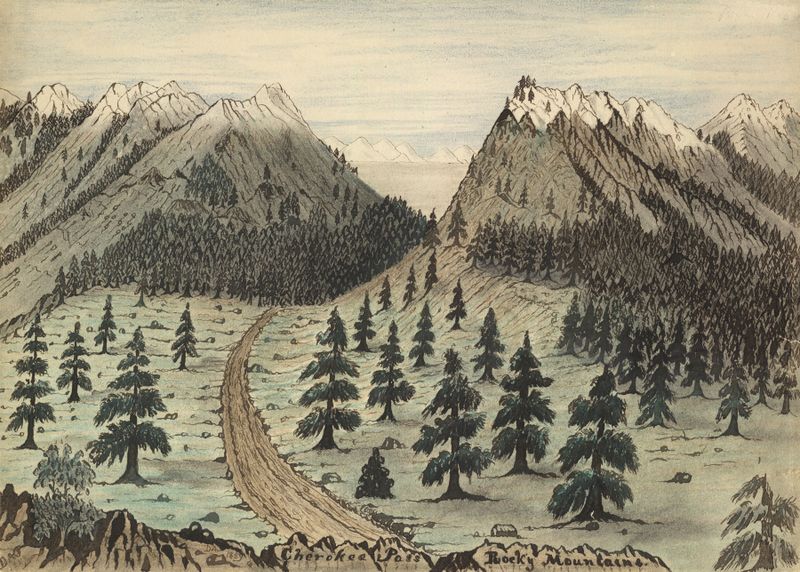
Cherokee Pass, Rocky Mountains
Daniel A. Jenks

Camp 100 – Humbolt River
Daniel A. Jenks
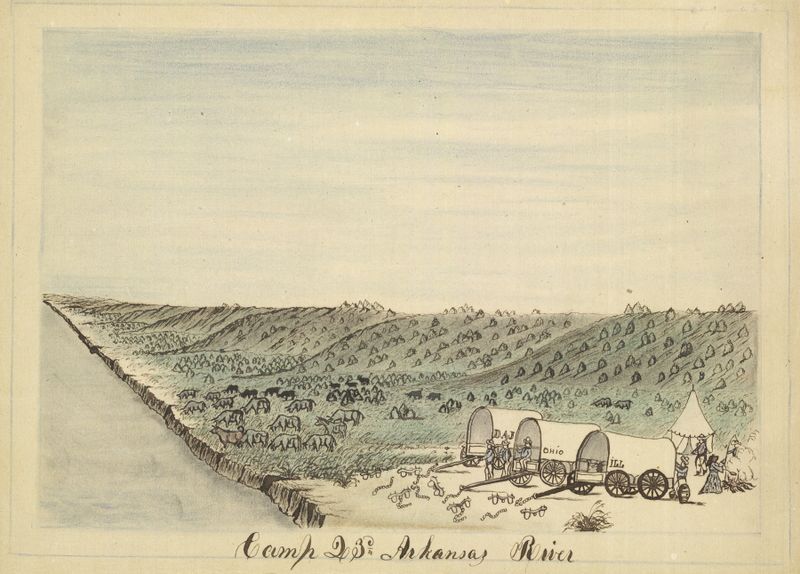
Camp 23rd Arkansas River
Daniel A. Jenks
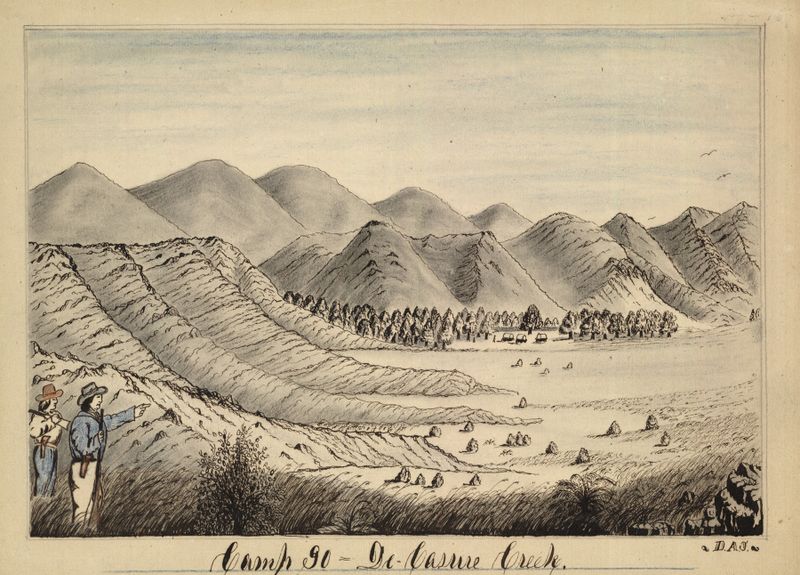
Camp 90, De Casure Creek
Daniel A. Jenks

Humbolt River Valley
Daniel A. Jenks





