
Humbolt River Valley — History & Facts
Can beauty exist without sorrow? In Humbolt River Valley, the question lingers like a mist over the landscape, inviting contemplation of nature’s duality and the legacy it leaves in its wake. Look to the center of the canvas, where the meandering river glimmers beneath a gentle sun; its waters reflect the golden hues of the surrounding hills. The artist employs a harmonious palette of greens and browns, interspersed with soft, azure skies that invite the viewer to traverse the serene valley. Notice how the brushwork creates a delicate interplay of light and shadow, enhancing the sense of depth—a masterful technique that draws the eye towards distant mountains, hinting at both beauty and the unknown. Yet, hidden within the tranquility lies an undertone of melancholy.
The lush landscape, teeming with life, is juxtaposed against the encroaching shadows of the mountains, suggesting the inevitable passage of time and the transience of existence. The river, while beautiful, also serves as a reminder of its flow—an emblem of both prosperity and loss. Each element within the scene speaks to the legacy of the land, a silent witness to the histories that shaped it and the hearts that have traversed its banks. In 1859, during a time of westward expansion in America, the artist created this piece while reflecting on the natural beauty found in the vast landscapes of the West.
As pioneers sought fortune and new beginnings, the artwork captures both the aspirations and the poignant realities of those who braved the unknown. This was an era marked by change, and through his brush, Jenks immortalized a moment of serene beauty, urging viewers to ponder their place within the unfolding story of the land.
More Artworks by Daniel A. Jenks
Browse all →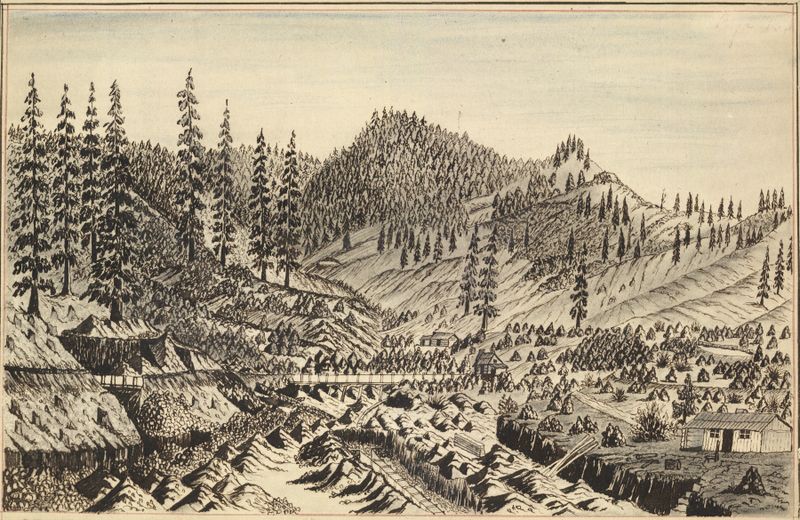
View of the mine at Long Gulch
Daniel A. Jenks
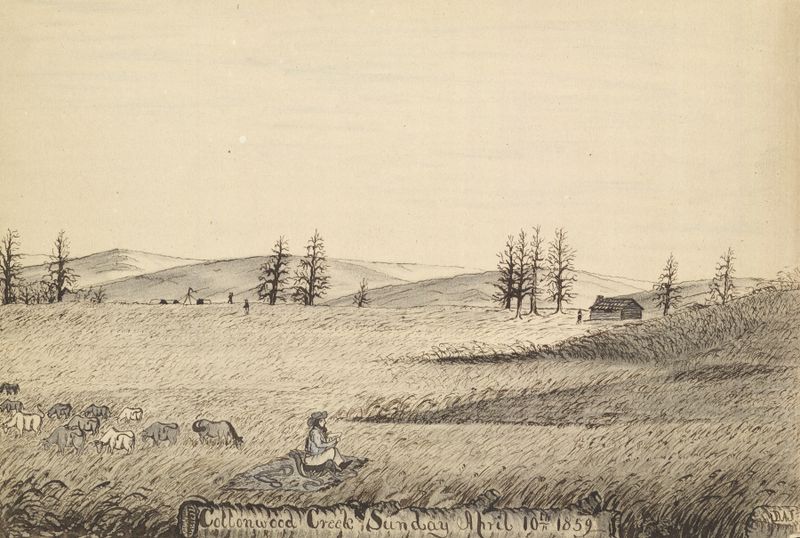
Cottonwood Creek, Sunday April 10th 1859
Daniel A. Jenks
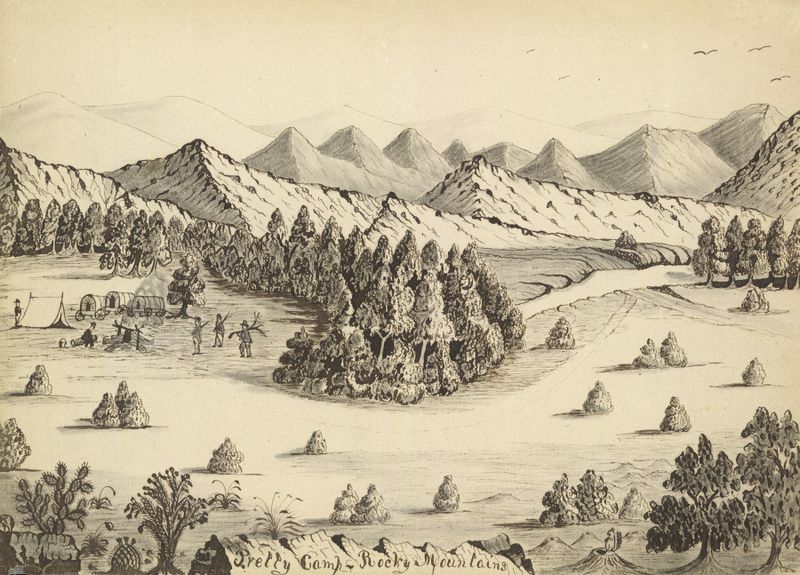
Pretty camp – Rocky Mountains
Daniel A. Jenks
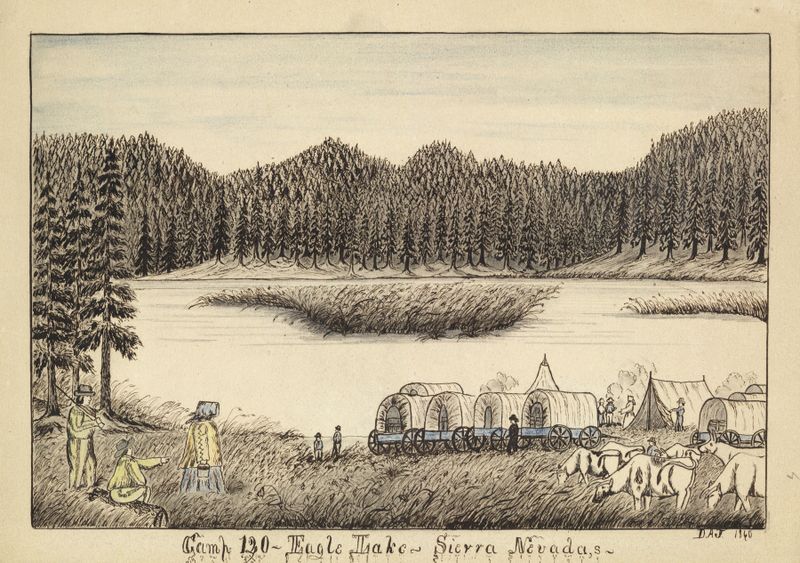
Camp 120, Eagle Lake, Sierra Nevadas
Daniel A. Jenks

Chavis Creek, camp 14th
Daniel A. Jenks
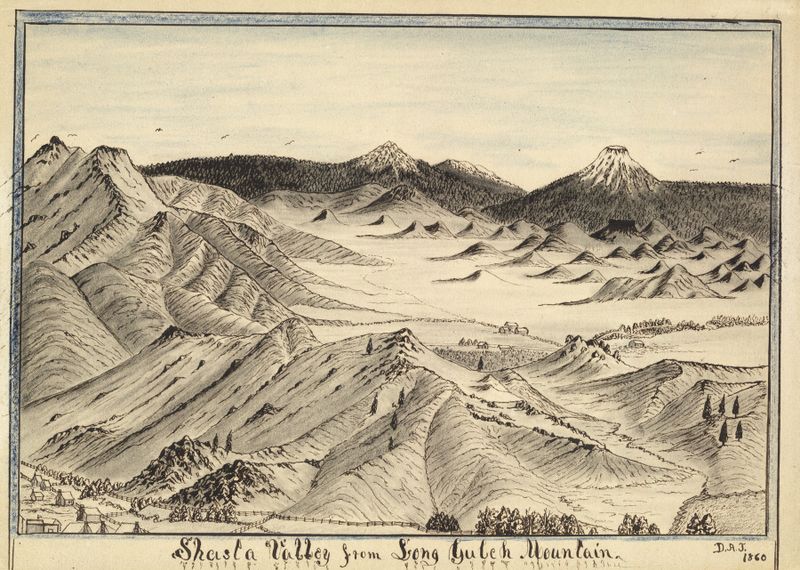
Shasta Valley from Long Gulch Mountain
Daniel A. Jenks
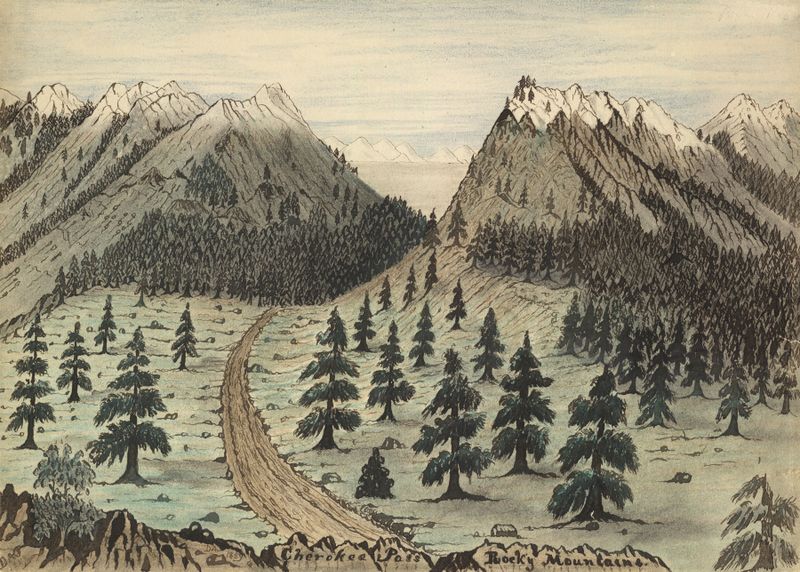
Cherokee Pass, Rocky Mountains
Daniel A. Jenks

Camp 100 – Humbolt River
Daniel A. Jenks
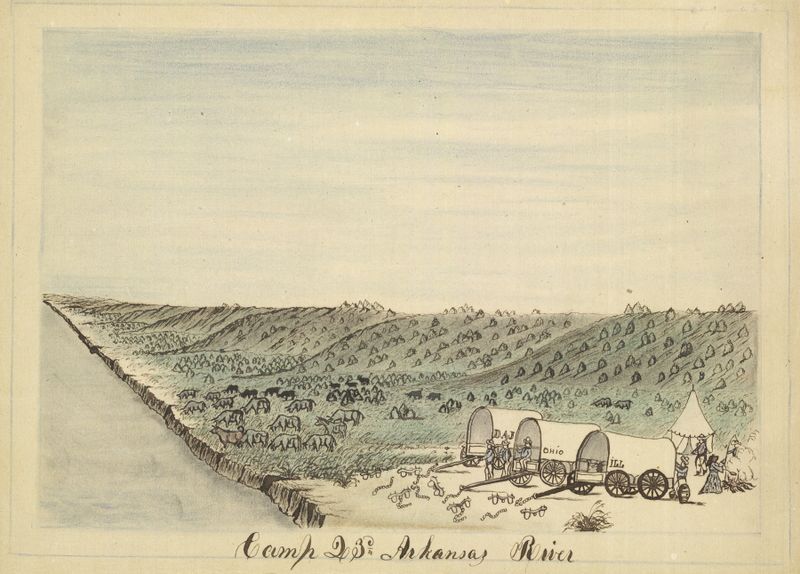
Camp 23rd Arkansas River
Daniel A. Jenks
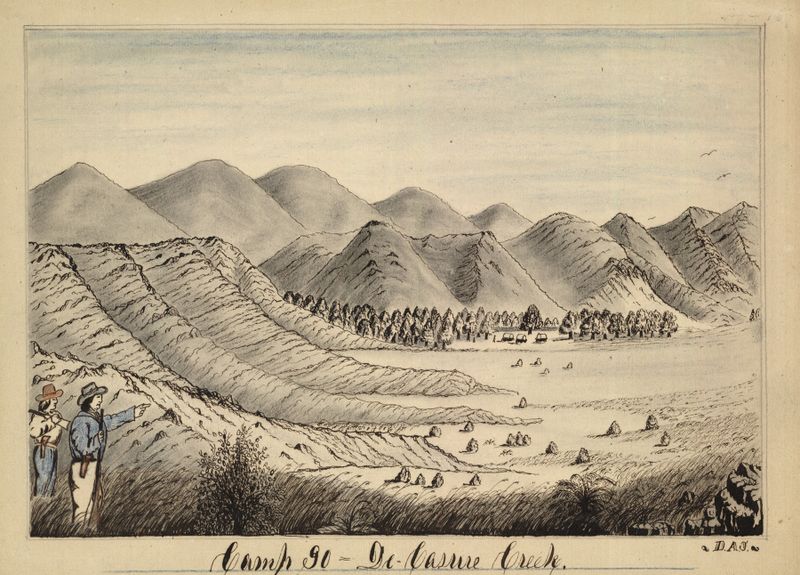
Camp 90, De Casure Creek
Daniel A. Jenks





