
Campement d’artillerie place de la Bourse, 4 juin 1871. — History & Facts
Who listens when art speaks of silence? In Campement d’artillerie place de la Bourse, 4 juin 1871, the viewer’s gaze is drawn first to the solemn gathering of soldiers just beyond the frame of tumultuous history. Look to the center, where the grays of their uniforms meld with the muted palette of the bustling square, almost absorbing the chaos around them. Notice the sharp contrasts of light that dance across the canvas, illuminating taut expressions and weary bodies, embodying the weight of their duties amidst an atmosphere thick with unresolved tension. Within this composition lies an intricate interplay of reflection and quiet resolve.
The soldiers, poised yet apprehensive, mirror the uncertainty of a nation healing from conflict. Subtle details, like the way one soldier clutches his musket with a hint of trepidation, speak volumes about the emotional landscape — a collective anxiety reverberating through the ranks. The architecture around them, rigid and imposing, emphasizes their vulnerability, as if the very stones of the Bourse echo the strains of their silent camaraderie and contemplation. Isidore Pils painted this scene during a time of great upheaval in France, shortly after the end of the Franco-Prussian War.
In June 1871, Paris was rife with the remnants of conflict, and the artist sought to capture not only the military presence but also the broader sense of societal unrest. His work reflects a moment when realism was paramount, and art served as a lens to examine the human condition in the face of adversity. By placing soldiers in an everyday environment, Pils invites viewers to confront the stark realities of war while contemplating the fragile nature of peace.
More Artworks by Isidore Pils
Browse all →
Fort sous la neige.
Isidore Pils
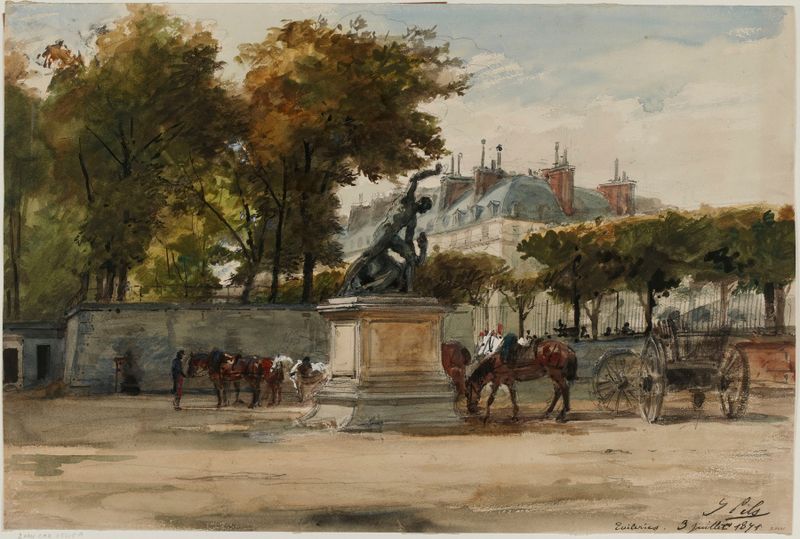
Artilleurs aux Tuileries, 9 juillet 1871.
Isidore Pils

Ruins of the Tuileries Palace
Isidore Pils

La place Vendôme après le renversement de la colonne.
Isidore Pils
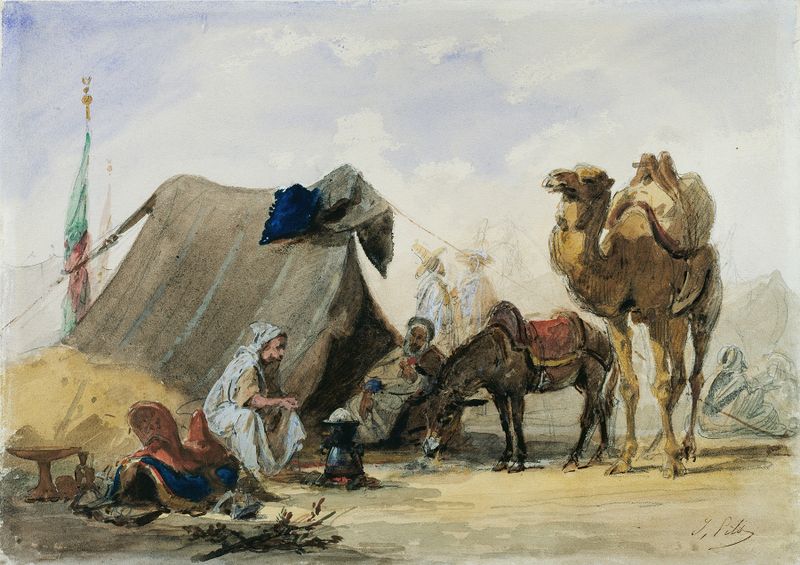
An Arab Encampment
Isidore Pils

Soldats du 37e de Ligne boulevard de Clichy.
Isidore Pils

Le bastion 63.
Isidore Pils

Les Buttes-Chaumont.
Isidore Pils

Le Point du Jour, février 1871.
Isidore Pils
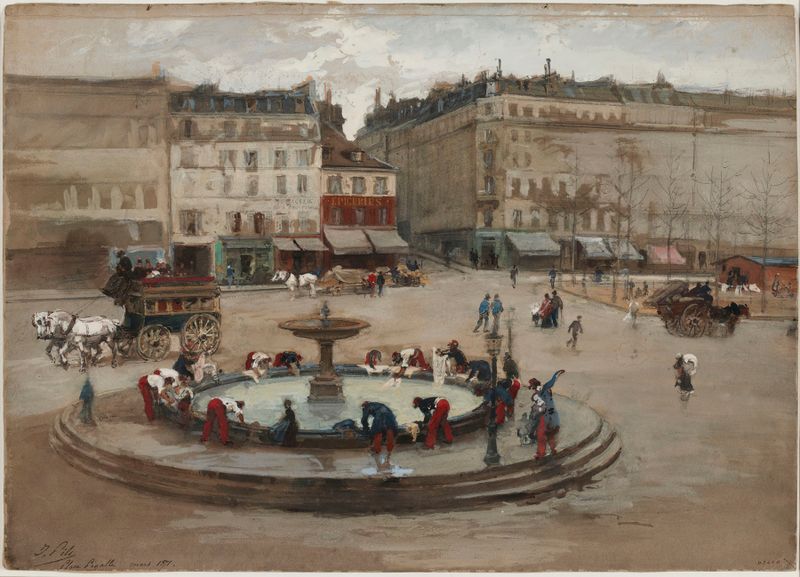
La lessive, place Pigalle, mars 1871.
Isidore Pils
More Historical Art
Browse all →
The Night Watch Militia Company of District II under the Command of Captain Frans Banninck Cocq
Rembrandt van Rijn
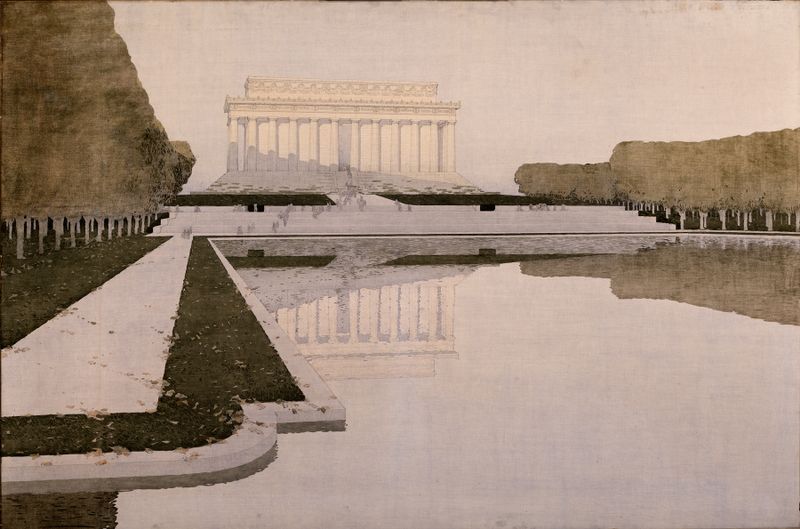
Lincoln Memorial
Henry Bacon
The Third of May 1808
Francisco de Goya

Isaac and Rebecca, Known as ‘The Jewish Bride’
Rembrandt van Rijn
The Charge of the Mamelukes (1814)
Francisco de Goya

De vier ruiters van de apocalyps
Albrecht Dürer