
Campo San Giovanni e Paolo, Venise — History & Facts
In the stillness of urban life, how often do we confront the void that lingers beneath the surface of human experience? Look to the center of the canvas, where the grand architecture of the church looms large against a backdrop of subtle hues. The warm ochres and muted blues evoke a sense of nostalgia, drawing the viewer’s eye toward the weathered facade. Notice how the play of light and shadow dances across the cobblestone streets, creating a textured interplay that whispers of countless footsteps and untold stories. This scene captures the delicate tension between permanence and transience.
The grandiosity of the church contrasts sharply with the small, solitary figures dotting the foreground, each lost in their own thoughts and journeys. The void of their presence, juxtaposed against the monumental structure, evokes a profound sense of isolation amidst a bustling city, inviting contemplation on the nature of existence itself. Raffaëlli painted Campo San Giovanni e Paolo, Venise during a time of significant artistic evolution in the late 19th century. Living in Paris, he was influenced by the Impressionist movement, yet his works often reflected a more somber reality, focusing on the life and struggles of the urban lower classes.
This piece exemplifies his ability to merge architectural grandeur with poignant human emotion, a testament to his keen observation of life and place during this transitional period in art history.
More Artworks by Jean François Raffaëlli
Browse all →
Autumn In Paris
Jean François Raffaëlli

Le jardin du Luxembourg
Jean François Raffaëlli
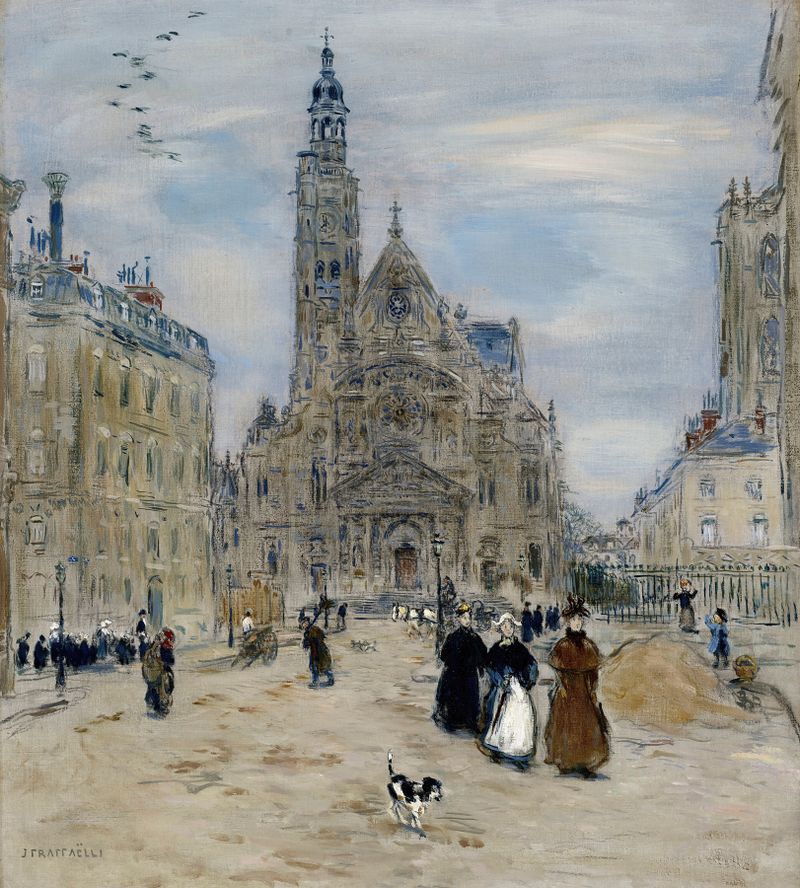
Saint-Étienne-du-Mont, Paris
Jean François Raffaëlli
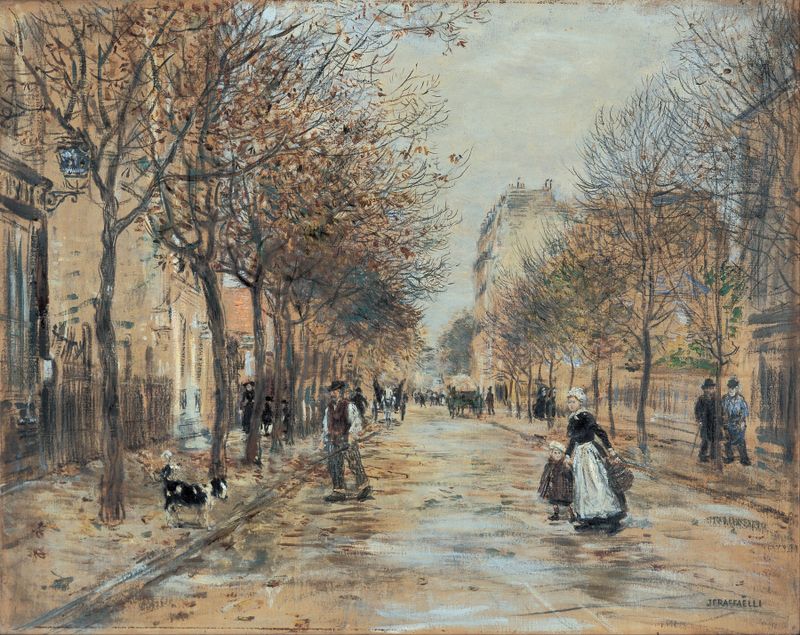
Street in Asnières
Jean François Raffaëlli
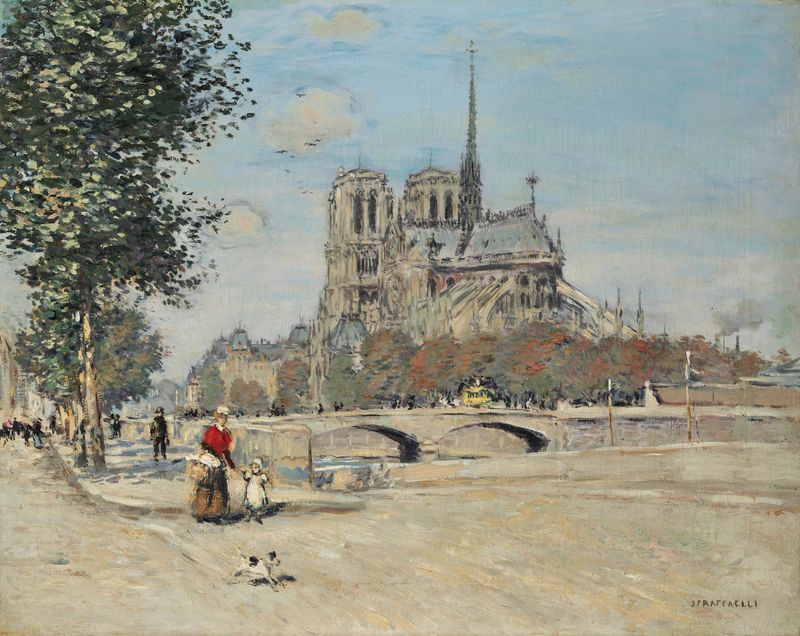
Notre-Dame de Paris et le pont de l’Archevêché
Jean François Raffaëlli

Place de Saint-Germain des Prés, Paris
Jean François Raffaëlli
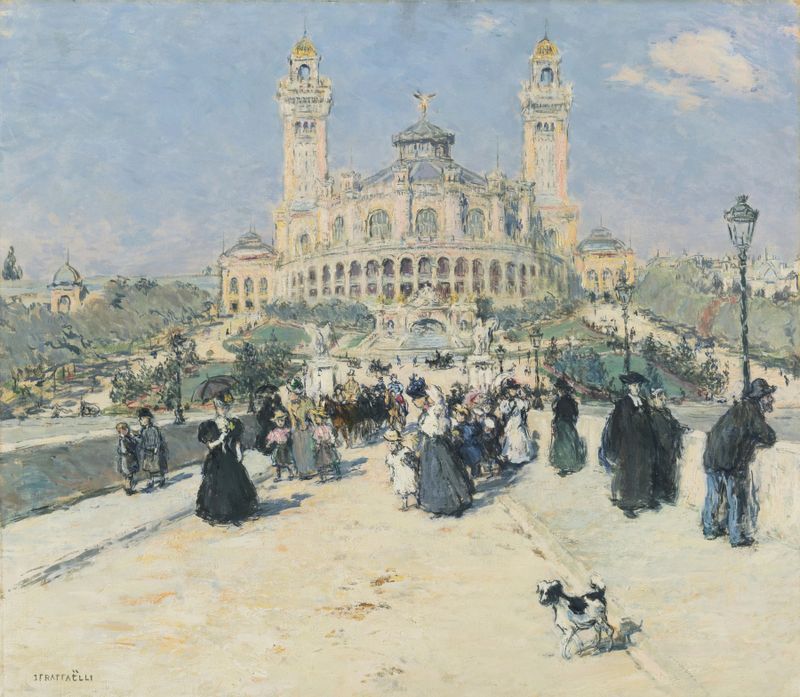
Le Trocadéro
Jean François Raffaëlli

Les Champs-Élysées
Jean François Raffaëlli

Le boulevard des Italiens
Jean François Raffaëlli

The Quai Malaquais, Paris
Jean François Raffaëlli
More Architecture Art
Browse all →
The statue of Liberty
Frédéric Auguste Bartholdi

View of Houses in Delft, Known as ‘The Little Street’
Johannes Vermeer

View of Houses in Delft, Known as ‘The Little Street’
Johannes Vermeer

The Cathedral in Rouen. The portal, Grey Weather
Claude Monet

The yellow house
Vincent van Gogh

The Church in Auvers-sur-Oise, View from the Chevet
Vincent van Gogh