
Le Trocadéro — History & Facts
In its stillness, it captures a profound loneliness that resonates within us all. Focus on the solitary figure in the foreground, a man seated on a bench, seemingly lost in thought. Notice the way the muted tones of gray and blue envelop him, creating a sense of isolation amidst the bustling scenery of the Trocadéro. The strokes are deft and deliberate, guiding the viewer’s eye along the subtle contrasts of light and shadow that define the forms around him, enhancing the emotional weight of his solitude. As you delve deeper, consider the subtle interplay between the vibrancy of the park behind him and the man’s detached demeanor.
The lively bursts of color in the distant background, where people interact and enjoy their day, juxtapose starkly with the melancholy atmosphere surrounding the lone figure. This contrast speaks to the profound theme of alienation amidst a world brimming with life. Look for the way the light barely grazes his features, amplifying the feeling of being unseen and unheard. During the time Le Trocadéro was painted, Raffaëlli was immersed in a world of changing artistic movements in late 19th-century Paris, where Impressionism began to dominate.
He often explored themes of urban life, focusing on those who felt marginalized, perhaps reflecting his own sense of displacement as an artist. This work conveys the complexities of human connection, capturing a fleeting moment that speaks volumes about loneliness in an otherwise vibrant city.
More Artworks by Jean François Raffaëlli
Browse all →
Autumn In Paris
Jean François Raffaëlli

Le jardin du Luxembourg
Jean François Raffaëlli
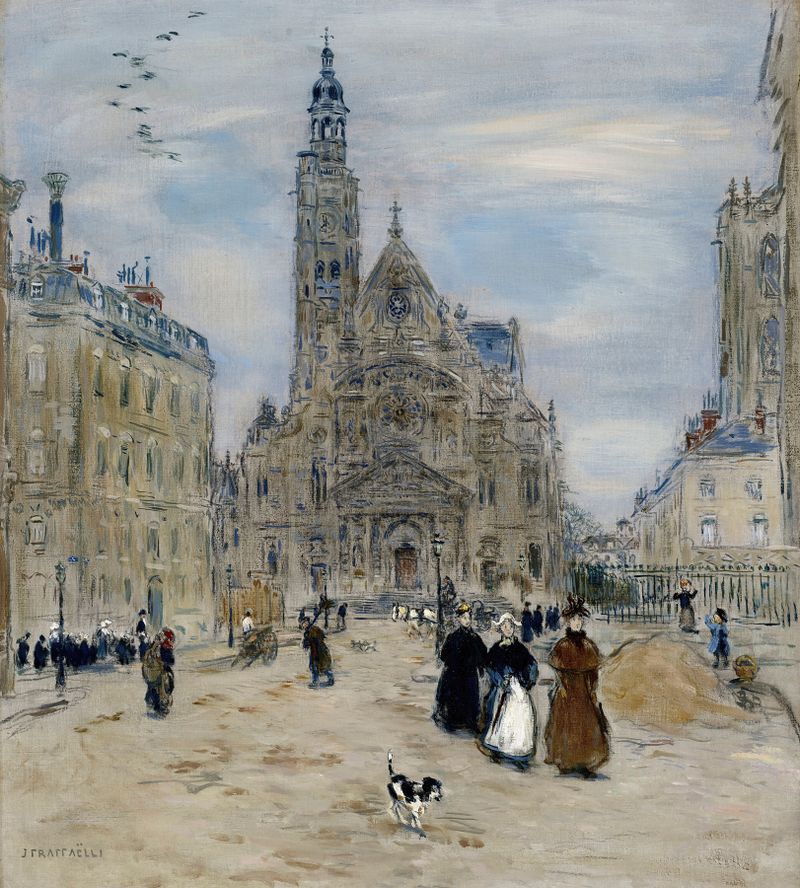
Saint-Étienne-du-Mont, Paris
Jean François Raffaëlli
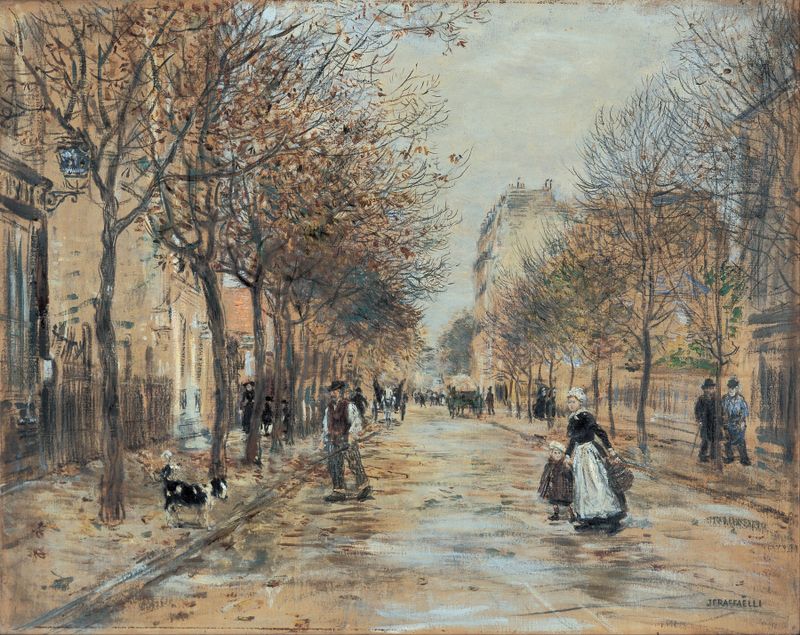
Street in Asnières
Jean François Raffaëlli
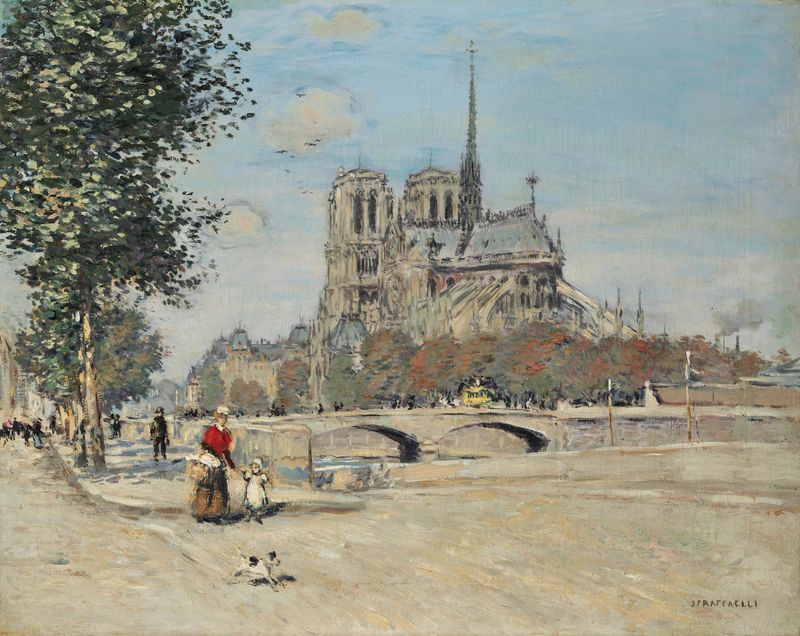
Notre-Dame de Paris et le pont de l’Archevêché
Jean François Raffaëlli

Place de Saint-Germain des Prés, Paris
Jean François Raffaëlli

Les Champs-Élysées
Jean François Raffaëlli

Le boulevard des Italiens
Jean François Raffaëlli

The Quai Malaquais, Paris
Jean François Raffaëlli

Place de la Trinité, Paris
Jean François Raffaëlli





