
Le jardin du Luxembourg — History & Facts
In the gentle embrace of greenery, where the silhouettes of trees arch gracefully, a legacy unfolds, whispering tales of life and tranquility. Look to the left at the sun-drenched path winding through the lush greenery, inviting you deeper into the heart of Le jardin du Luxembourg. The vibrant greens contrast beautifully with the soft hues of the figures scattered throughout the scene, each capturing a moment of leisure. Raffaëlli’s brushwork, with its delicate textures, creates a sense of movement and calm, while dappled light dances across the surface, animating the space and inviting the viewer to connect with the souls enjoying their time beneath the trees. However, beneath the idyllic surface lies a tension between nature and urbanity, between the fleeting moments of joy and the weight of time.
The figures, seemingly lost in their leisurely pursuits, also reflect a deeper longing—a connection to the past and a contemplation of what lies ahead. Each character, with its own story, beckons the viewer to ponder their own legacies and the transient nature of happiness. In 1895, Raffaëlli painted this scene in Paris, a city alive with artistic fervor and social transformation. As Impressionism flourished, he sought to capture the everyday moments that often go unnoticed.
It was a time when the boundaries of art were expanding, challenging conventions, and Raffaëlli's work stood as a testament to this evolving narrative, encapsulating the essence of life in the sprawling urban landscape.
More Artworks by Jean François Raffaëlli
Browse all →
Autumn In Paris
Jean François Raffaëlli
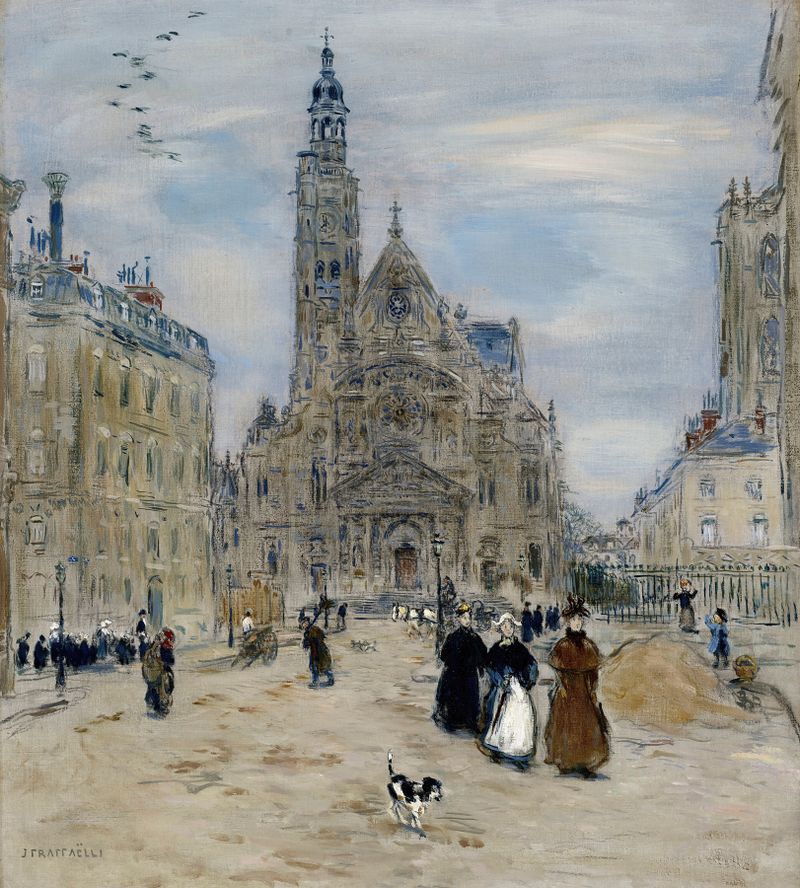
Saint-Étienne-du-Mont, Paris
Jean François Raffaëlli
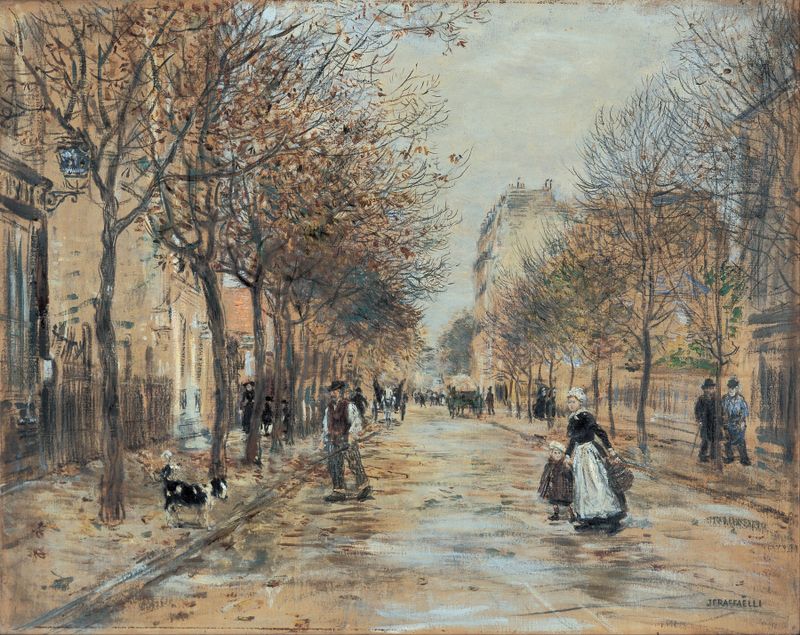
Street in Asnières
Jean François Raffaëlli
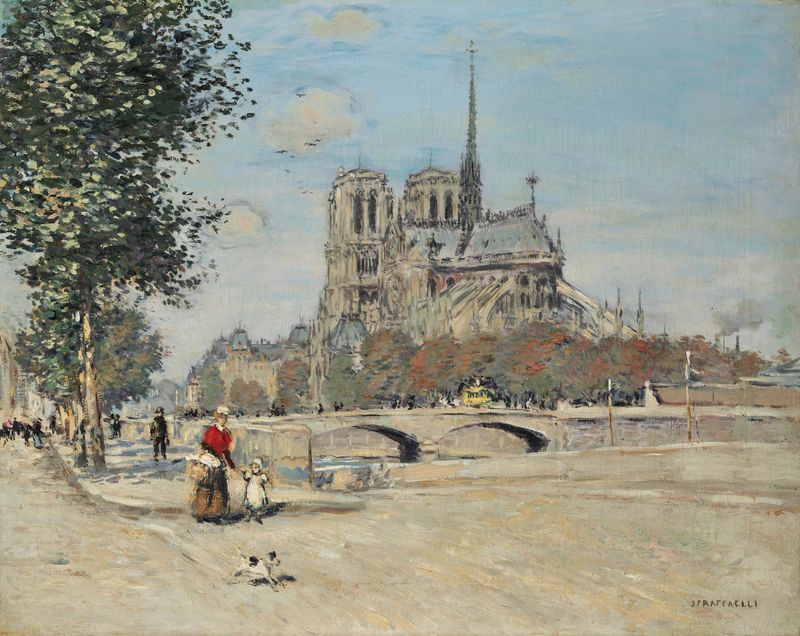
Notre-Dame de Paris et le pont de l’Archevêché
Jean François Raffaëlli

Place de Saint-Germain des Prés, Paris
Jean François Raffaëlli
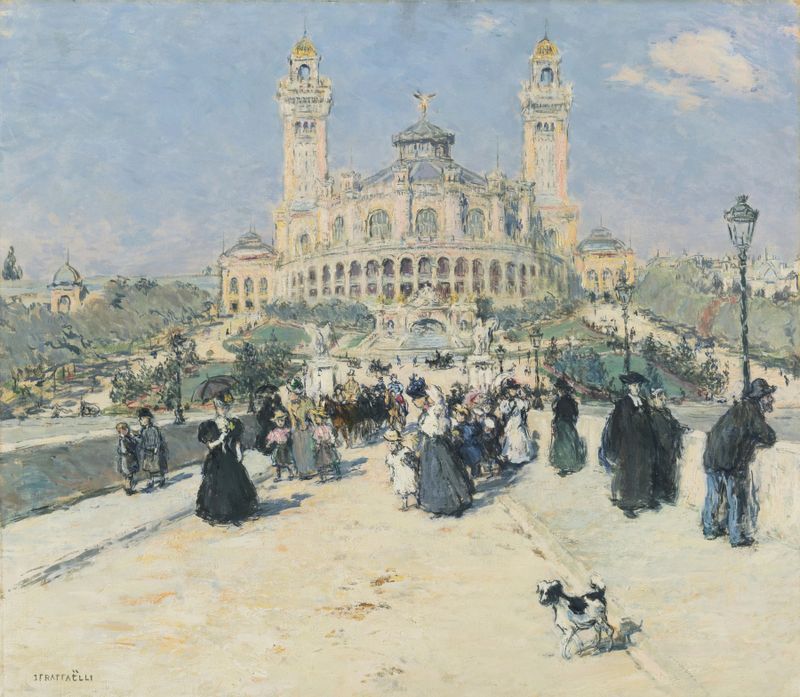
Le Trocadéro
Jean François Raffaëlli

Les Champs-Élysées
Jean François Raffaëlli

Le boulevard des Italiens
Jean François Raffaëlli

The Quai Malaquais, Paris
Jean François Raffaëlli

Place de la Trinité, Paris
Jean François Raffaëlli





