
Les Champs-Élysées — History & Facts
In a world where moments are fleeting, artists capture the essence of life, offering us glimmers of rebirth amidst the routine. Look to the left at the lively outdoor café, where figures gather under the dappled sunlight filtering through the trees. Raffaëlli employs a rich palette of greens and soft earth tones that breathe life into each brushstroke, inviting a sense of nostalgia. Notice the texture of the cobblestones, rough yet inviting, as the composition draws the eye along the iconic avenue, leading us through bustling activity and lingering wonder. The contrast between the animated crowd and the stretching calm of the tree-lined path evokes a sense of depth and connection.
The vibrant interactions among patrons suggest a moment of shared joy and community, while the trees stand sentinel, embodying the passage of time itself. This juxtaposition highlights the fleeting nature of such moments, yet also suggests the possibility of renewal — of life cycles where joy and tranquility coexist. Raffaëlli painted this scene in 1902, a period marked by significant transformation in Parisian life and art. Emerging from the backdrop of rapid industrialization, he found inspiration in the daily lives of ordinary people.
This painting reflects his commitment to realism, capturing the essence of modernity while celebrating the beauty found in everyday moments on the famed Champs-Élysées.
More Artworks by Jean François Raffaëlli
Browse all →
Autumn In Paris
Jean François Raffaëlli

Le jardin du Luxembourg
Jean François Raffaëlli
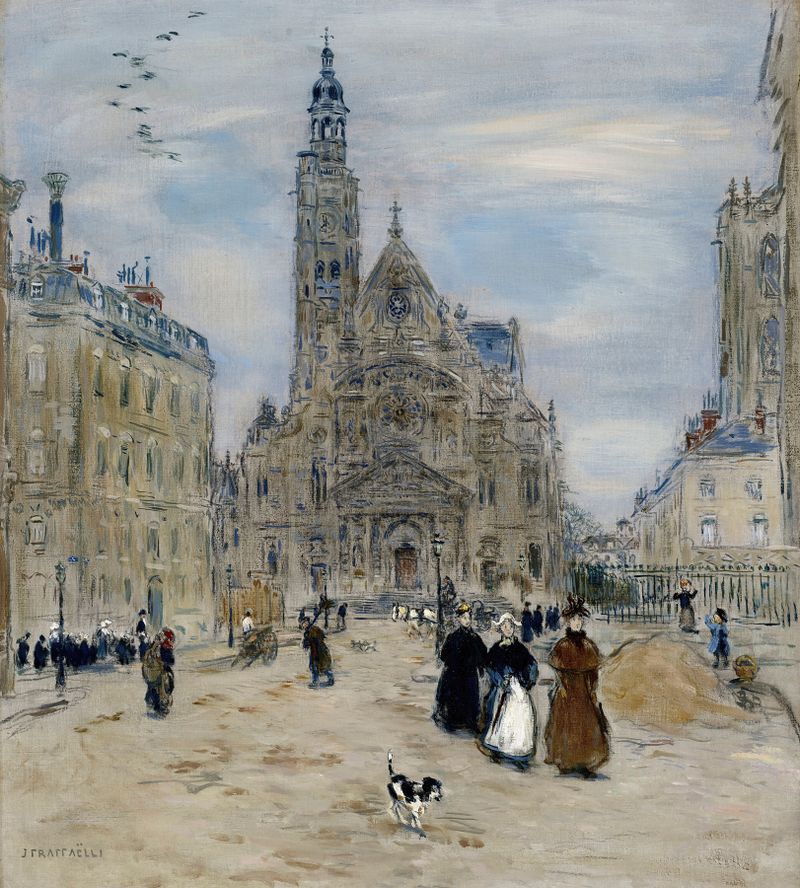
Saint-Étienne-du-Mont, Paris
Jean François Raffaëlli
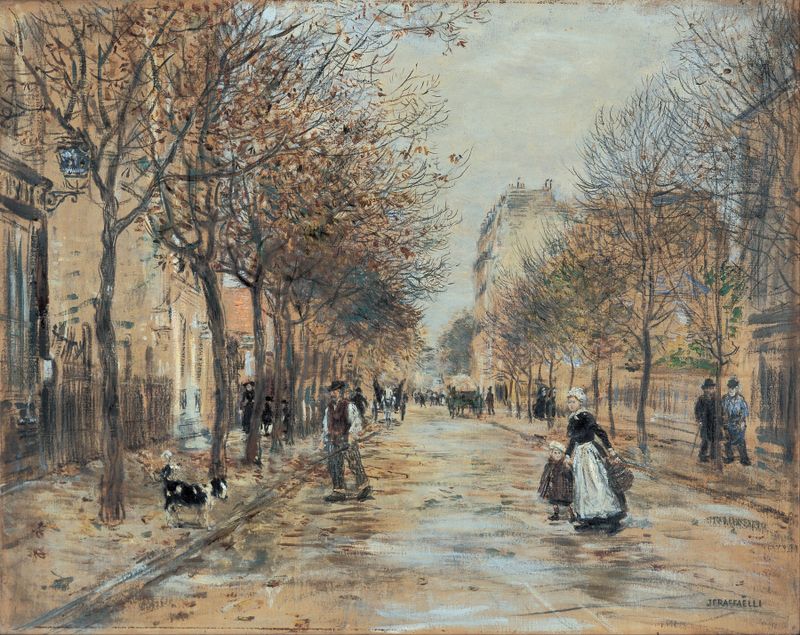
Street in Asnières
Jean François Raffaëlli
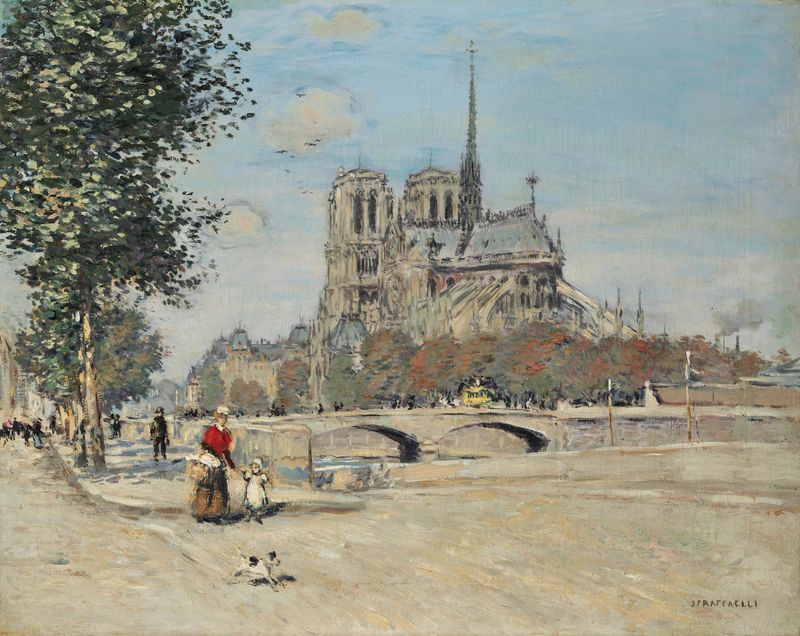
Notre-Dame de Paris et le pont de l’Archevêché
Jean François Raffaëlli

Place de Saint-Germain des Prés, Paris
Jean François Raffaëlli
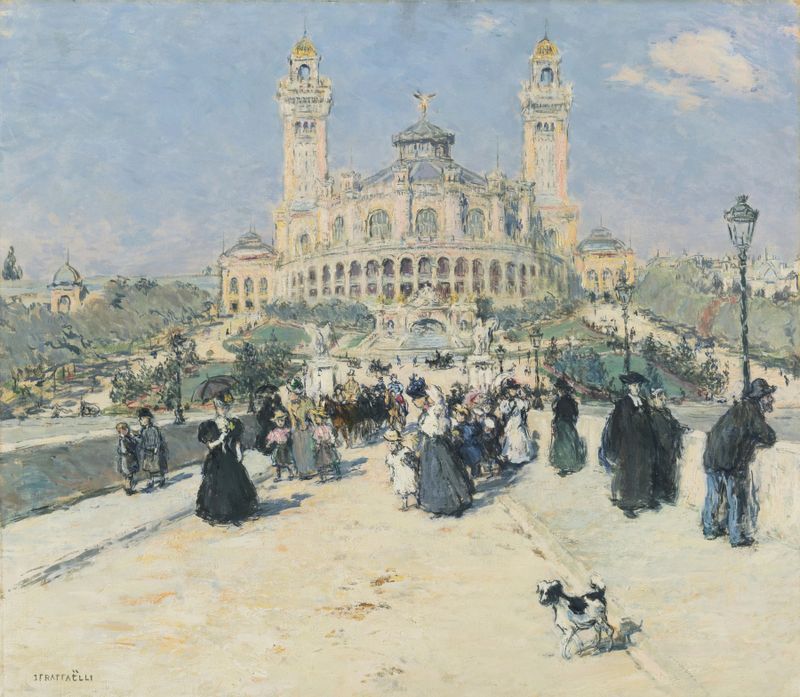
Le Trocadéro
Jean François Raffaëlli

Le boulevard des Italiens
Jean François Raffaëlli

The Quai Malaquais, Paris
Jean François Raffaëlli

Place de la Trinité, Paris
Jean François Raffaëlli





