Saint-Étienne-du-Mont, Paris — History & Facts
In a world where moments slip through our fingers like sand, art becomes a vessel for memory, capturing the essence of what we lose. Focus on the gentle interplay of light and shadow in Saint-Étienne-du-Mont, Paris. The luminous glow filtering through the stained glass imbues the space with a quiet reverence. Notice the soft, muted palette that evokes a sense of nostalgia, where the warm hues of ochre and amber merge to create an inviting yet melancholic atmosphere.
The artist's brushstrokes, both deliberate and expressive, draw your gaze upward, guiding you toward the architectural elegance of the church, its intricate details standing as a testament to time's passage. In the foreground, a solitary figure offers a poignant contrast to the grandeur of the church. This presence, bathed in soft light, embodies the theme of loss—a reminder of those who have come before, the echoes of their lives resonating within the hallowed walls. The juxtaposition of the human element against the monumental structure speaks to the transient nature of existence, inviting contemplation on mortality and legacy.
Every brushstroke pulsates with an emotional gravity, creating a dialogue between the personal and the universal. During the time Saint-Étienne-du-Mont, Paris was created, Jean François Raffaëlli experienced a world caught between tradition and modernity, reflecting the shifting dynamics of Parisian life. The late 19th century was a period of great artistic exploration, marked by the emergence of Impressionism, and Raffaëlli found his unique voice amid these transformations. Although the exact date of this work remains unknown, it encapsulates a moment in which the past and present collided, revealing the profound impact of time on both art and human experience.
More Artworks by Jean François Raffaëlli
Browse all →
Autumn In Paris
Jean François Raffaëlli

Le jardin du Luxembourg
Jean François Raffaëlli
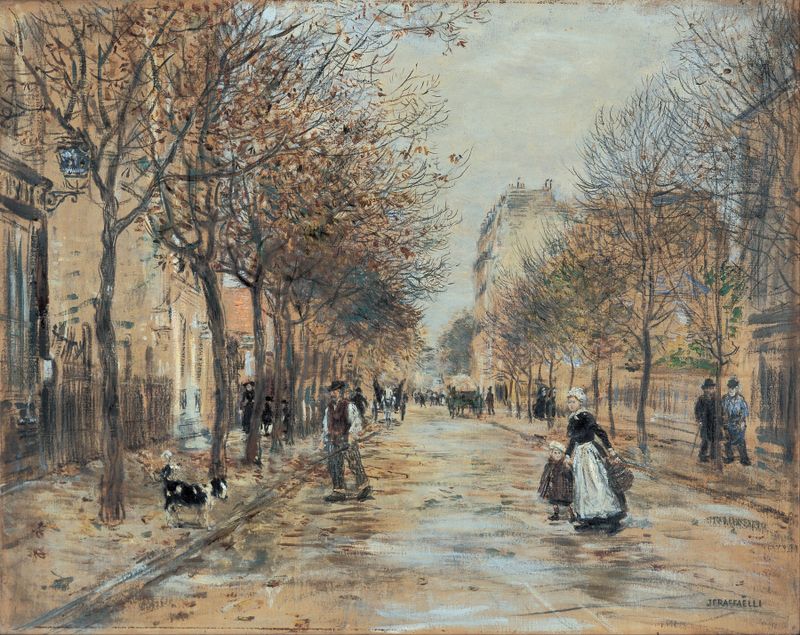
Street in Asnières
Jean François Raffaëlli
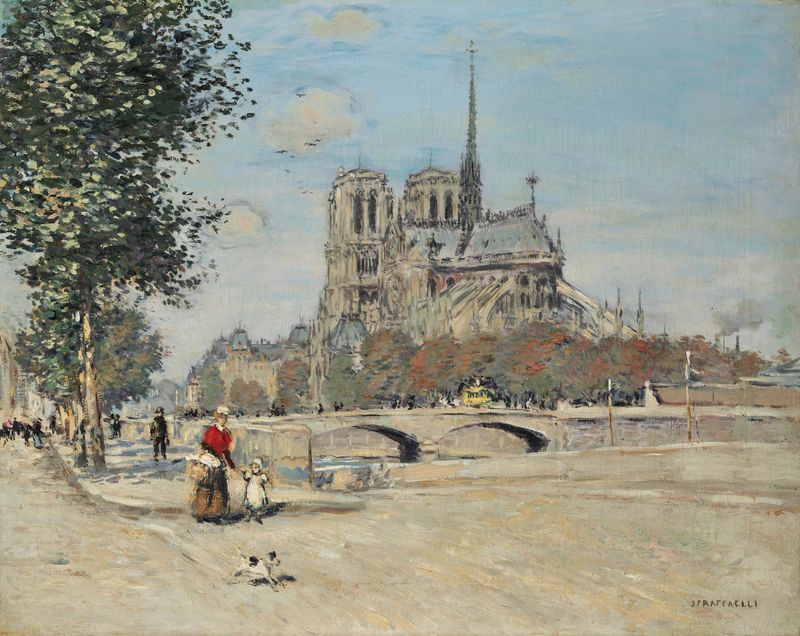
Notre-Dame de Paris et le pont de l’Archevêché
Jean François Raffaëlli

Place de Saint-Germain des Prés, Paris
Jean François Raffaëlli
Le Trocadéro
Jean François Raffaëlli

Les Champs-Élysées
Jean François Raffaëlli

Le boulevard des Italiens
Jean François Raffaëlli

The Quai Malaquais, Paris
Jean François Raffaëlli

Place de la Trinité, Paris
Jean François Raffaëlli