
Street in Asnières — History & Facts
What if silence could speak through light? In Street in Asnières, the interplay of shadow and illumination encapsulates a moment weighed down by unspoken tensions and the potential for violence. Look to the left at the figures draped in muted tones, their postures hinting at a shared unease. The warm sunlight bathes the cobblestone streets, softening the harsh lines of buildings and drawing the eye to the play of light across the scene. Notice how the contrast between light and shadow heightens the emotional undercurrents—the light draws your gaze yet the shadows linger, suggesting a hidden narrative beneath the surface. In this composition, Raffaëlli captures an everyday moment that is anything but mundane.
The juxtaposition of the vibrant street filled with life against the subtle hints of possible conflict—perhaps in the gestures of the pedestrians or the distant, tense atmosphere—invites viewers to confront the duality of existence: the beauty of life coexisting with the specter of violence. The stark contrasts remind us that beneath the tranquility of a sunny day lies a complex human experience rife with uncertainty. Created in the late 19th century, during a period of transformation for both art and society, the painting reveals Raffaëlli's response to the industrial changes and social tensions of urban life. Working in Paris, he sought to depict the realities of the working class, drawing attention to their struggles and resilience.
This moment in history saw the rise of Impressionism, yet Raffaëlli’s unique interpretation straddled realism and the emerging modernist threads, capturing both the vibrancy and underlying strife of city life.
More Artworks by Jean François Raffaëlli
Browse all →
Autumn In Paris
Jean François Raffaëlli

Le jardin du Luxembourg
Jean François Raffaëlli
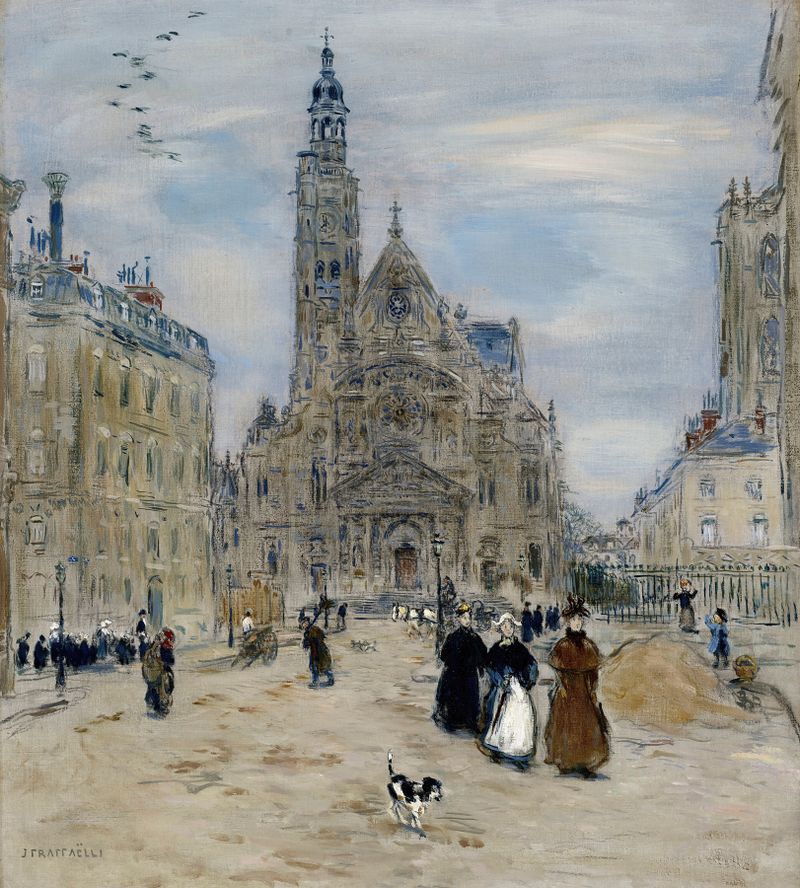
Saint-Étienne-du-Mont, Paris
Jean François Raffaëlli
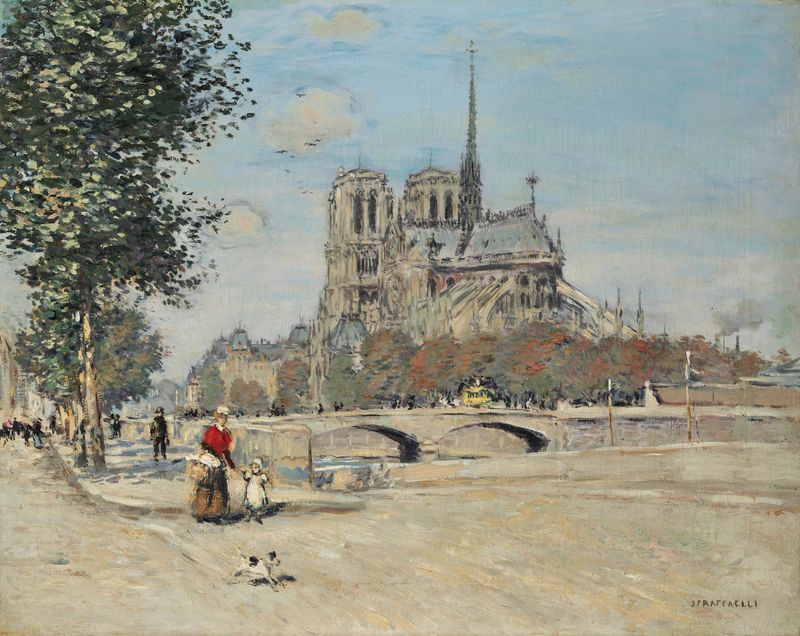
Notre-Dame de Paris et le pont de l’Archevêché
Jean François Raffaëlli

Place de Saint-Germain des Prés, Paris
Jean François Raffaëlli
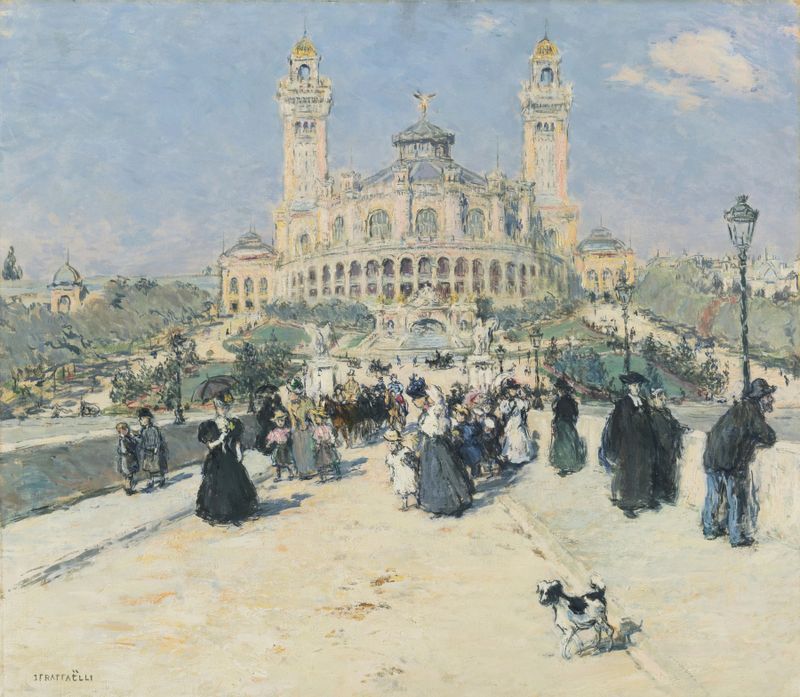
Le Trocadéro
Jean François Raffaëlli

Les Champs-Élysées
Jean François Raffaëlli

Le boulevard des Italiens
Jean François Raffaëlli

The Quai Malaquais, Paris
Jean François Raffaëlli

Place de la Trinité, Paris
Jean François Raffaëlli





