Cantine de la Mere Pichard — History & Facts
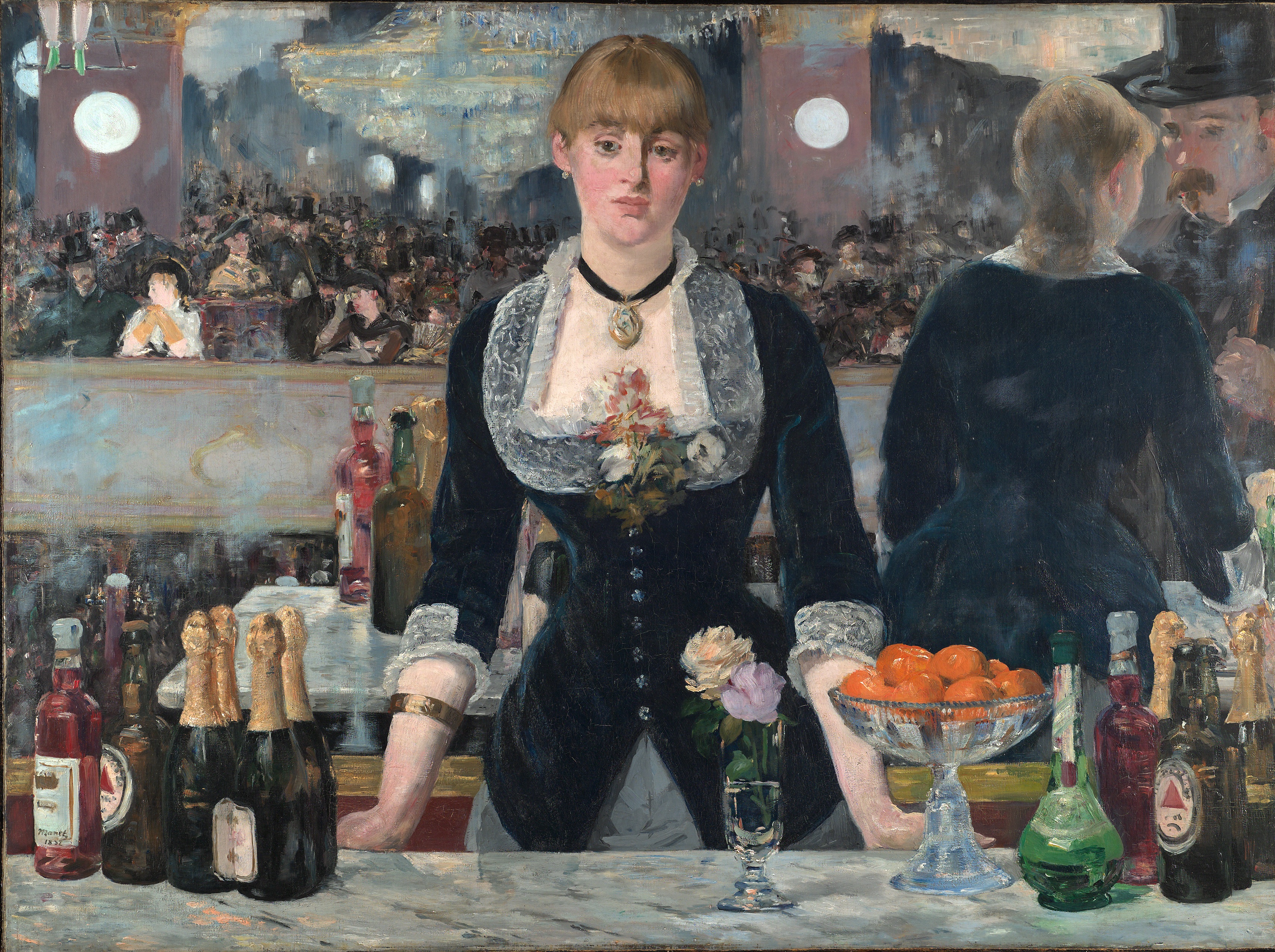
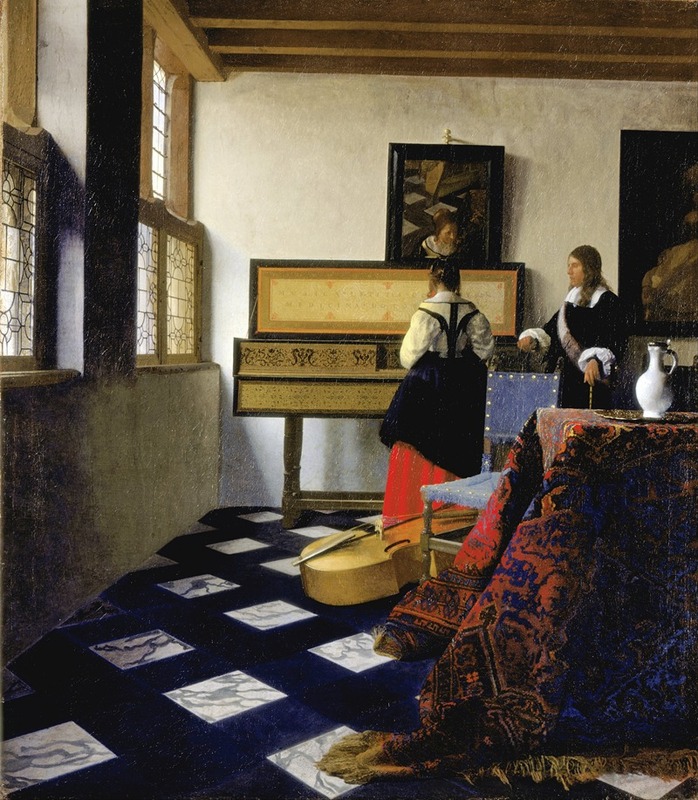
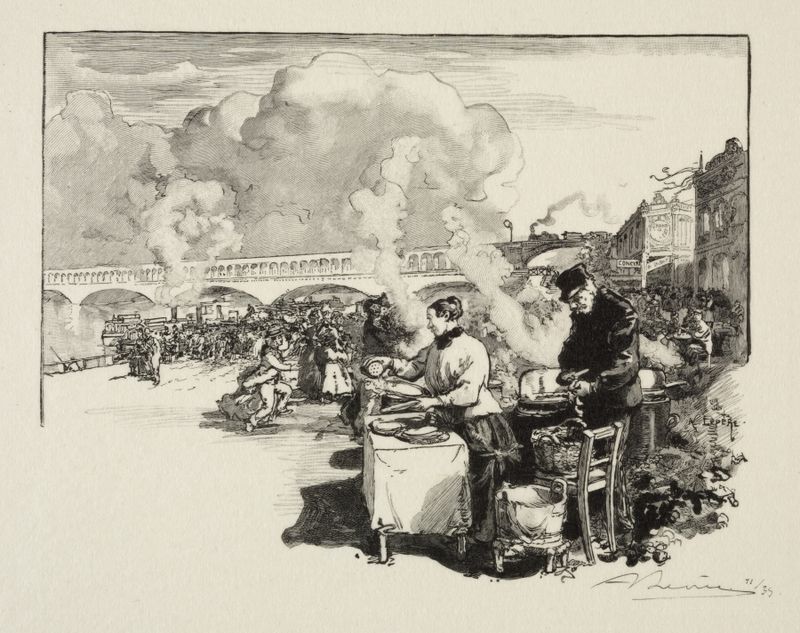
This thought echoes in the heart as we gaze upon the vibrant hues of a bustling eatery from another time. Amidst the clatter of dishes and murmurs of conversation, the scene unfolds—a dance of hope and yearning captured in a single moment. Look to the left; the warm glow of sunlight spills through the windows, illuminating the faces of patrons with soft, golden light. The artist employs a harmonious palette of earth tones and rich blues, contrasting the lively atmosphere with a sense of quiet reflection.
Notice the intricate brushwork that defines the textures of the tablecloth and the subtle variations in the subjects' expressions, inviting the viewer to linger in their stories. Beneath the surface, a narrative emerges from the everyday. The juxtaposition of the bustling activity against the isolated figures at their tables evokes a poignant tension—a longing for connection amidst the chaos. Each seated person, lost in their own thoughts, symbolizes the universal search for solace, reminding us that hope often resides in such crowded moments of solitude. In 1888, when this piece was completed, Lepère was deeply immersed in the printmaking and impressionist movements that were reshaping the art world.
Living in Paris, he found inspiration in the vibrant life around him, as well as in his struggles to establish his career. This painting reflects a time of artistic exploration and societal change, capturing the delicate balance between joy and melancholy that defines the human experience.
More Artworks by Auguste Louis Lepère
Browse all →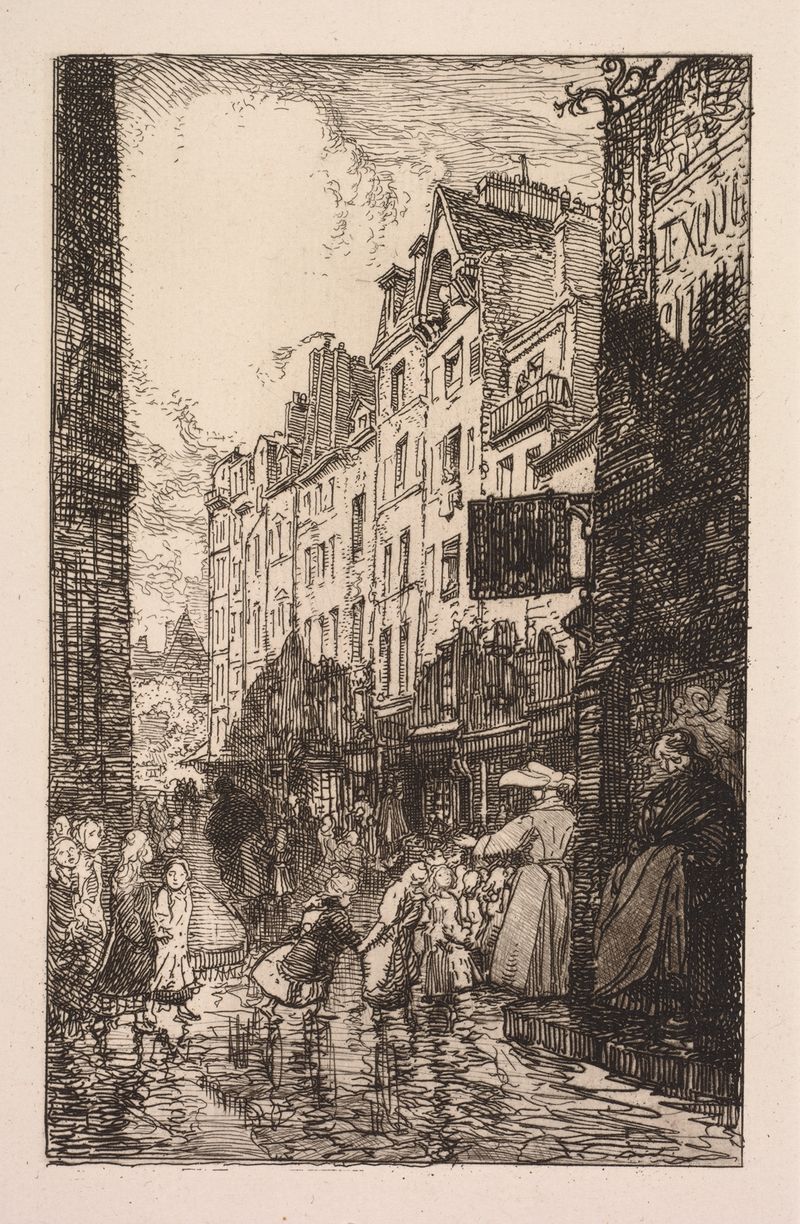
La Rue des Prêtres Saint-Séverin
Auguste Louis Lepère
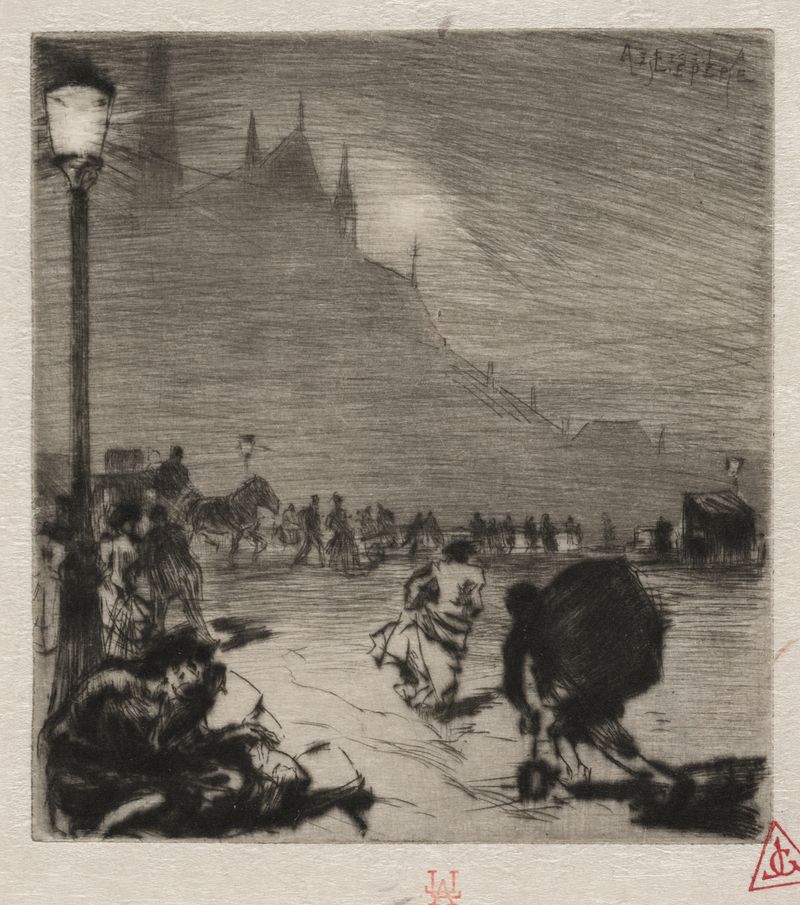
Au Coin du Pont-aux-Doubles
Auguste Louis Lepère
Debarcadère des bateaux-omnibus
Auguste Louis Lepère

La Seine, au quai de la Rapée
Auguste Louis Lepère
L’Ecluse du Canal St. Martin
Auguste Louis Lepère

Le Boulevard Montmartre, le Soir
Auguste Louis Lepère

Une Chasse au Mont Gérard
Auguste Louis Lepère
Les Charbonniere
Auguste Louis Lepère
Notre Dame vue du Marché aux pommes
Auguste Louis Lepère

Le Palais des Arts Liberaux, Intèrieur
Auguste Louis Lepère