Capricci of ruins with figures: An Allegory of Spring — History & Facts
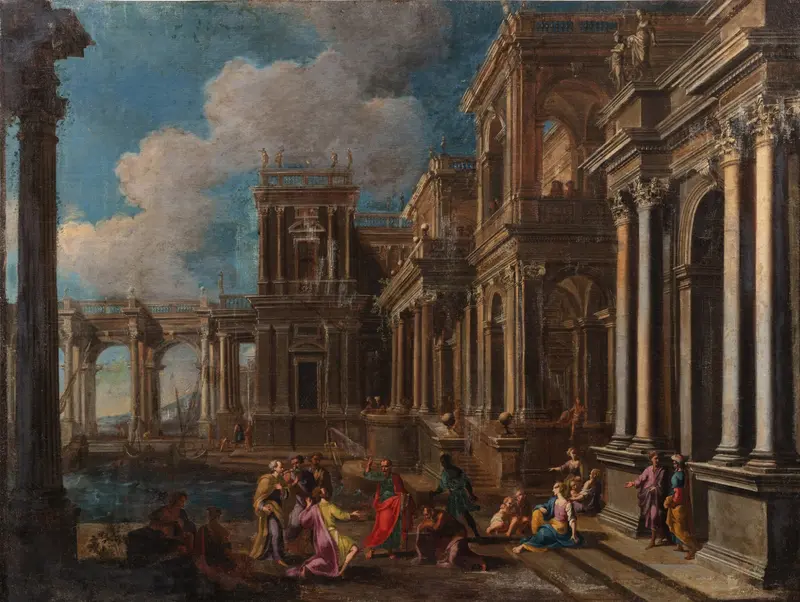
What draws the eye first in Capricci of ruins with figures: An Allegory of Spring is the theatrical stage of crumbling columns and lush overgrowth, where myth and nature entwine. The painter, Alberto Carlieri, sets his figures in the embrace of ancient ruins, their gestures animated as if caught mid-festival. Light pours through the open arches, illuminating a gathering of women and cherubic children who seem to celebrate the arrival of spring itself—one child sits among flowers, another rides a goat, while others raise their arms in dance or toss petals.
The palette is bright and fresh, with sky blues and verdant greens lending the scene a sense of renewal, while the ruins themselves, draped in vines, remind us of time’s passage and the eternal return of the seasons. This kind of capriccio—an imaginative landscape blending real and invented architecture—flourished in seventeenth-century Italy, where artists like Carlieri conjured visions of antiquity as settings for allegory and delight. Such paintings were prized by collectors who longed for the grandeur of Rome and the pleasures of myth, often adorning the homes of the cultured elite. The Dorotheum’s record places this work in the 17th century, a time when the ruins of the past became a playground for the imagination and a symbol of nature’s triumph over stone.
The painting invites us to linger, to follow the play of light and gesture, and to wonder what stories these ruins have witnessed—and what joys each new spring might bring.