
Capriccio of a Port Scene — History & Facts
In a moment suspended between reality and imagination, the canvas whispers stories that often elude our sensory grasp. Here, we find ourselves on the cusp of a bustling port, where the shimmering waters beckon and the air dances with the call of distant horizons. Look to the center of the painting, where vibrant boats sway gently on the waves, their sails billowing with the promise of adventure. The harmonious palette of azure, ochre, and verdant greens draws your eye, inviting exploration of the contrasting textures — the smooth glassy surface of the water and the ruggedness of the dock.
Above, the sky shifts from golden sunlight to hues of lavender, hinting at the fleeting nature of time as day gives way to dusk. Yet beneath the surface, a narrative unfolds. The juxtaposition of the busy port against the serene backdrop of rolling hills suggests a tension between human ambition and nature’s enduring presence. Notice the figures engaged in their tasks, their gestures revealing a deep-seated hope entwined with the weariness of labor.
The reflection of the boats in the water not only mirrors their physical forms but also symbolizes the duality of aspiration and reality, reminding us of the dreams that fuel our lives even amidst toil. Giuseppe Bernardino Bison created this work during the late 18th century when he was established in Italy, thriving amidst the neoclassical revival. His keen observations of the world around him were influenced by the artistic movements of his time, which sought to balance dramatic narrative with serene beauty. Amidst political upheavals and the shifting tides of artistic expression, Bison’s intimate portrayal of a port scene serves as both a personal reflection and a broader commentary on the human condition.
More Artworks by Giuseppe Bernardino Bison
Browse all →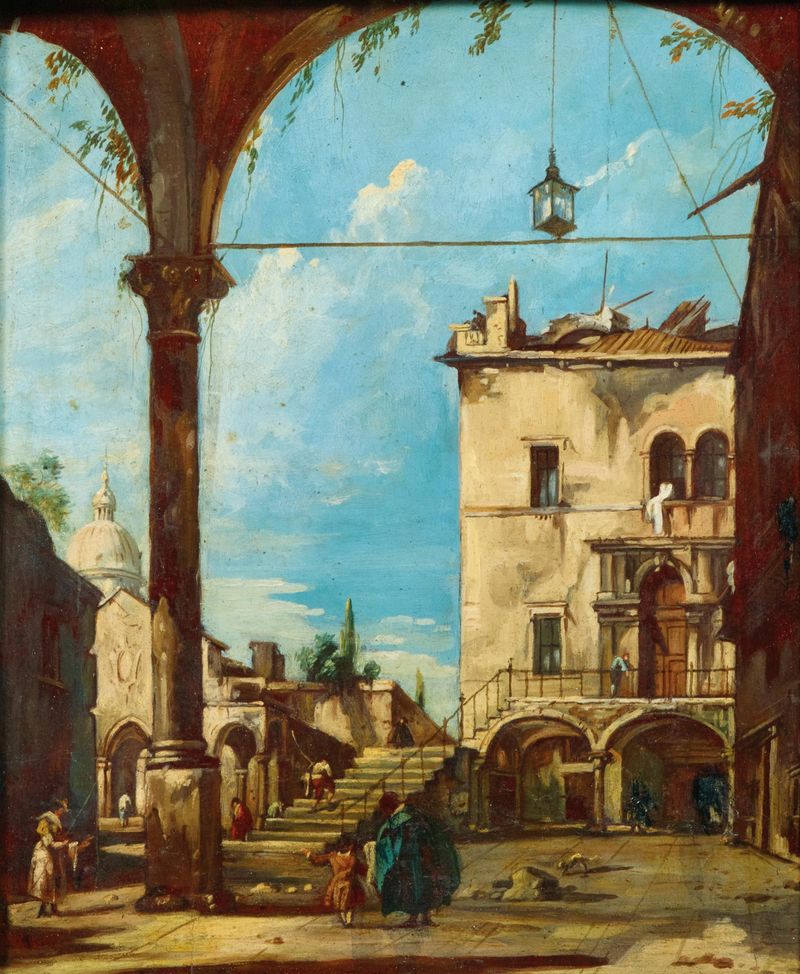
An Architectural Capriccio with Figures
Giuseppe Bernardino Bison
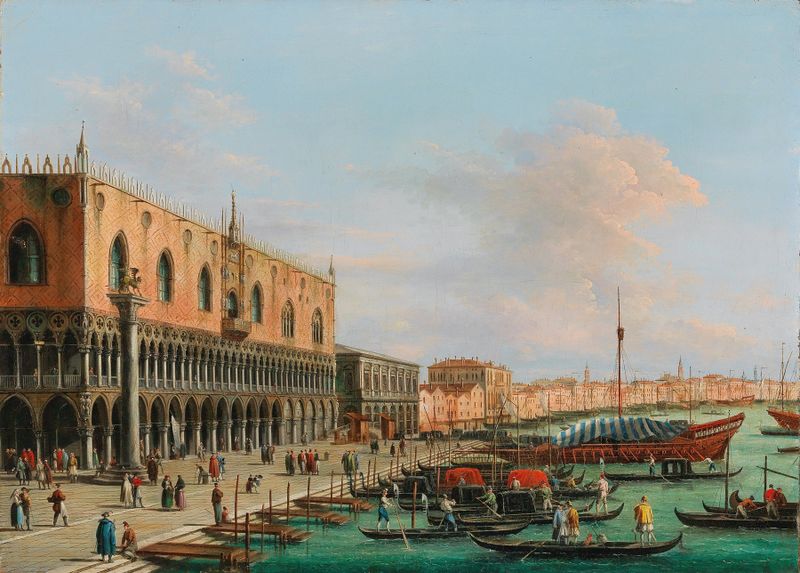
The Palazzo Ducale and the Riva degli Schiavoni, Venice
Giuseppe Bernardino Bison
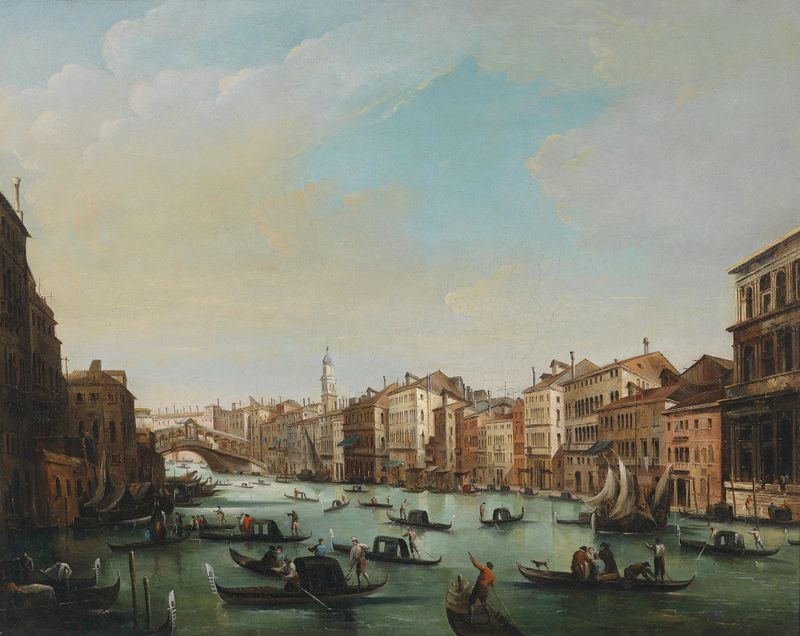
Venedig Canal Grande mit Ponte Rialto
Giuseppe Bernardino Bison
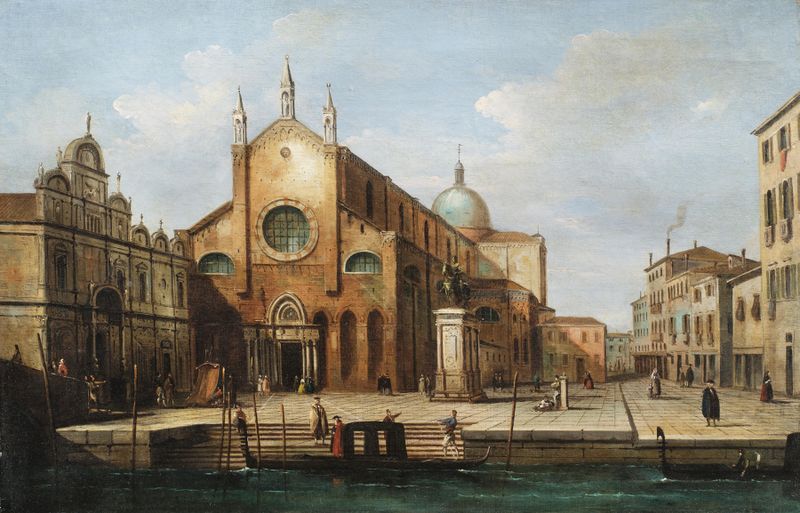
Venice, View of Campo Santi Giovanni e Paolo and the Scuola Grande di San Marco
Giuseppe Bernardino Bison
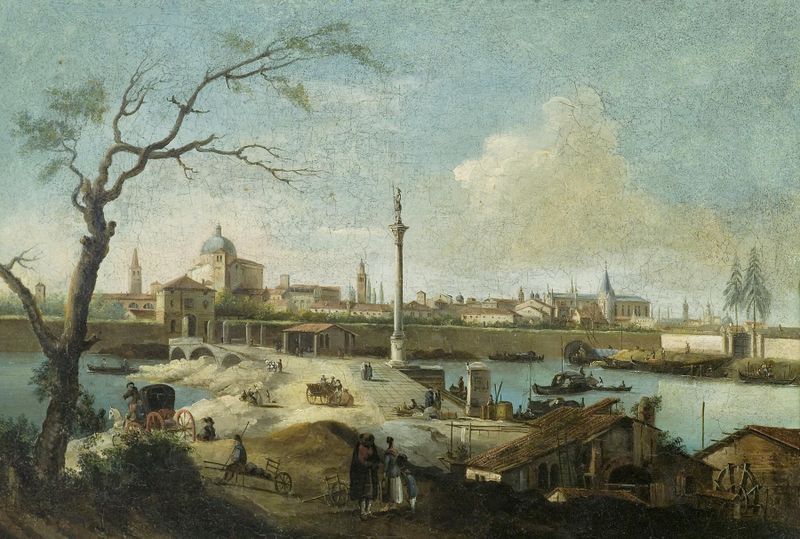
Capriccio mit der Ansicht von Padua
Giuseppe Bernardino Bison
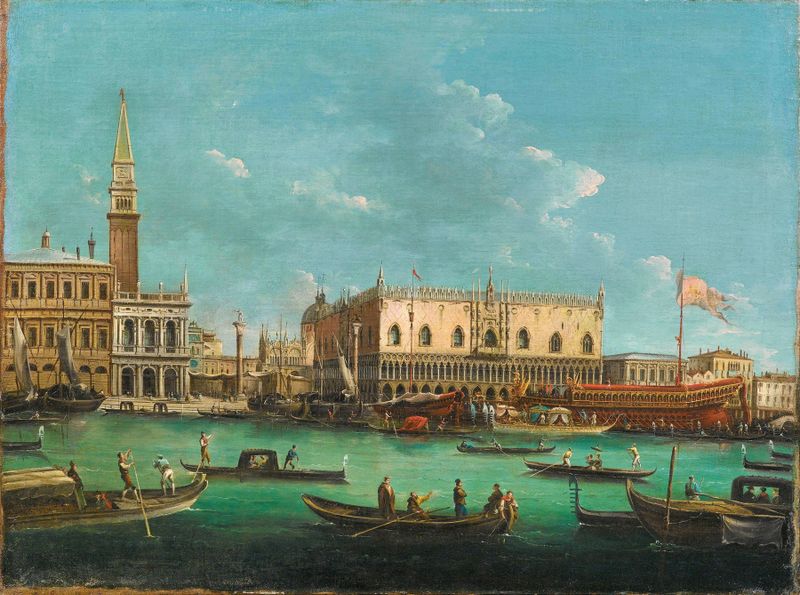
The Bucintoro at the Molo, Venice, on Ascension Day
Giuseppe Bernardino Bison
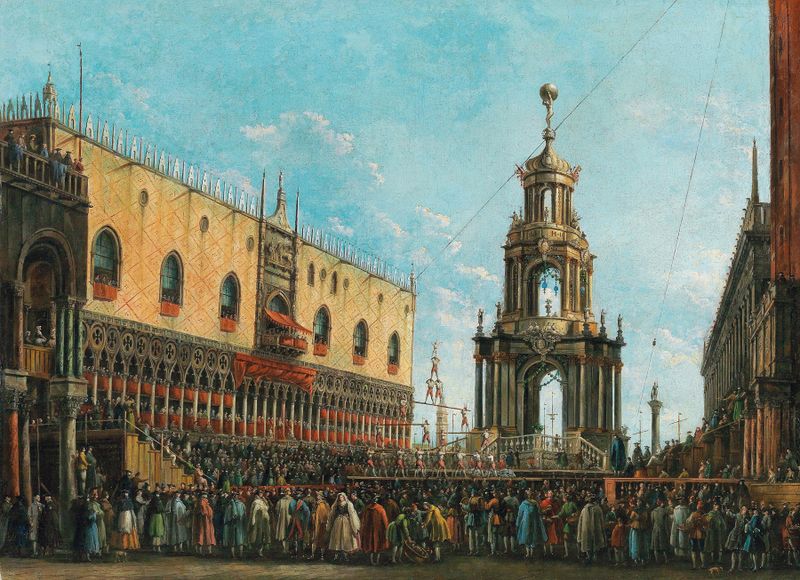
The ‘Giovedi Grasso’ Festival before the Ducal Palace in Venice
Giuseppe Bernardino Bison
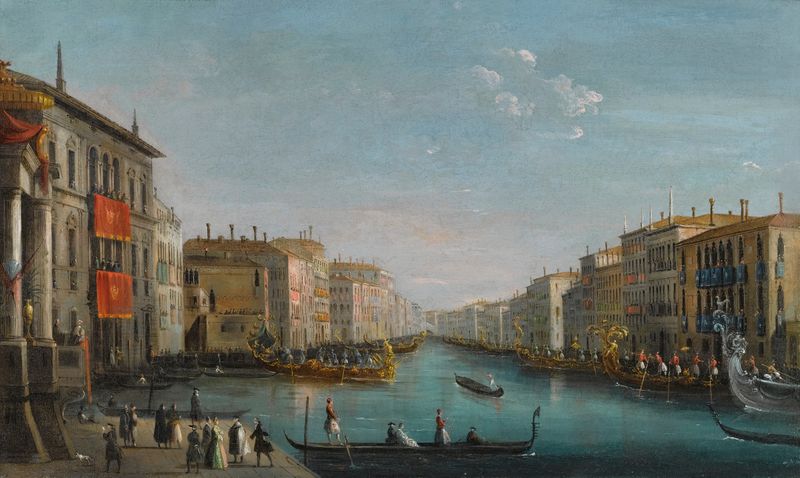
Venice, A View Of The Grand Canal From The Palazzo Balbi Looking Toward The Rialto Bridge With A Regata
Giuseppe Bernardino Bison
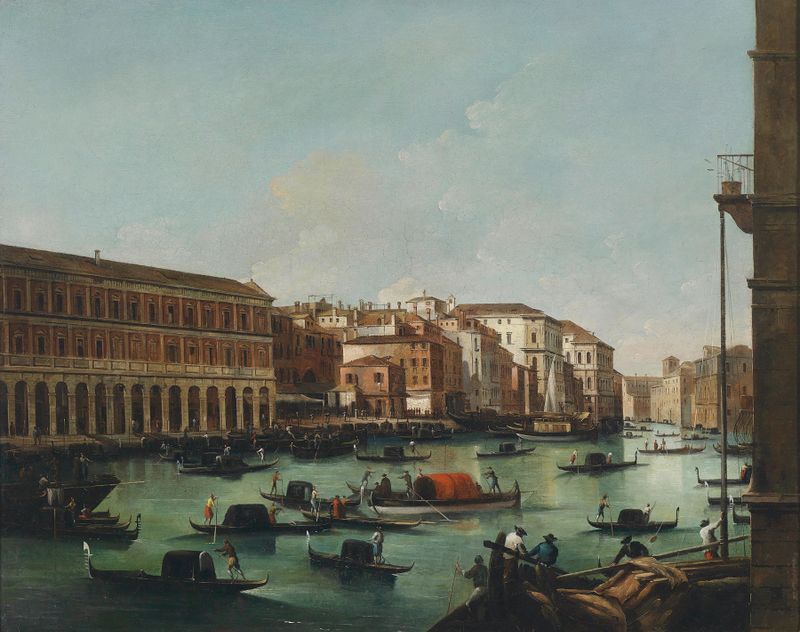
Venedig Canal Grande mit Fabbriche Nuove
Giuseppe Bernardino Bison
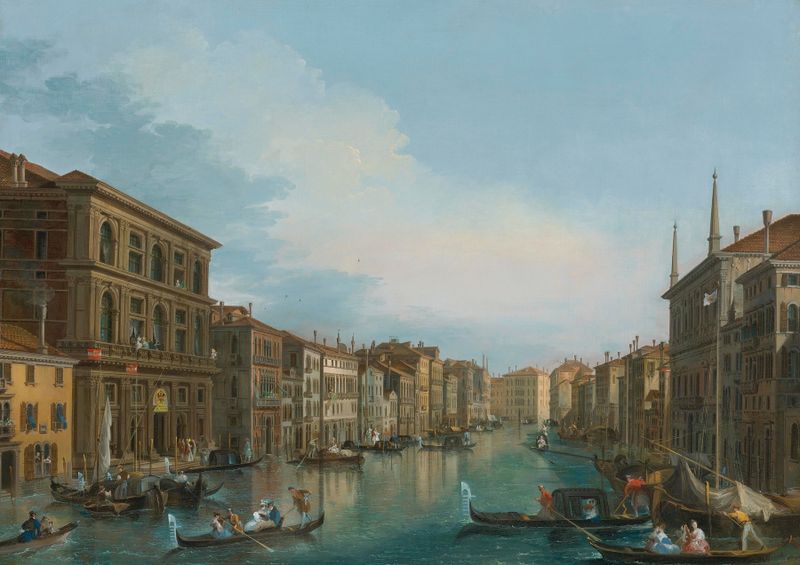
View Of The Grand Canal From The Palazzo Grimani
Giuseppe Bernardino Bison





