Capriccio with the vision of St. Augustine in a ruined arcade — History & Facts
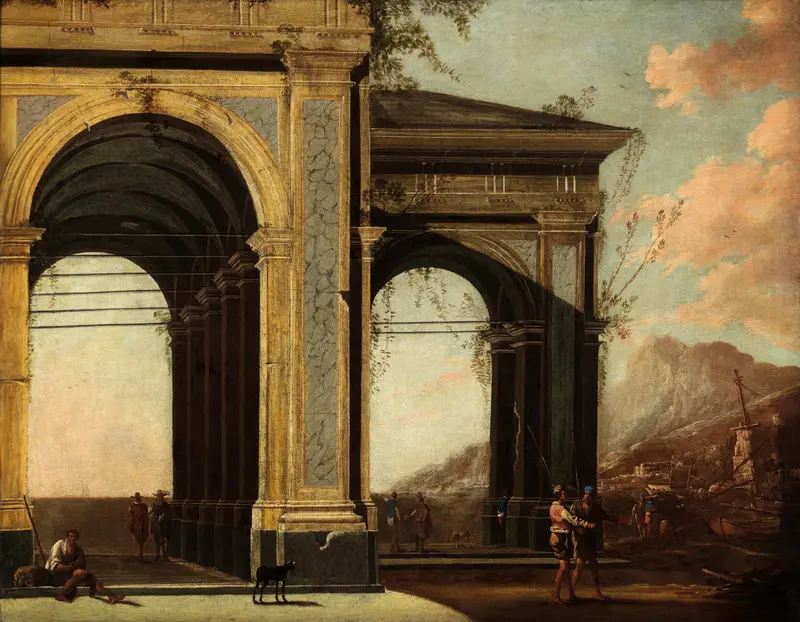
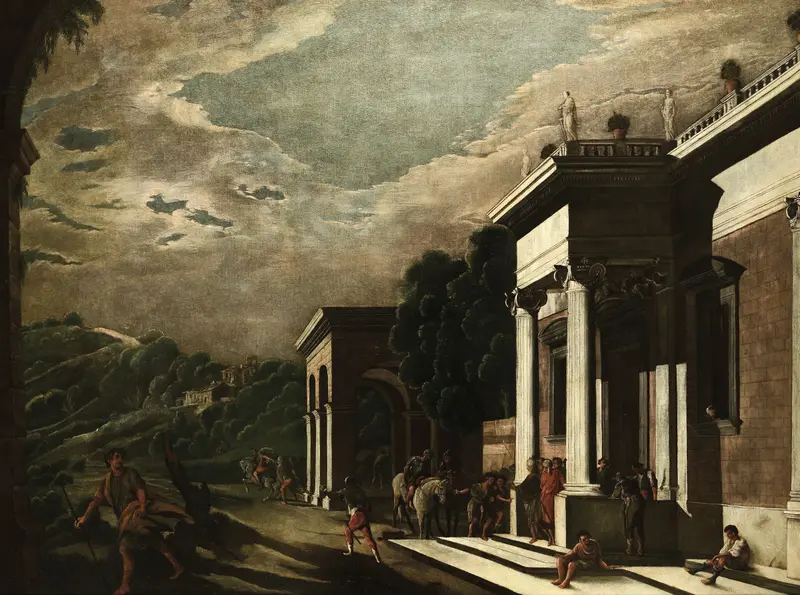
Light pours through the shattered vault of an ancient arcade, drawing the eye upward before pulling it back down to a scene of quiet revelation unfolding beneath the ruined grandeur. At the heart of the composition, a bishop in golden robes bends toward a cherubic child who traces a circle in the earth with a stick—an enigmatic gesture that hints at mysteries beyond the visible. The ruined columns, lush with creeping foliage and crowned with sculpted figures, frame the drama and suggest a world where the sacred and the classical mingle.
Two angels, one contemplative and one vigilant, anchor the scene at either side, their presence both guardian and witness. The palette—warm ochres and cool blue shadows—creates a mood of stillness, as if time itself has paused to honor the vision. Painted between 1669 and 1691, Capriccio with the vision of St. Augustine in a ruined arcade by Ascanio Luciani belongs to a period when artists delighted in conjuring imaginary ruins and sacred apparitions within them.
Such capriccios, blending architectural fantasy with religious narrative, were prized by collectors eager for both intellectual play and spiritual reflection. In the late seventeenth century, the fascination with antiquity and the ruins of Rome shaped the ambitions of painters and patrons alike, offering a stage where saints and angels could move among the vestiges of empires past. History has kept few traces of Luciani’s career, but works like this—now in the collection of Piraneseum—invite us to linger, searching for meaning in the interplay of stone, light, and vision.