
Casas Colgantes, Cuenca — History & Facts
When did color learn to lie? Beneath its vibrant façade, it holds secrets that stir the soul and awaken curiosity. Look to the left where the ochre and burnt sienna of the hanging houses seem to cling precariously to the cliffside, their geometric forms contrasting against the ethereal blues of the sky. Notice how the brushstrokes vary in intensity; the thick impasto brings texture to the buildings, while the softer washes evoke the fleeting essence of the clouds drifting above. The interplay of light and shadow creates a dynamic rhythm, inviting the viewer to explore the depths of this seemingly idyllic scene. Yet, as you immerse yourself in this picturesque landscape, a tension begins to form.
The vivid colors exude warmth and vitality, yet the precariousness of the structure hints at an underlying fragility, reflecting the delicate balance between human ambition and nature's power. The juxtaposition of the vibrant homes and the looming cliffs suggests a struggle, a contrast between the stability we seek and the instability inherent in life itself. In the late 19th century, during his time in Spain, Rusiñol captured this arresting scene. Living amidst a vibrant artistic community, he was inspired by the modernist movements around him, blending impressionist techniques with a distinct emotional depth.
Such a work not only reflects the picturesque beauty of Cuenca but also speaks to the artist's exploration of color as a vehicle for deeper truths, marking a significant moment in his evolving style.
More Artworks by Santiago Rusiñol
Browse all →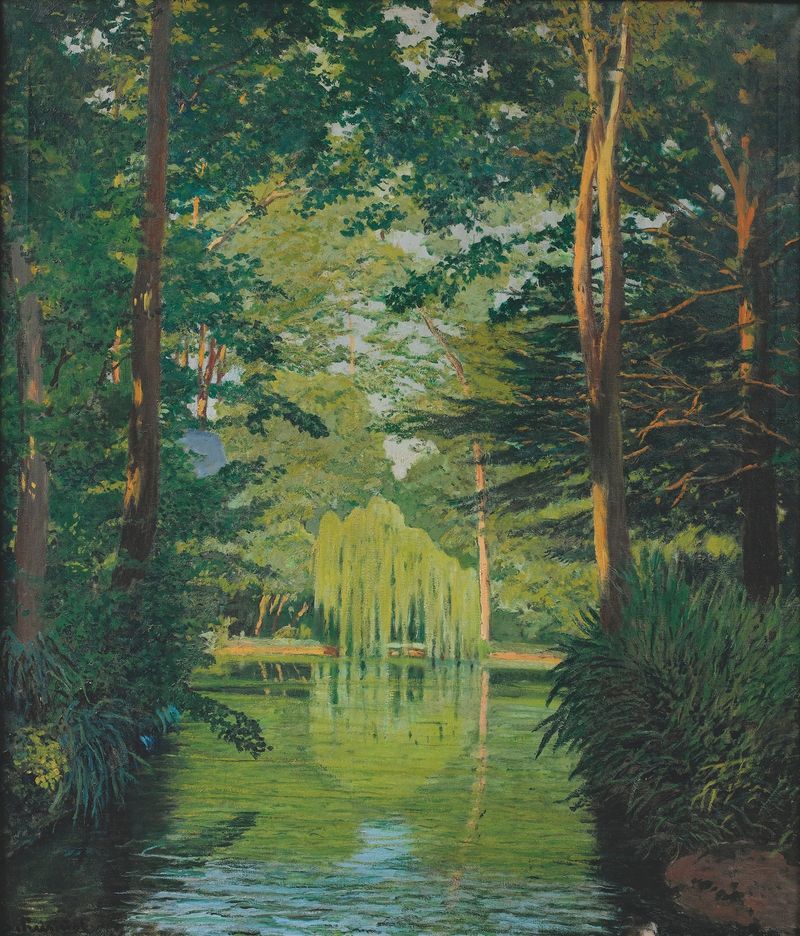
Parc Badés, Arbúcies
Santiago Rusiñol
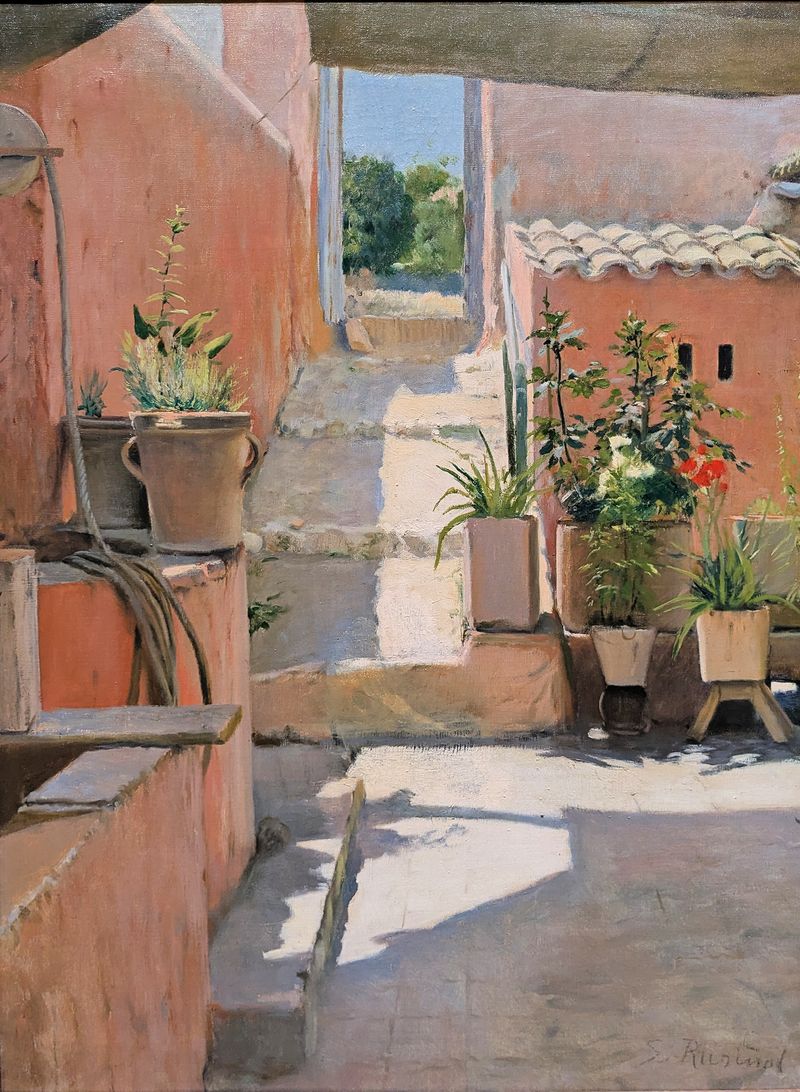
Patio in Sitges
Santiago Rusiñol
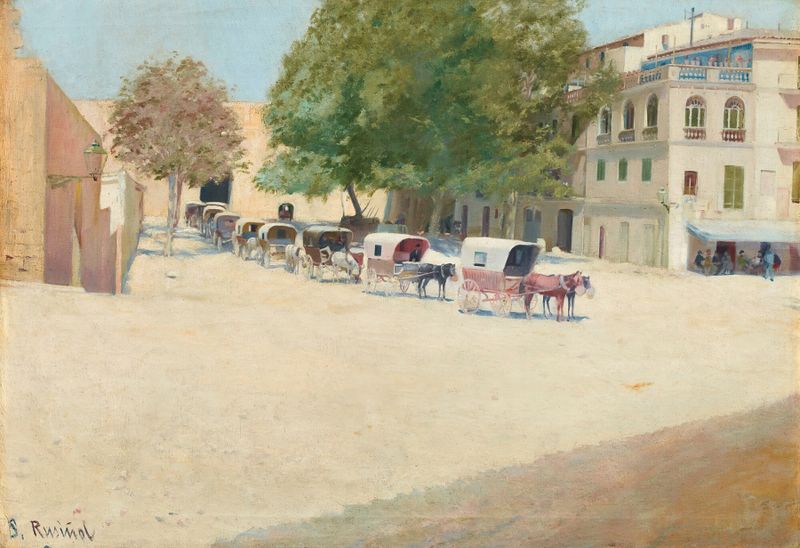
Paseo De Mallorca
Santiago Rusiñol
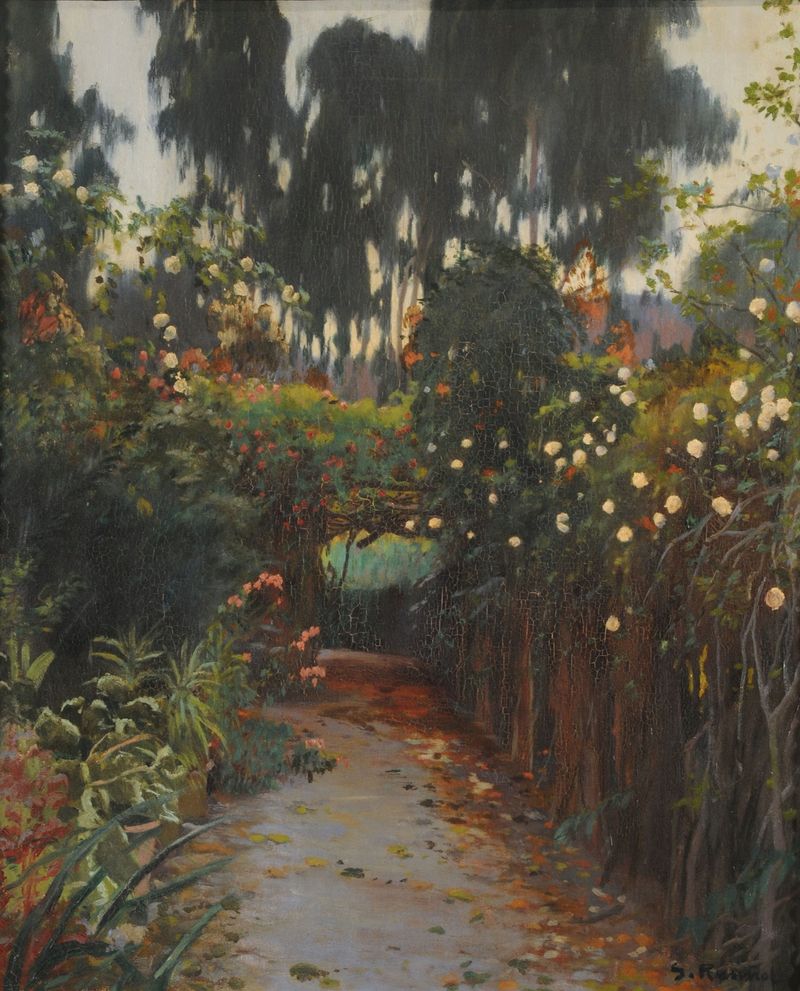
Camino de rosas
Santiago Rusiñol

Lavaderos De La Barceloneta
Santiago Rusiñol
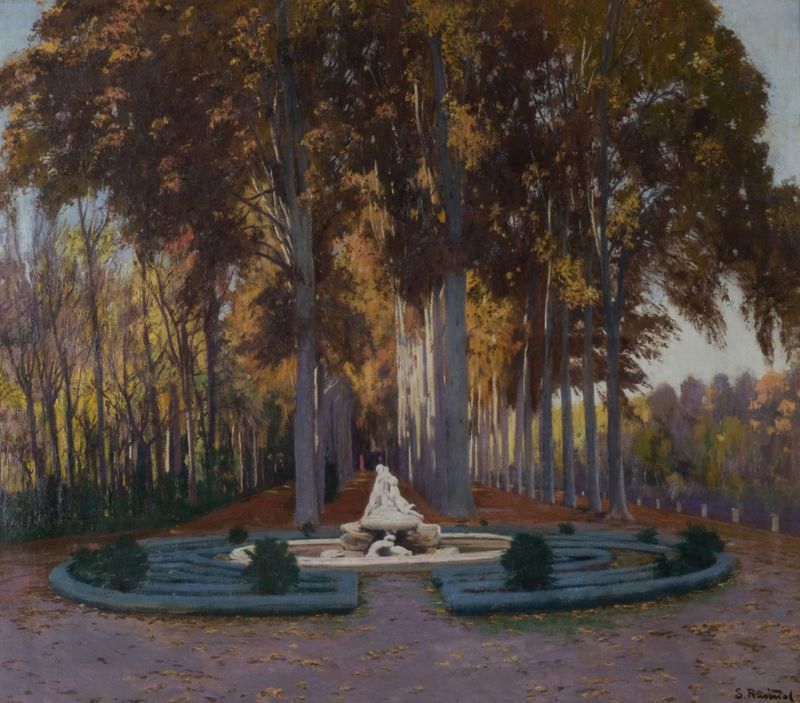
Otoñal
Santiago Rusiñol

Cala Grisa
Santiago Rusiñol

Gardens of the Generalife
Santiago Rusiñol

Jardín De Sa Coma. Valdemosa
Santiago Rusiñol

La Fuente De Los Cipreses
Santiago Rusiñol
More Architecture Art
Browse all →
The statue of Liberty
Frédéric Auguste Bartholdi

View of Houses in Delft, Known as ‘The Little Street’
Johannes Vermeer

View of Houses in Delft, Known as ‘The Little Street’
Johannes Vermeer

The Cathedral in Rouen. The portal, Grey Weather
Claude Monet

The yellow house
Vincent van Gogh

The Church in Auvers-sur-Oise, View from the Chevet
Vincent van Gogh