Castillo De Chapultepec — History & Facts
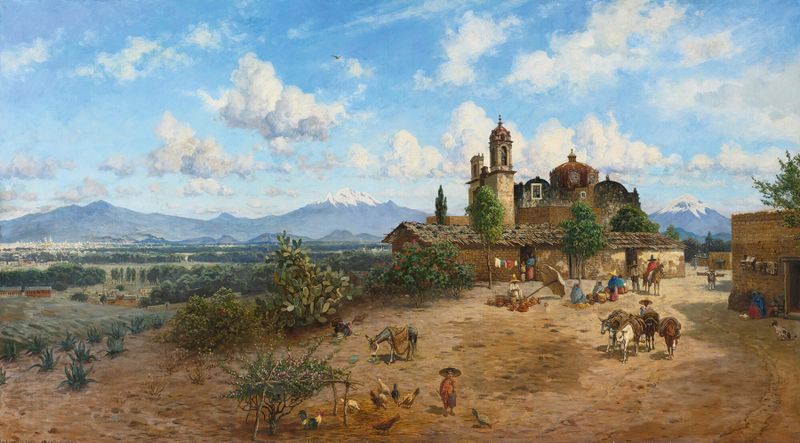
Could a single brushstroke hold eternity? In Castillo De Chapultepec, the fleeting essence of time and memory is captured with a delicate touch, whispering the fragility of existence. Look at the sweeping landscape that unfolds before you. The shimmering greens of the trees are illuminated by dappled sunlight, leading your gaze toward the majestic castle perched atop the hill. Notice how the artist employs a soft palette, blending warm earth tones with cool blues to evoke a sense of tranquility.
The gentle strokes create a harmonious interplay between the castle and its natural surroundings, suggesting a moment suspended between permanence and transience. Yet, there’s an underlying tension within this idyllic scene. The castle, a symbol of strength and resilience, appears almost vulnerable against the vastness of the sky. The juxtaposition of the sturdy fortress and the ephemeral quality of the clouds hints at the impermanence of human constructs.
These delicate details embody a poignant reminder that beauty, like life itself, is fleeting and fragile, urging us to cherish moments that can easily slip away. Created in 1898, Löhr painted this work during a period of great artistic exploration and change. The late 19th century saw an increased interest in capturing the essence of nature and architecture, as artists moved towards impressionistic techniques. Living in Mexico at the time, Löhr was influenced by both the rich cultural heritage of the region and the broader shifts happening in the world of art, as traditional methods began to give way to more modern interpretations of reality.