Pico De Orizaba (Citlaltépetl) — History & Facts
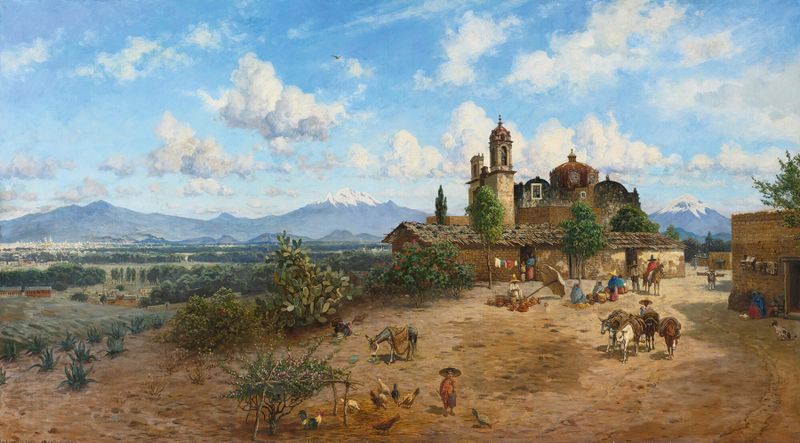
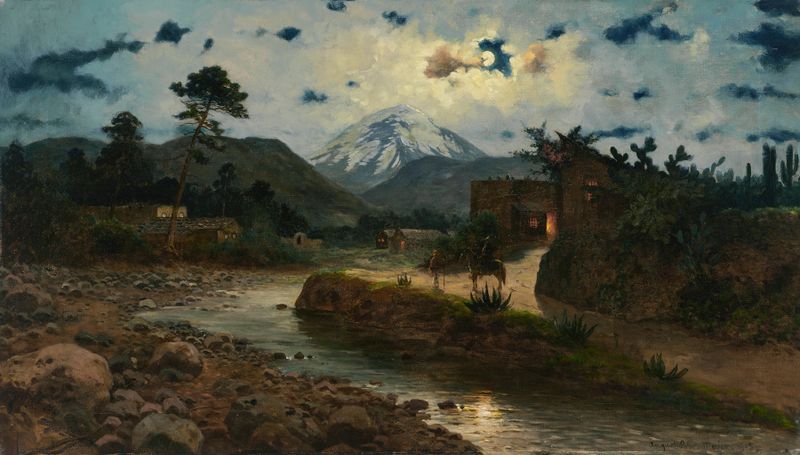
In Pico De Orizaba (Citlaltépetl), a haunting balance emerges between serene majesty and the weight of hidden struggle. The snow-capped peak stands resolute, a shimmering beacon that calls to the viewer's deepest sense of awe while hinting at the tensions of the human experience beneath its beauty. Look to the left where the mountain's shadow cradles the foreground, inviting a lush landscape that flourishes with an array of greens. As you move your gaze upwards, the warm sunlight caresses the icy summit, creating a breathtaking contrast against the cool blues and whites of the snow.
The artist's brushstrokes reveal a masterful play of light and texture, capturing not just the physical form of the mountain, but the emotional resonance it embodies — a delicate equilibrium between nature's grandeur and the fragility of existence. Hidden beneath the surface lies a complex relationship with the mountain itself, reflecting the paradox of stability and turmoil. The vibrant colors of the valley suggest life and hope, yet the looming presence of the peak serves as a reminder of the struggles faced by those who seek to conquer it. This work evokes the tension between aspiration and reality, as if inviting viewers to contemplate the endurance of beauty amid the challenges of life. August Löhr painted this piece in 1918 while seeking refuge from the tumult of World War I.
Living in Mexico, he was deeply influenced by the landscapes that surrounded him, as well as the cultural and artistic movements of the time. This painting, embodying both a physical and emotional landscape, reflects not only his personal experiences but also a broader commentary on the resilience of beauty amid chaos.