Night in Mexico in Front of Popocatepetl — History & Facts
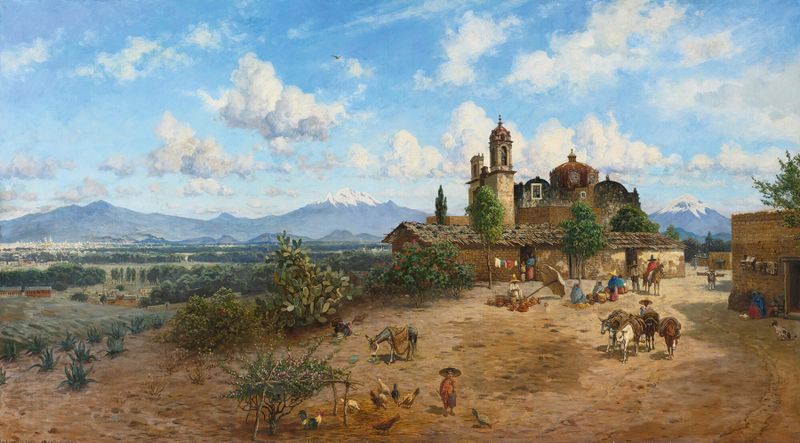
Who listens when art speaks of silence? The stillness captured in this painting resonates with a timeless echo, inviting us to reflect on the fleeting moments that define experience. Look to the center of the canvas, where the majestic Popocatepetl rises against a deepening twilight, its silhouette a formidable guardian over the landscape. The artist employs rich, dark hues to create a sense of night enveloping the scene, while soft touches of luminescence hint at a distant light source, perhaps the last rays of sunset flickering just before darkness takes hold. Notice how the foreground merges seamlessly with the sky, blurring the lines between earth and ether, a technique that invites contemplation on the passage of time. Beyond its captivating visuals, the painting captures an emotional tension between the eternal and the ephemeral.
The towering volcano symbolizes permanence, a steadfast presence amid the transitory nature of life. In contrast, the night sky, filled with an array of blues and purples, evokes a sense of fleeting beauty, a reminder of the ephemeral moments that are both haunting and profound. The gentle brushstrokes whisper stories of countless nights that have passed, leaving behind traces of memory and reflection. In 1905, August Löhr painted this piece while living in Mexico, a time when European artists were increasingly drawn to the vibrant landscapes and cultures of Latin America.
The region was undergoing significant transformation, as traditional ways of life began to collide with modern influences. This artwork reflects not only Löhr's personal journey but also the broader cultural exchange happening at the time, capturing a moment suspended between past and present, echoing the silent conversations that linger in the air.