Landscape with the Iztaccíhuatl in the Background — History & Facts
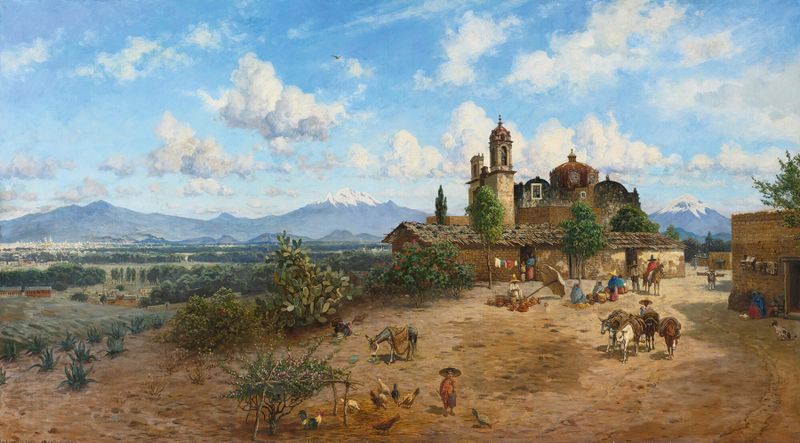
This notion mirrors the haunting beauty captured in this artwork, where the landscape serves as both a refuge and a reminder of mortality. Look to the horizon where the majestic Iztaccíhuatl rises, its snow-capped peaks piercing the azure sky. The painter's brush strokes create a delicate interplay of light and shadow, while vibrant greens and golds envelop the foreground, inviting you to wander into this enchanting realm. Notice how the gentle contours of the hills lead your gaze toward the formidable mountain, establishing an unspoken dialogue between the serene landscape and the looming presence of the volcano. Yet beneath this idyllic facade lies a tension, a duality of life and death.
The lush valley, teeming with vitality, serves as a stark contrast to the dormant giant in the background, echoing the fragility of existence. Each element—the foliage, the mountain, even the shifting clouds—evokes a poignant reminder of the passage of time, where beauty coexists with the inevitability of decay. The radiant colors juxtaposed against the starkness of the mountain suggest a fleeting moment, capturing both the joy of life and the shadow of its end. August Löhr painted this piece in 1915 while residing in Mexico, a period marked by personal and societal upheaval.
The Mexican Revolution was reshaping the nation’s identity, and Löhr found inspiration in the rich landscapes and the cultural tapestry. This painting reflects not only a geographical portrayal but also a contemplation of life's transience amid the tumult of an evolving world.