El Valle De México — History & Facts
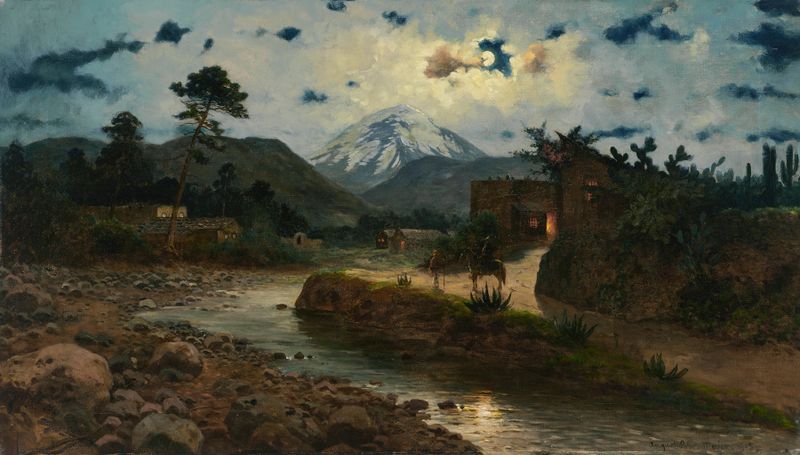
The vast expanse of the valley stretches out, echoing the whispers of those who once walked its land, filled with a lingering sense of longing that tugs at the heart. Focus on the horizon, where the silhouettes of mountains cradle the sky, their majesty tempered by the soft, muted colors of dawn. The interplay of light and shadow creates a tapestry of hues, with rich greens and earthy browns enveloping the valley, inviting one to delve deeper. Each brushstroke reveals Löhr’s meticulous attention to detail, emphasizing the vastness of the landscape while simultaneously drawing the viewer into its intimate embrace. Upon closer inspection, subtle contrasts emerge: the serenity of the lush valley juxtaposed with the imposing mountains that stand watch, embodying both solace and solitude.
This duality speaks to the human experience—yearning for connection while being faced with the immensity of life’s journey. The clouds, scattered yet purposeful, echo the scattered thoughts of the soul, drifting between dreams and reality, capturing a moment suspended in time. In 1903, August Löhr created this work during a period of increasing interest in landscape painting as an expression of national identity. Living in Mexico City, he found inspiration in the breathtaking landscapes that surrounded him, a vivid contrast to the urban life that thrummed outside.
At this time, the art world was experiencing a shift towards impressionism, and Löhr embraced this movement, allowing him to capture the essence of his environment with both precision and emotional depth.