
Castle and Watermill by a River — History & Facts
In the quietude of a landscape, a river reflects the world, revealing more than mere scenery; it uncovers the essence of existence itself. Look to the left where the sturdy silhouette of the castle towers over the watermill, its solid stone beckoning with promises of history and strength. The gentle curve of the river guides your gaze toward the horizon, where soft clouds blend with the brilliant blue sky. Notice how the interplay of light and shadow dances across the foliage, casting a serene energy that envelops the entire scene, inviting contemplation and introspection. Yet beneath this tranquil surface lies a tension between the enduring and the ephemeral.
The castle, a symbol of power and permanence, contrasts sharply with the watermill, an embodiment of nature’s fluidity and the passage of time. The vibrant greens of the trees juxtapose the muted earth tones of the structures, creating a dialogue between human craftsmanship and the untamed forces of nature. This delicate balance reflects the artist's deep understanding of life’s complexities, capturing both a sense of peace and the inevitability of change. Jacob van Ruisdael painted Castle and Watermill by a River around 1670, during a period when he was deeply engaged in exploring the Dutch landscape tradition.
Living in the Netherlands, a nation marked by its relationship with water, Ruisdael sought to express the beauty and challenges of his environment. This work exemplifies his mastery in blending natural and architectural elements, reflecting the broader artistic movements of his time while also revealing his unique perspective on the world.
More Artworks by Jacob van Ruisdael
Browse all →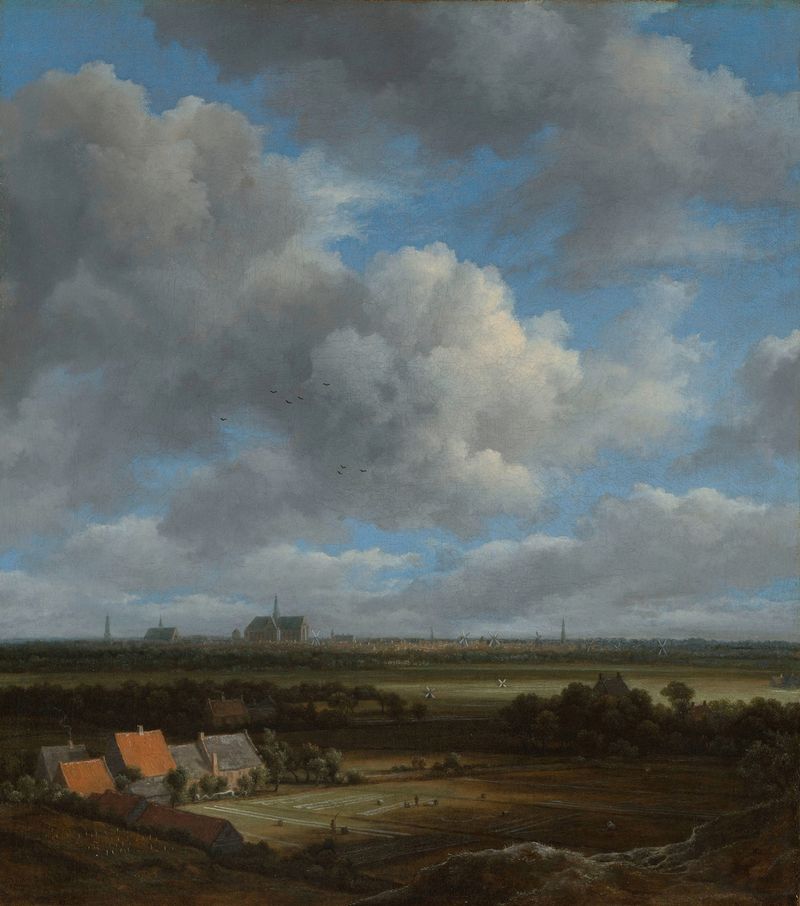
View of Haarlem from the Northwest, with the Bleaching Fields in the Foreground
Jacob van Ruisdael
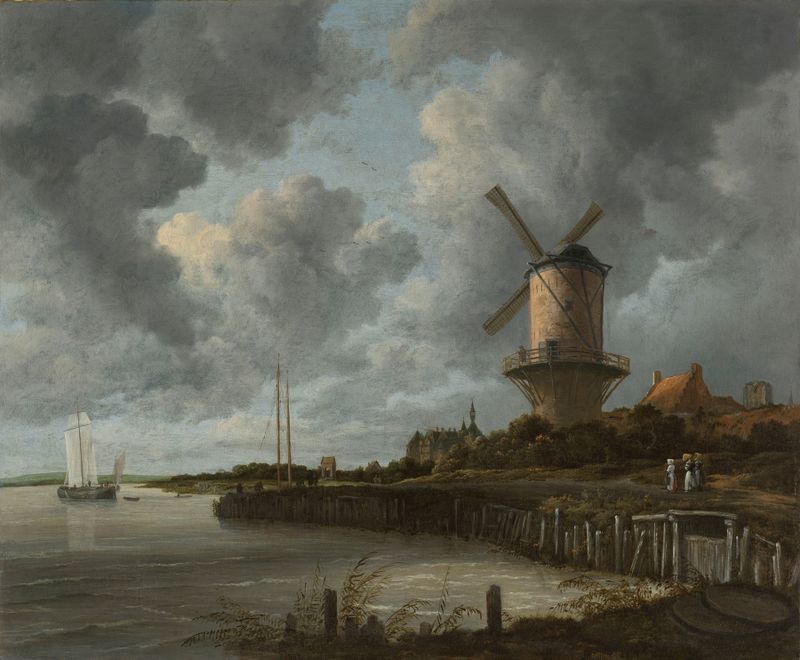
The Windmill at Wijk bij Duurstede
Jacob van Ruisdael
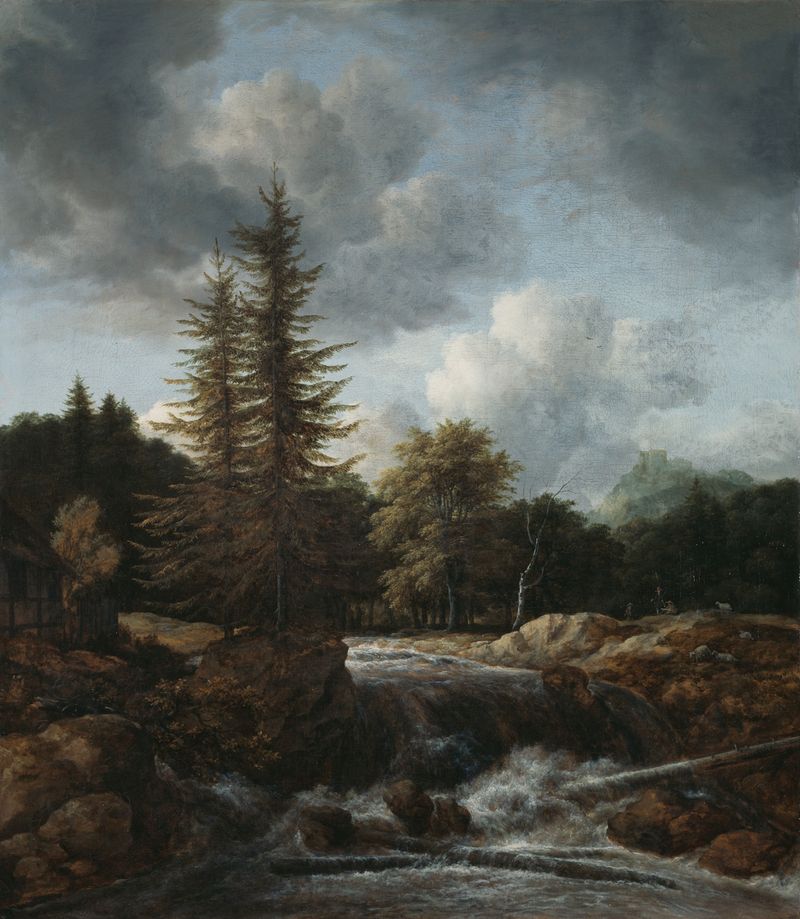
Landscape with Waterfall
Jacob van Ruisdael
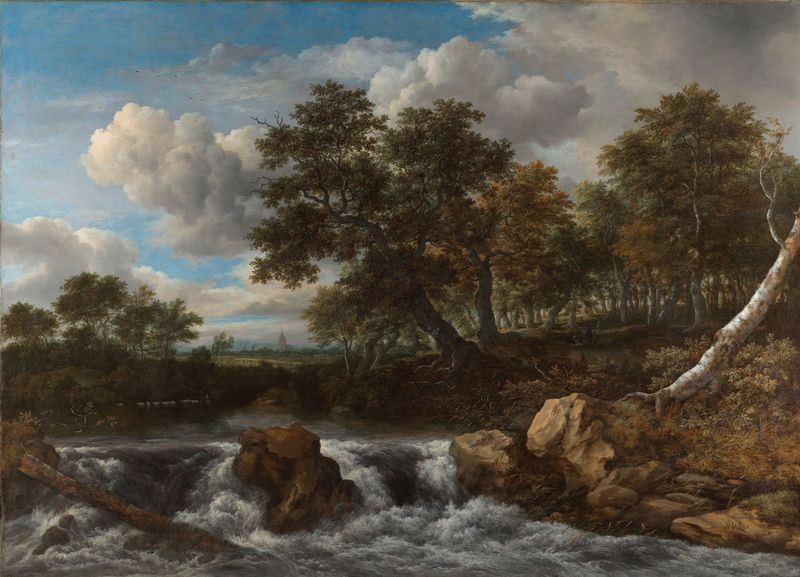
Landscape with Waterfall
Jacob van Ruisdael
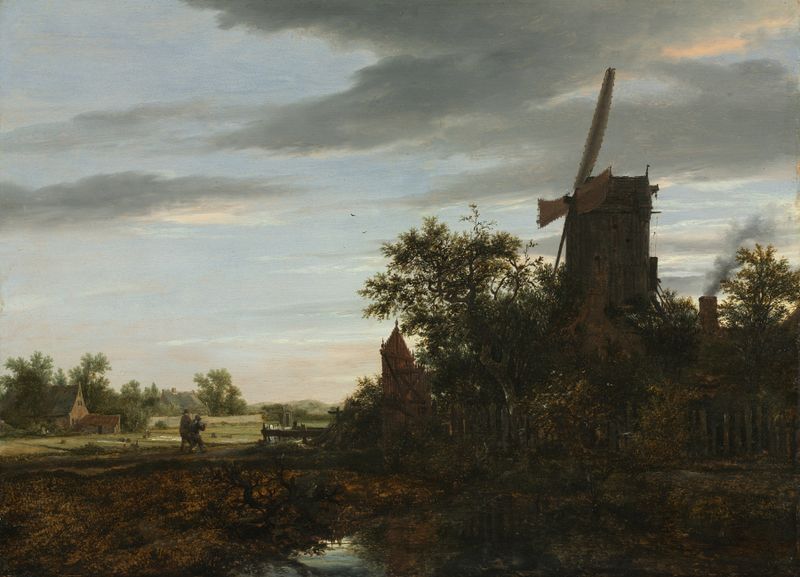
Landscape with a Windmill
Jacob van Ruisdael

Wooded hillside with a view of Bentheim Castle
Jacob van Ruisdael
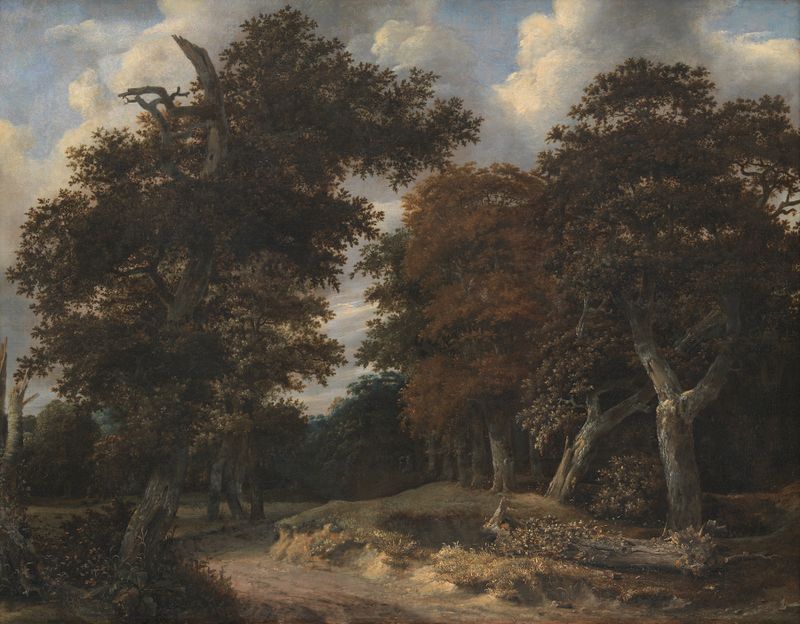
Road through an Oak Forest
Jacob van Ruisdael

Landscape with a Church
Jacob van Ruisdael

The Forest Stream
Jacob van Ruisdael

The Jewish Cemetery
Jacob van Ruisdael





