
Cats at the Play — History & Facts
A dozen feline faces peer out from the glow of the footlights, each one animated with its own distinct personality—wide-eyed astonishment, sly amusement, and the unmistakable thrill of being part of an audience. The scene is a riot of whiskers and fur, but every detail is purposeful: a cat at the left coolly wields a fan, while another sports spectacles, and yet another wears a purple bowtie, as if to remind us that this is no ordinary gathering. The deep red of the curtain frames the group and draws the eye to the center, where the largest cat presides, as if presuming the role of chaperone or matriarch.
The effect is both comic and oddly dignified, inviting the viewer to imagine the unseen drama unfolding onstage. Created in 1906 as a postcard for Raphael Tuck & Sons, Cats at the Play is a product of the Edwardian era’s fascination with anthropomorphic whimsy and the booming popularity of illustrated cards. Louis Wain, whose name is forever linked to the transformation of the domestic cat into a creature of wit and social commentary, found in such images a ready audience among collectors and children alike. Postcards like this were designed to amuse, to travel, to be treasured and pinned to mantels—a fleeting art form that captured the spirit of its time.
History has kept few traces of individual cards, but their survival offers a window onto a world where humor, imagination, and the everyday mingled freely. Look again, and you may find yourself among the audience, caught up in the play.
More Artworks by Louis Wain
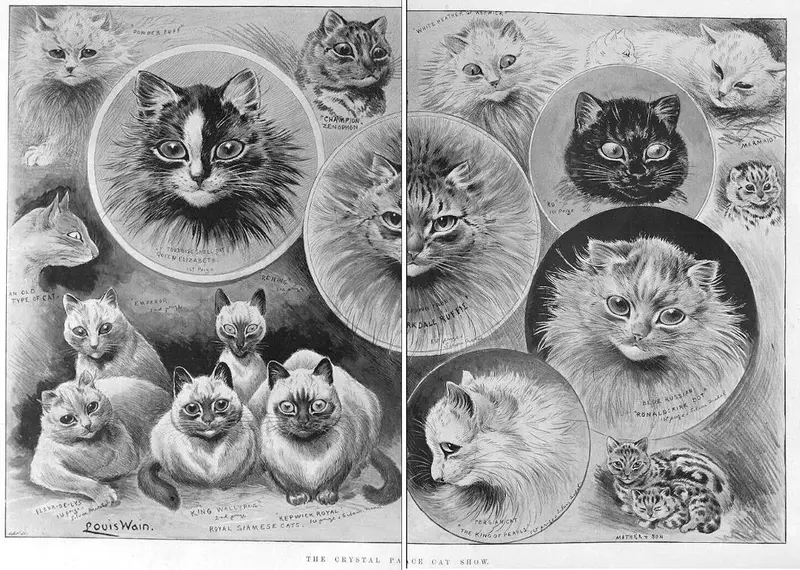
The Crystal Palace Cat Show
Louis Wain

Cats' Christmas
Louis Wain
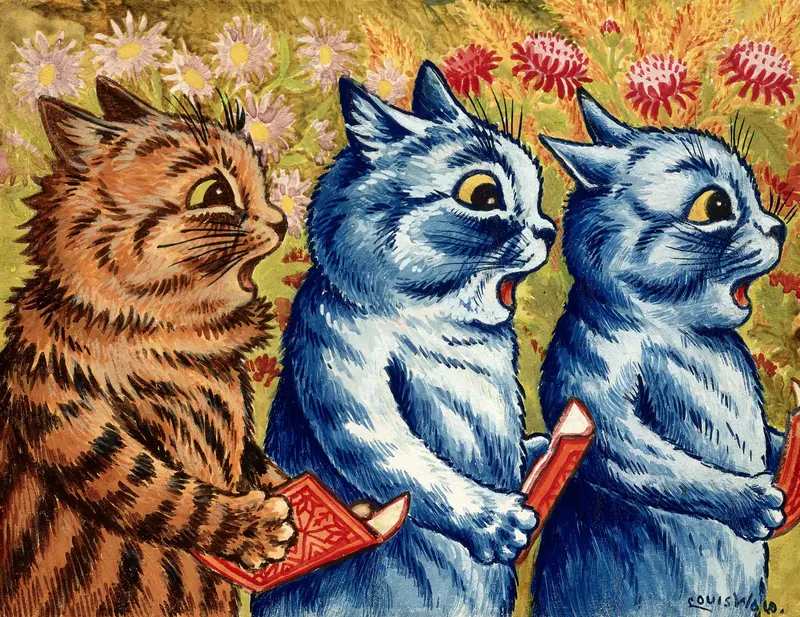
Three Cats Singing
Louis Wain
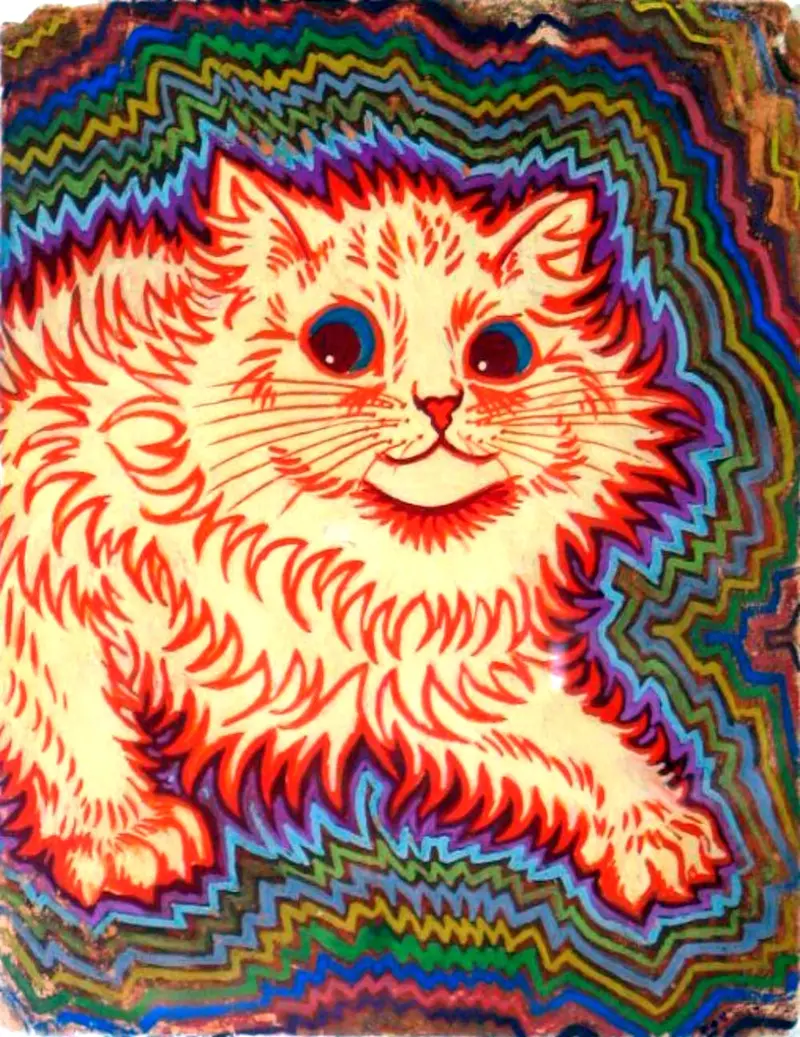
Psychedelic Cat
Louis Wain
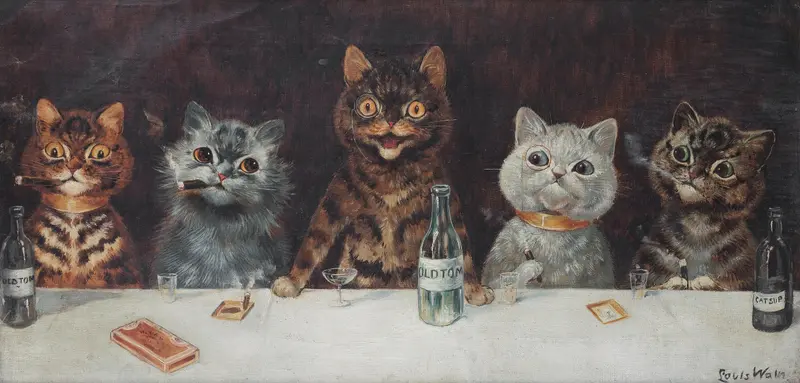
The Bachelor Party
Louis Wain
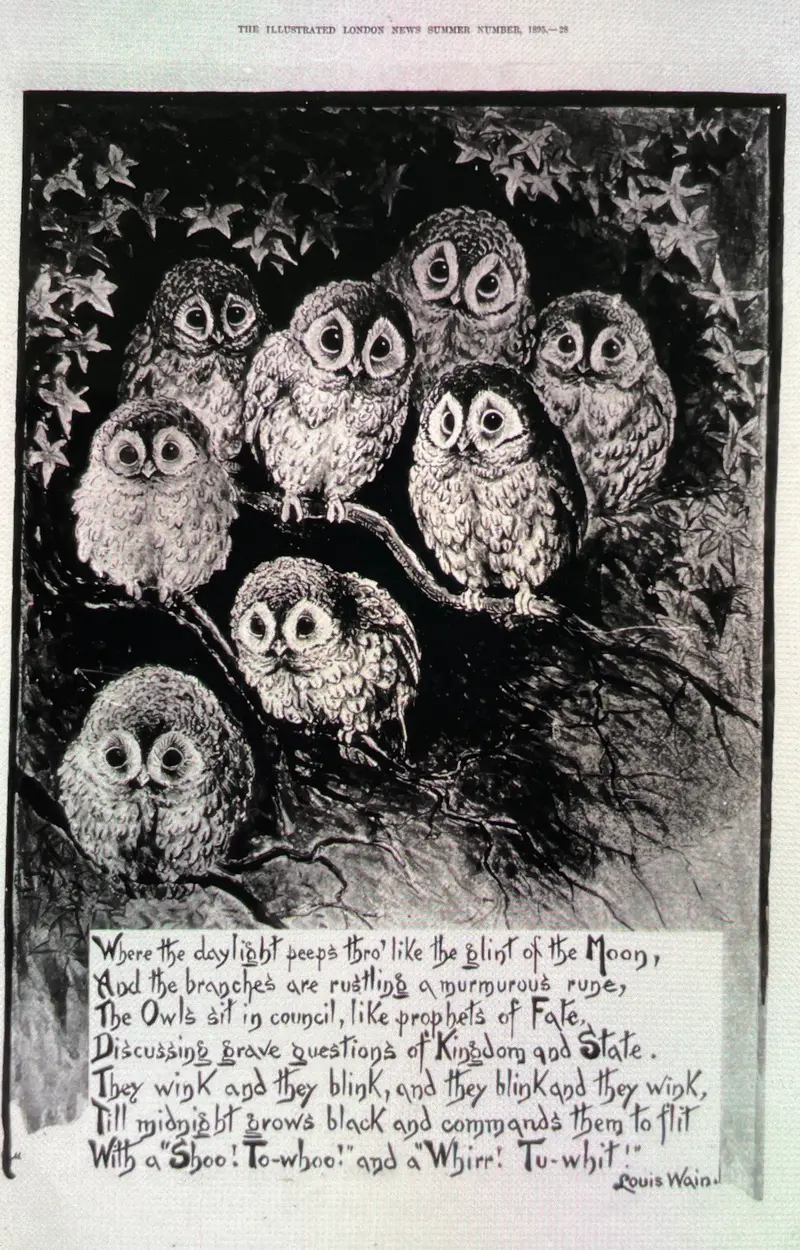
Owls
Louis Wain
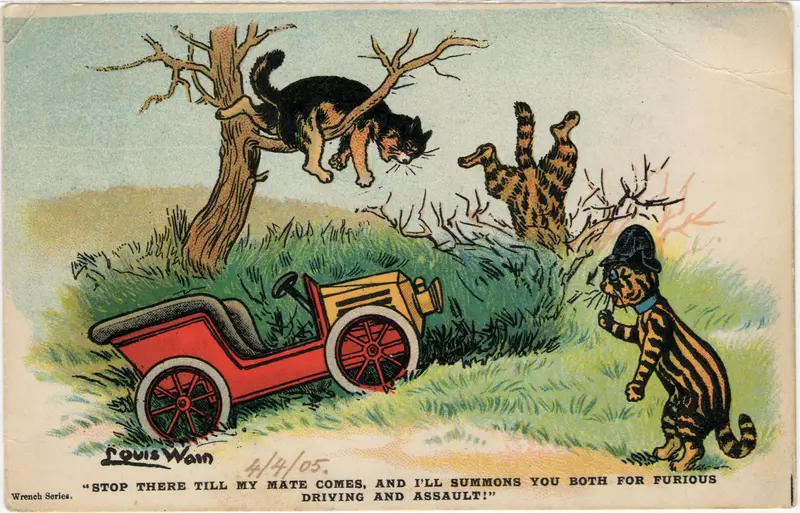
The Cat Car Crash
Louis Wain
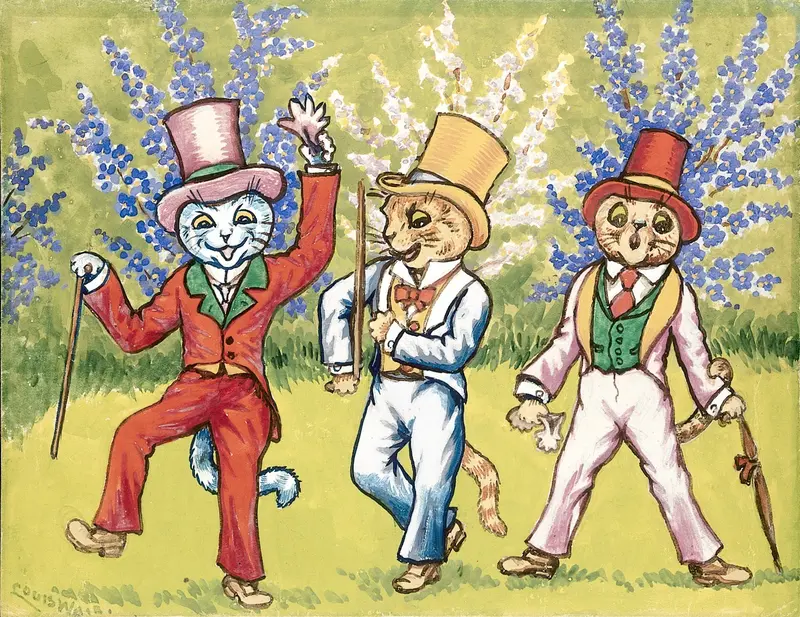
Three Cats Performing a Song and Dance
Louis Wain
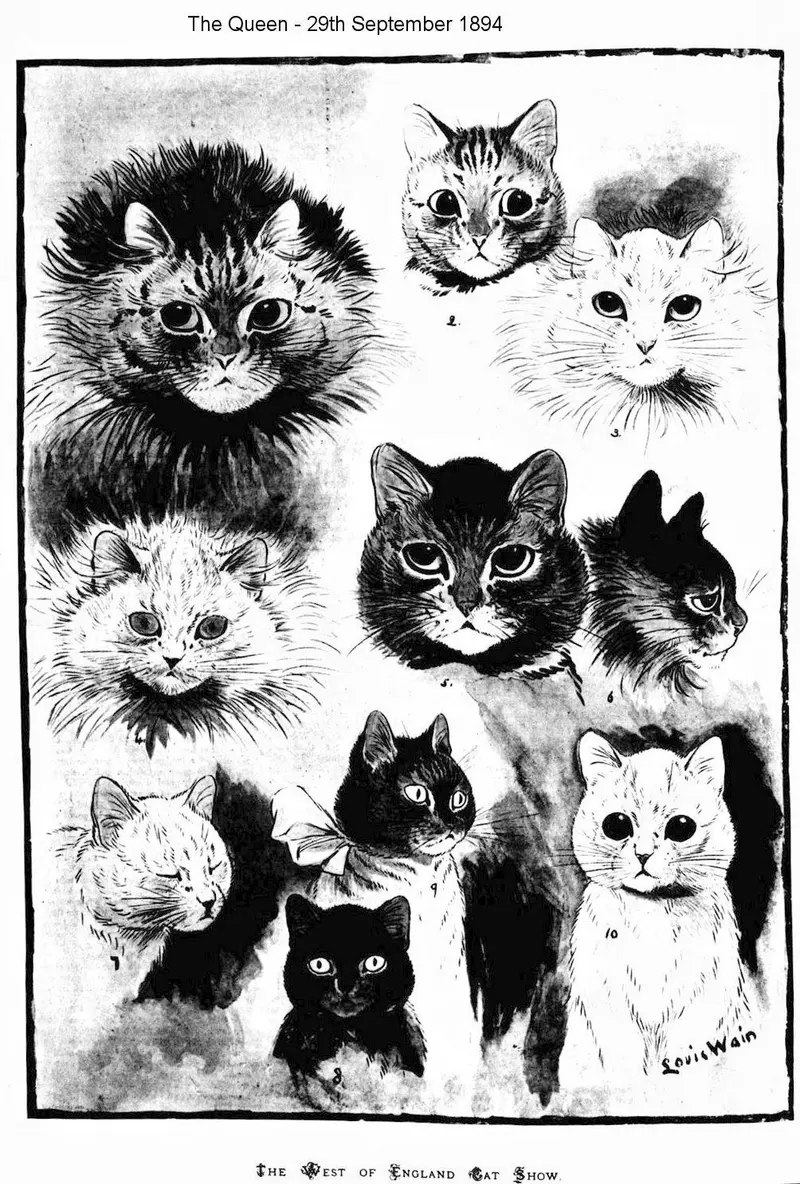
Poster for the National Cat Show, 1894
Louis Wain
Kaleidoscope Cat II
Louis Wain





