
Three Cats Singing — History & Facts
What first seizes the eye in Three Cats Singing is not just the chorus of open feline mouths, but the sense that these cats are caught mid-note, their voices raised in improbable harmony. Each cat stands upright, paws gripping red songbooks, their bodies arranged in a line as if on a stage. The striped tabby on the left bursts with energy, its fur bristling with the effort of song, while the two blue cats beside it echo the same wide-eyed, earnest expression.
Behind them, a riot of wildflowers fills the background, their bright petals suggesting both the setting of a garden and the exuberance of the performance. The artist’s bold, rhythmic brushwork and the cats’ exaggerated features invite the viewer to imagine not just the sound, but the comic seriousness of this feline choir. This work belongs to the world of Louis Wain, whose career spanned the late nineteenth and early twentieth centuries and whose name became synonymous with cats rendered as actors in the dramas of human life. In Britain during this period, anthropomorphic animal art flourished, often appearing in illustrated books, postcards, and magazines—objects meant to amuse, comfort, or gently satirize their audience.
The playful absurdity of singing cats would have fit perfectly into the interwar years, when society sought both distraction and delight. This particular gouache, dated between 1925 and 1939 and now held in the Wellcome Collection, is a testament to Wain’s enduring appeal and the era’s fascination with the boundary between animal instinct and human culture. The longer you look, the more the cats’ earnestness becomes infectious—inviting you to join in their impossible song.
More Artworks by Louis Wain
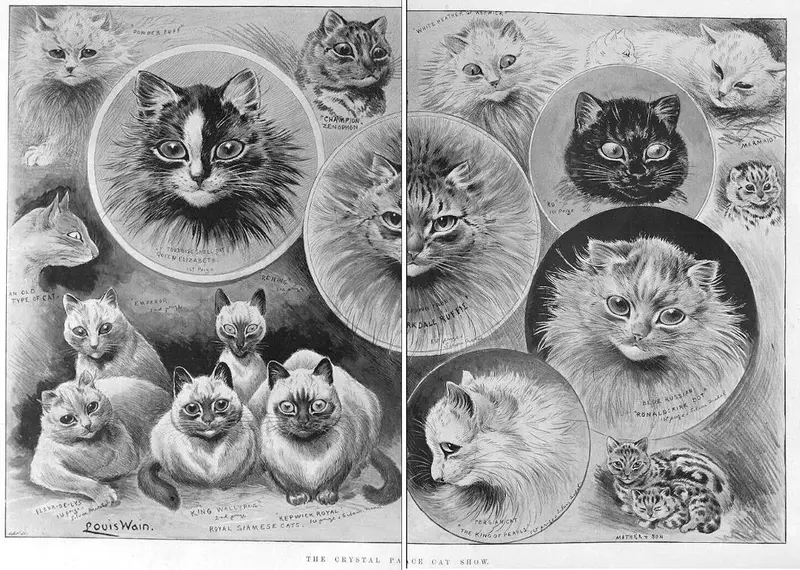
The Crystal Palace Cat Show
Louis Wain

Cats' Christmas
Louis Wain
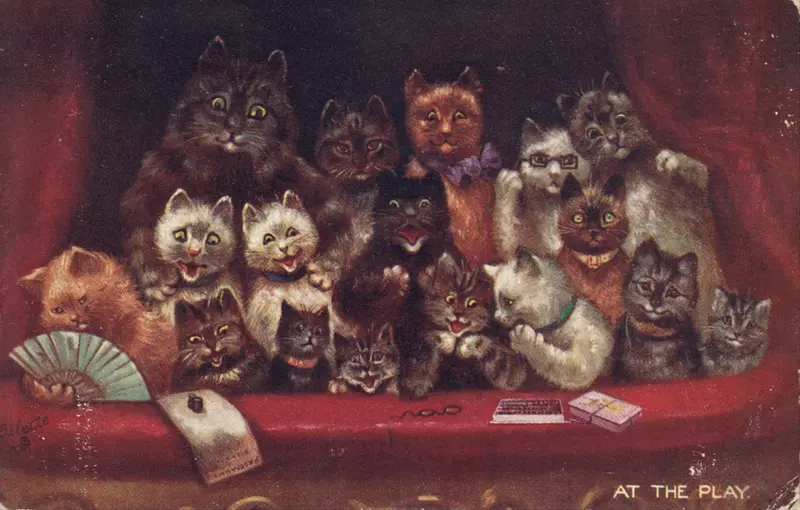
Cats at the Play
Louis Wain
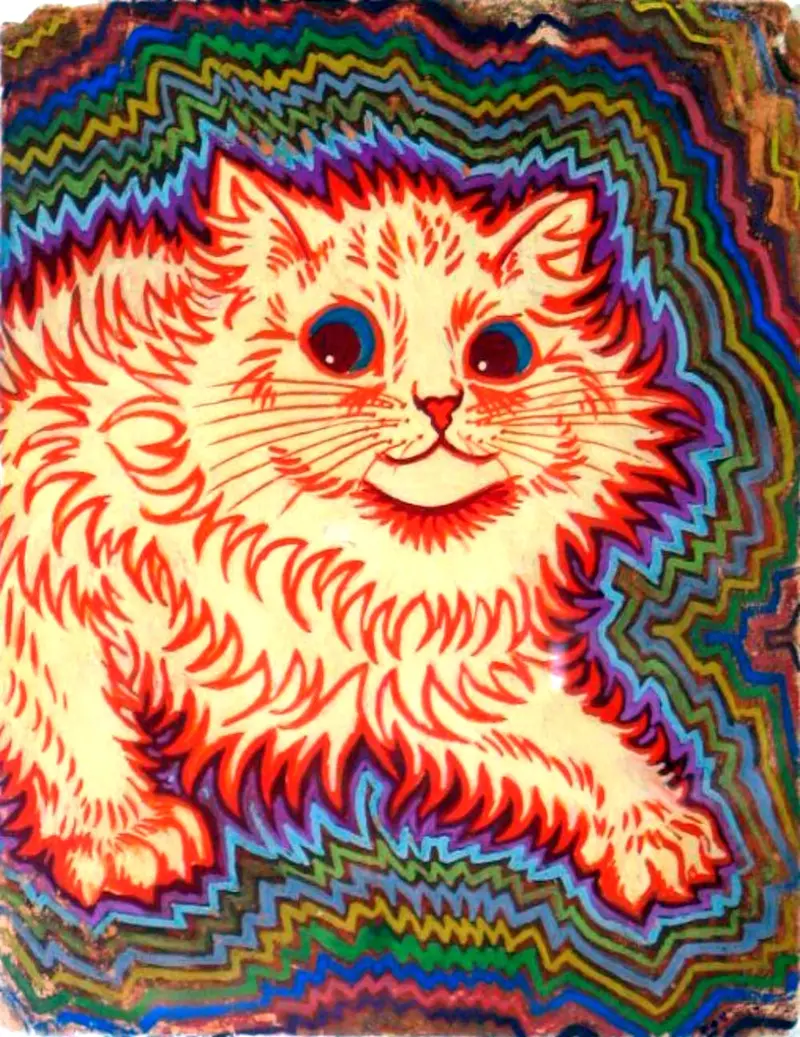
Psychedelic Cat
Louis Wain
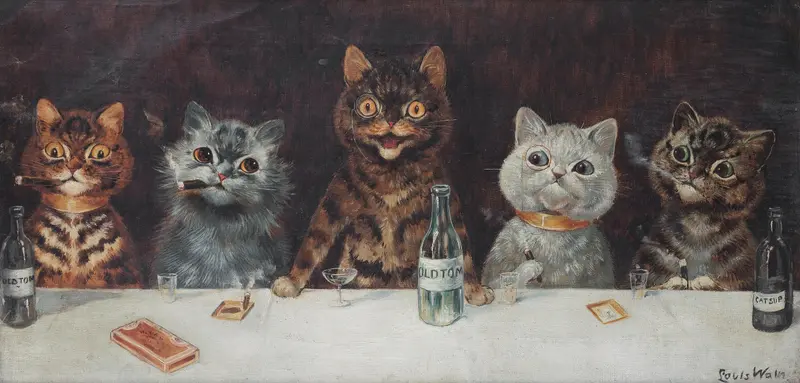
The Bachelor Party
Louis Wain
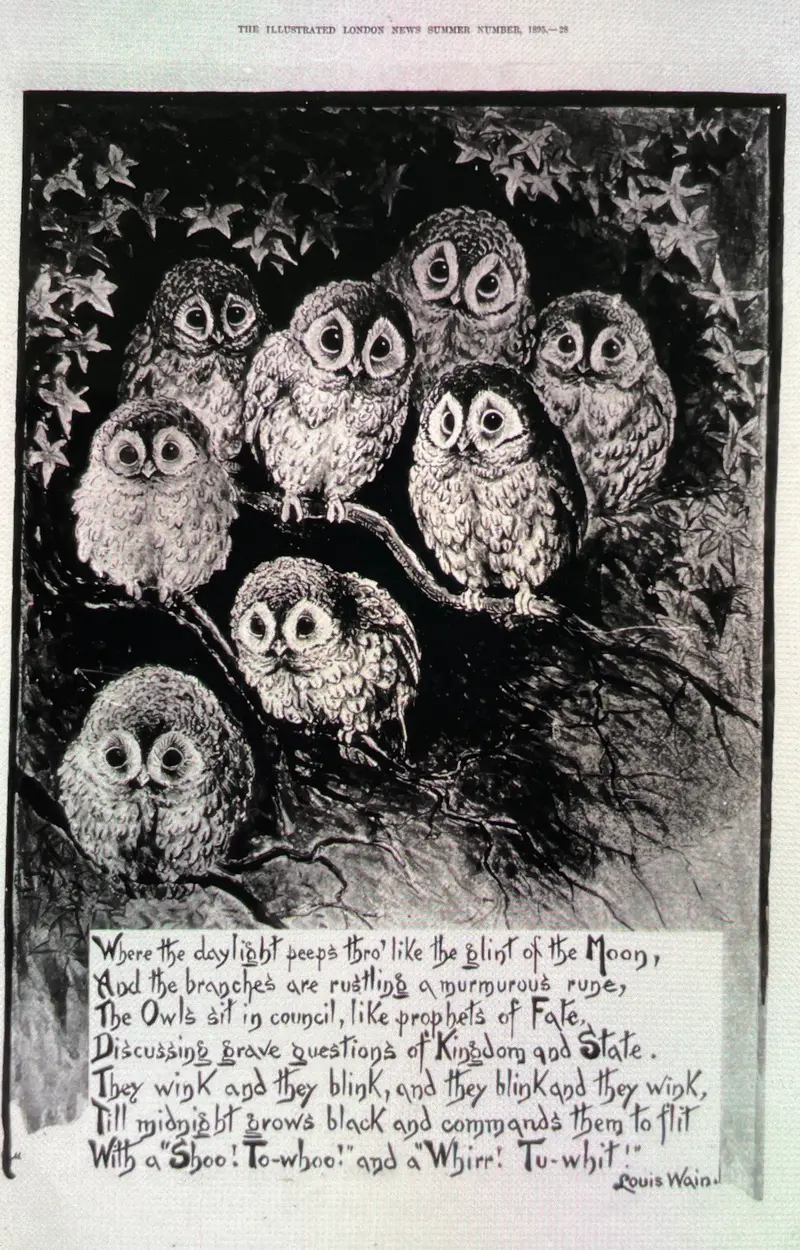
Owls
Louis Wain
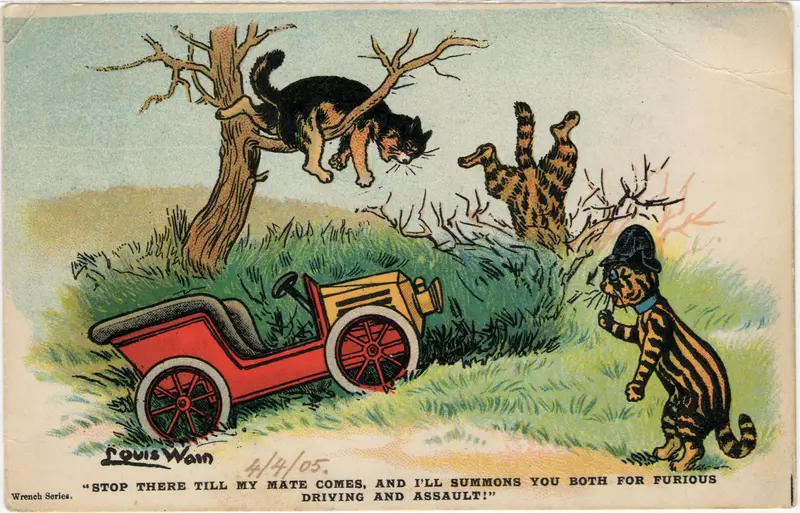
The Cat Car Crash
Louis Wain
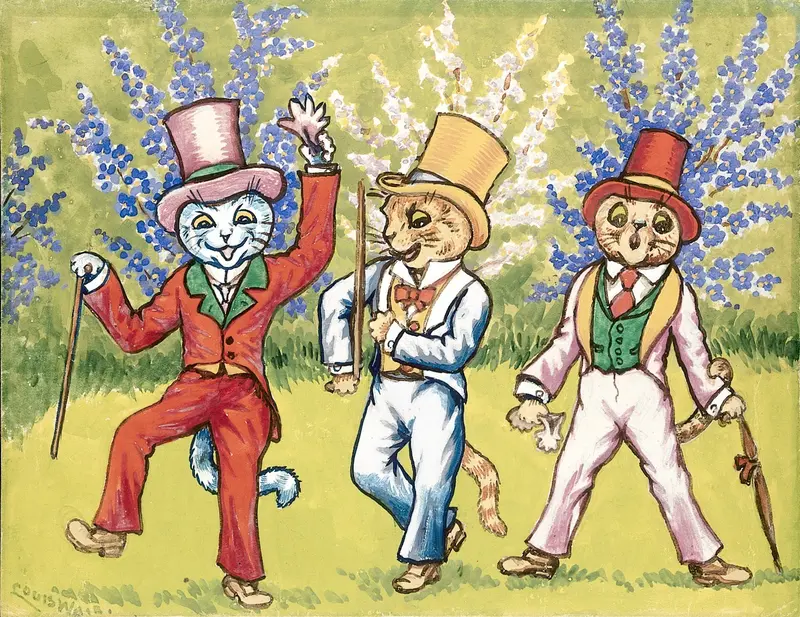
Three Cats Performing a Song and Dance
Louis Wain
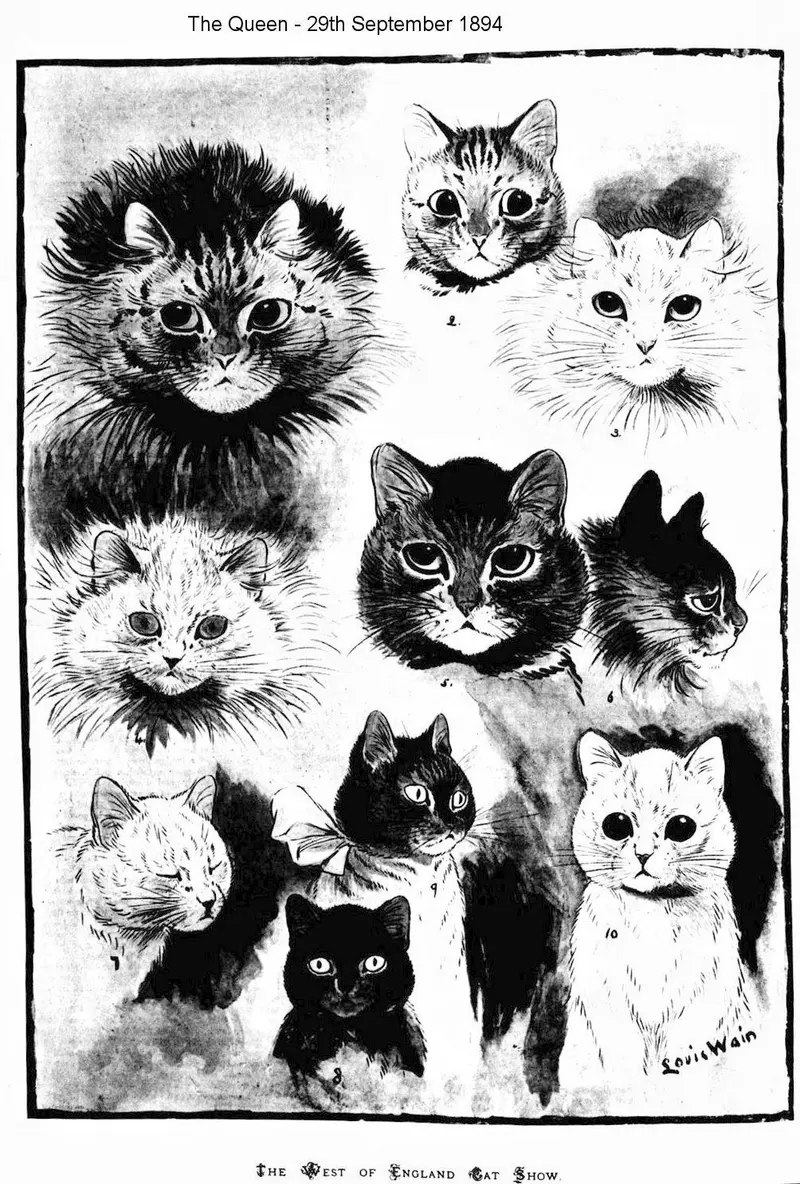
Poster for the National Cat Show, 1894
Louis Wain
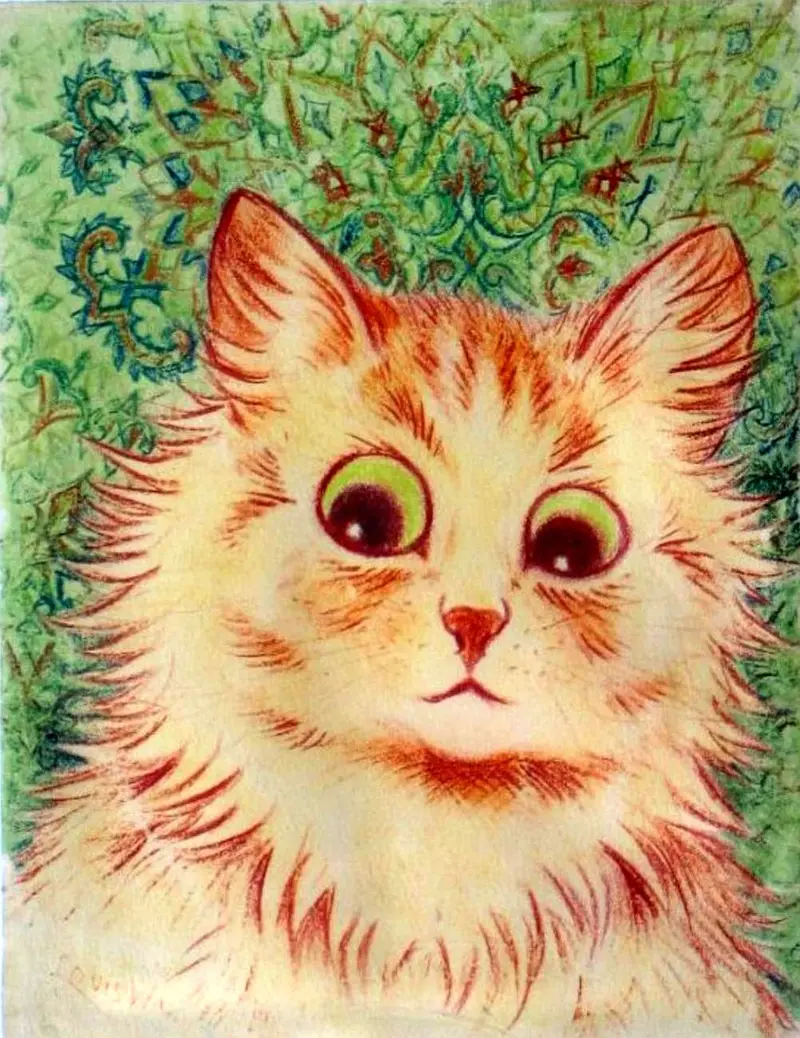
Kaleidoscope Cat II
Louis Wain





