
Kaleidoscope Cat II — History & Facts
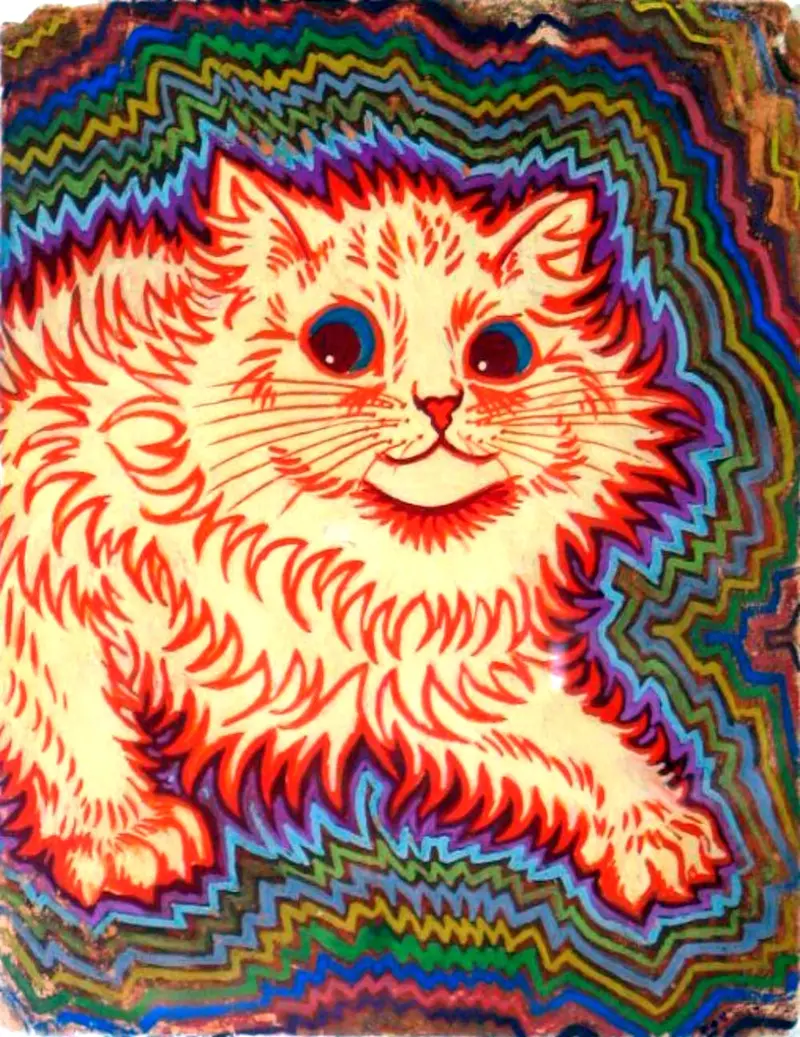
What first catches the eye in Kaleidoscope Cat II is the electric intensity of the cat’s gaze—wide, luminous eyes that seem to hover between curiosity and astonishment. The animal’s fur, rendered in energetic lines of orange and russet, radiates outward, as if charged by the swirling green and blue patterns that fill the background. These intricate shapes, almost hypnotic in their repetition, crown the cat’s head like a living aura, drawing the viewer’s attention to the creature’s startled expression.
The entire image pulses with a sense of movement, as if the world behind the cat is alive with unseen energy, and the cat itself is both witness and participant in this strange, decorative universe. Created in the 1910s, this work belongs to the period when Louis Wain was celebrated—and sometimes puzzled over—for his ever more imaginative portrayals of cats. In Edwardian England, such images were both beloved and unsettling, reflecting changing attitudes toward animals, mental health, and the boundaries of artistic expression. While little is recorded about this specific piece, its presence in the Bethlem Museum hints at the artist’s own journey through the institutions of his time.
The swirling patterns and heightened colors speak to a moment when art, psychology, and popular culture collided, inviting viewers to wonder at the mysteries behind a cat’s stare.
More Artworks by Louis Wain
The Crystal Palace Cat Show
Louis Wain

Cats' Christmas
Louis Wain
Three Cats Singing
Louis Wain
Cats at the Play
Louis Wain
Psychedelic Cat
Louis Wain
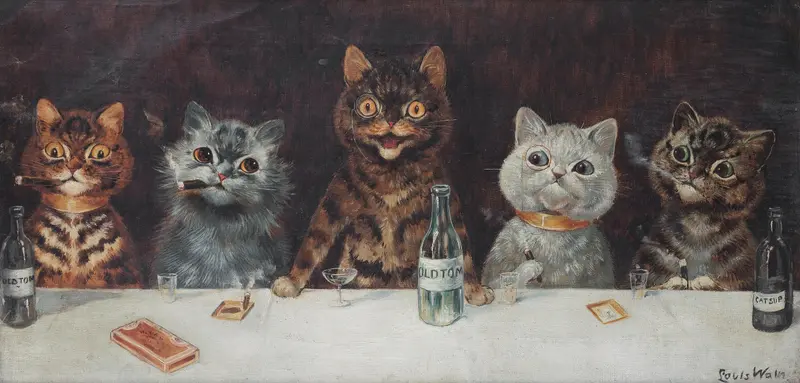
The Bachelor Party
Louis Wain
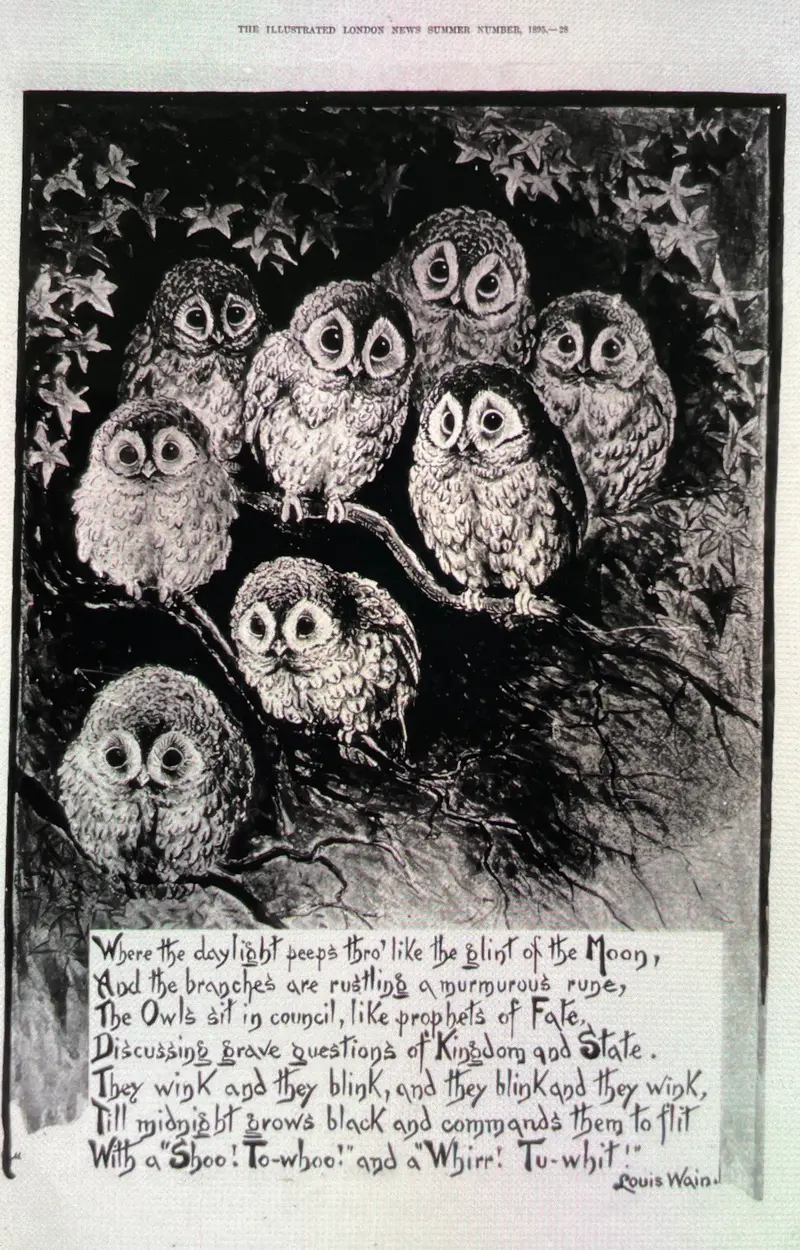
Owls
Louis Wain
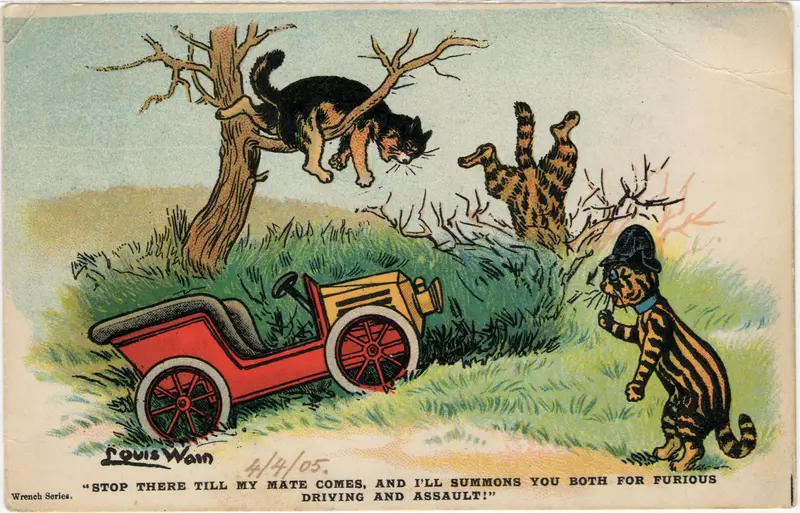
The Cat Car Crash
Louis Wain
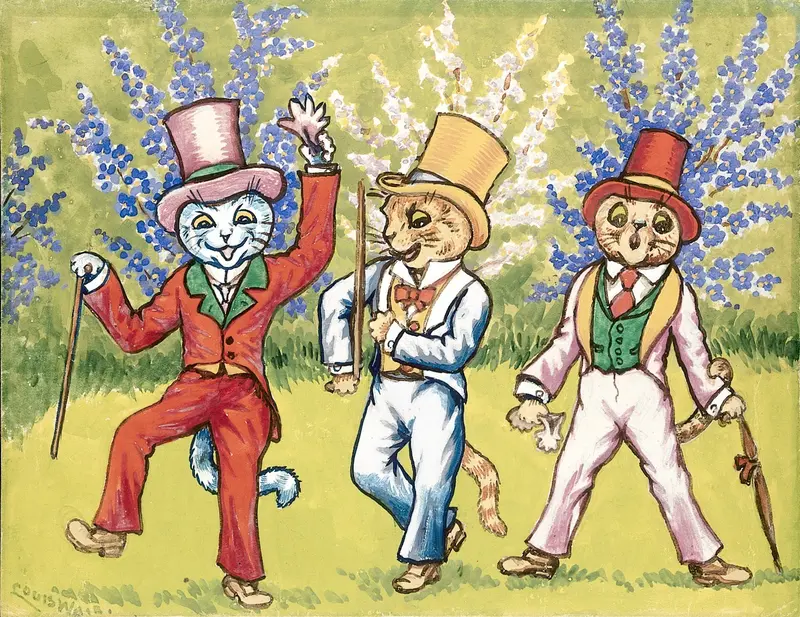
Three Cats Performing a Song and Dance
Louis Wain
Poster for the National Cat Show, 1894
Louis Wain





