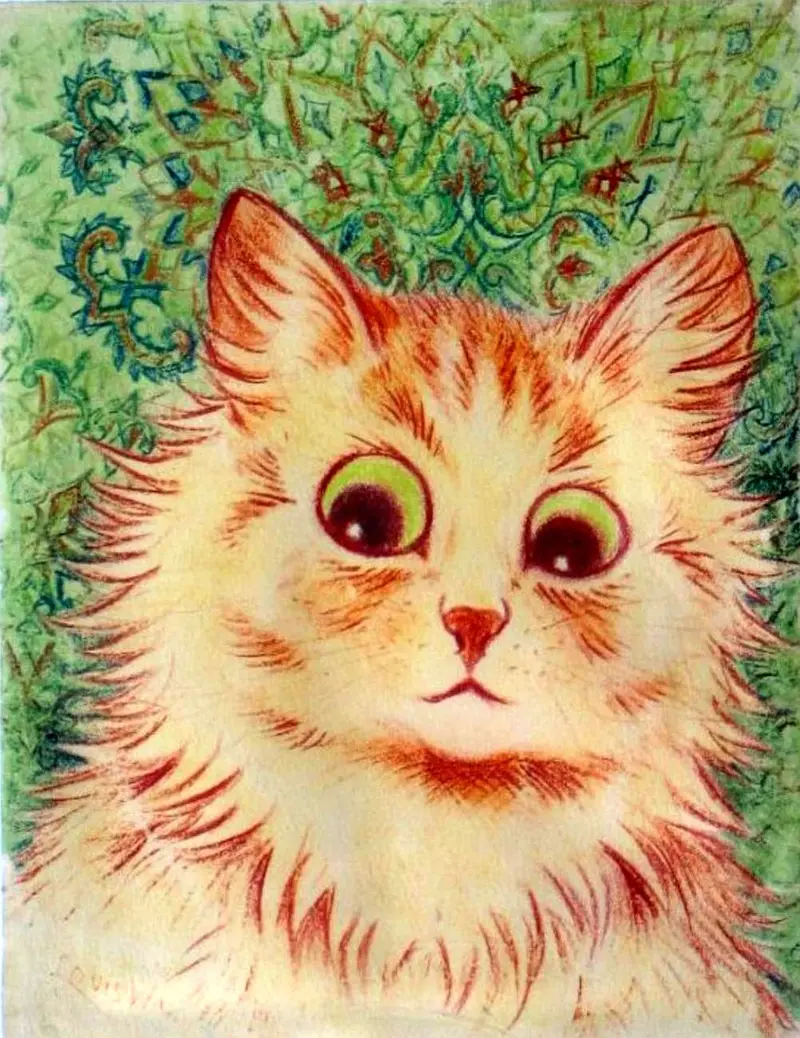
The Crystal Palace Cat Show — History & Facts
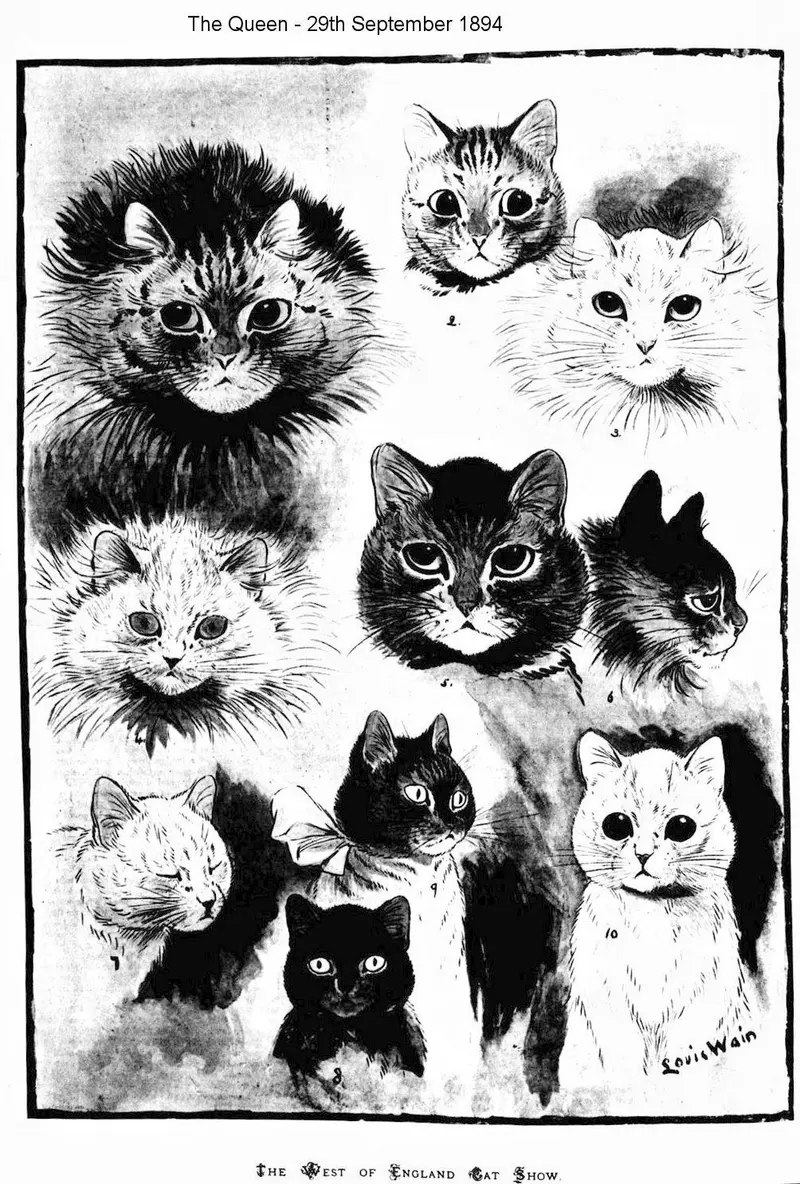
A parade of feline personalities greets the viewer, each face rendered with a distinct air of dignity or mischief, as if the cats themselves are aware of their place in the spotlight. The composition draws you in with its almost hypnotic arrangement of circular frames, each encasing a champion of whiskers and fur, their names and titles inscribed like those of society’s elite. The largest portraits command the center, their eyes wide and unblinking, while the smaller vignettes cluster around them, suggesting a hierarchy that mirrors the competitive world of the cat show.
The artist’s hand lingers on the texture of every coat, from the silken fluff of the Persian to the sleek lines of the Siamese, and the careful shading gives each animal a presence that is both lifelike and slightly larger than life. Created in 1896, this work belongs to a period when animal portraiture was enjoying a curious vogue, propelled by both the rise of the middle class and a growing fascination with pedigree and breeding. The Crystal Palace Cat Show, referenced in the title, was a real event that helped transform the domestic cat from household mouser to celebrated companion, and artists like Louis Wain became household names for their ability to capture the charisma of these animals. Little is recorded about the journey of this particular affiche beyond its preservation in the messybeast collection, but its lively detail and playful grandeur speak to the Victorian appetite for novelty and spectacle.
As you return to the image, notice how each cat’s gaze seems to follow you, inviting you to choose a favorite among these feline aristocrats.