
Champfond à Crémieu — History & Facts
What if silence could speak through light? In Champfond à Crémieu, the unyielding stillness of the French landscape pulses with an underlying tension, as if the very air holds its breath before an impending storm. Begin your exploration by focusing on the horizon, where the rolling hills meet a brooding sky, painted in muted greens and ochres. The subtle interplay of light and shadow reveals a patchwork of fields, each stroke a whisper of the idyllic yet tumultuous countryside. Notice how the clouds gather ominously above, their heavy forms threatening to unleash chaos upon the tranquility below, while the foreground is punctuated by delicate wildflowers, vibrant yet fragile against the encroaching darkness. There is a palpable contrast between the serene beauty of the landscape and the violent potential that simmers beneath the surface.
The absence of human figures draws the viewer into an intimate dialogue with nature, igniting a sense of unease—what storms have brewed here, both literal and metaphorical? Each element of the composition reflects a duality; the gentle curves of the land juxtaposed with the stark, menacing sky hints at turmoil that has yet to unfold. Painted during a time when Ravier was grappling with the transition from Romanticism to a more impressionistic approach, Champfond à Crémieu embodies his quest to capture the essence of a landscape that is both beautiful and foreboding. Created in the mid-19th century, when France was undergoing significant political and social upheaval, the work reflects both the artist's personal evolution and the turbulent spirit of his time.
More Artworks by François-Auguste Ravier
Browse all →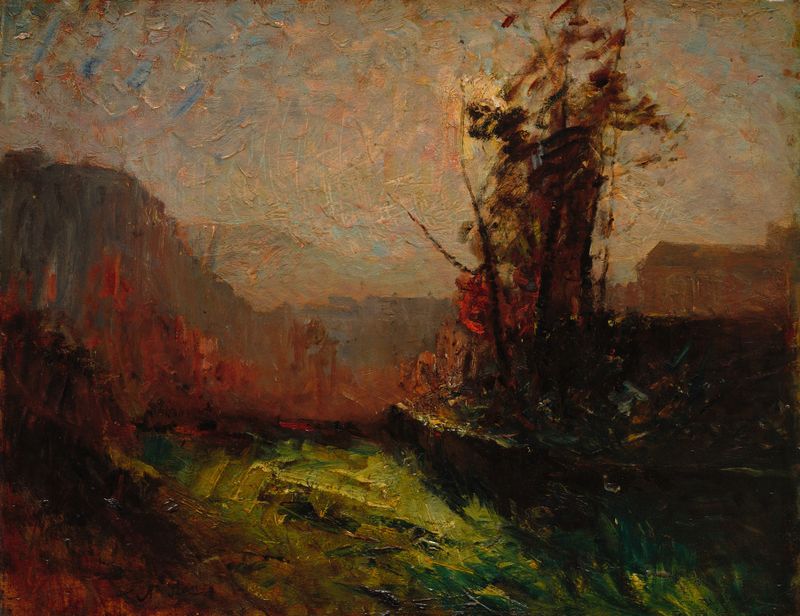
Crémieu, Seen from Chaillonnette
François-Auguste Ravier
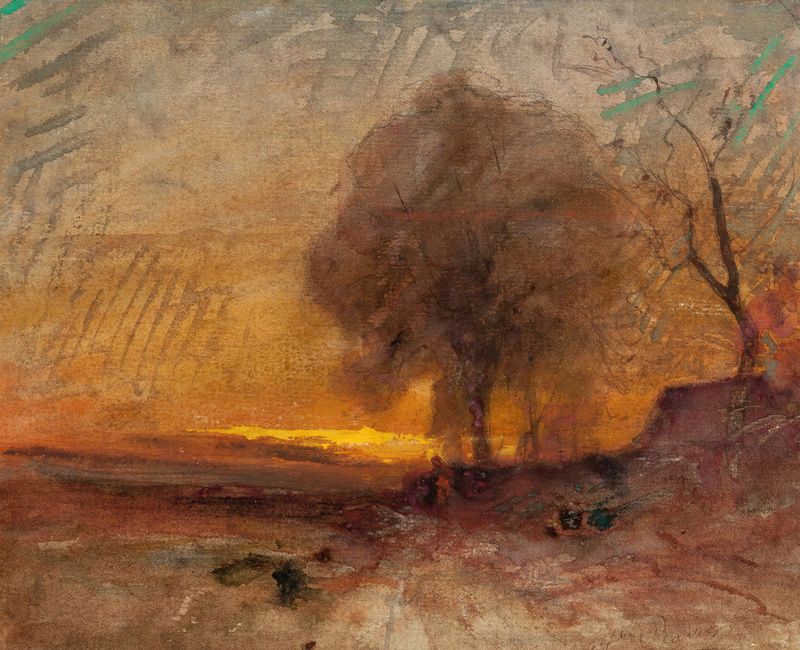
Landscape at Dusk
François-Auguste Ravier

Étude de paysage
François-Auguste Ravier
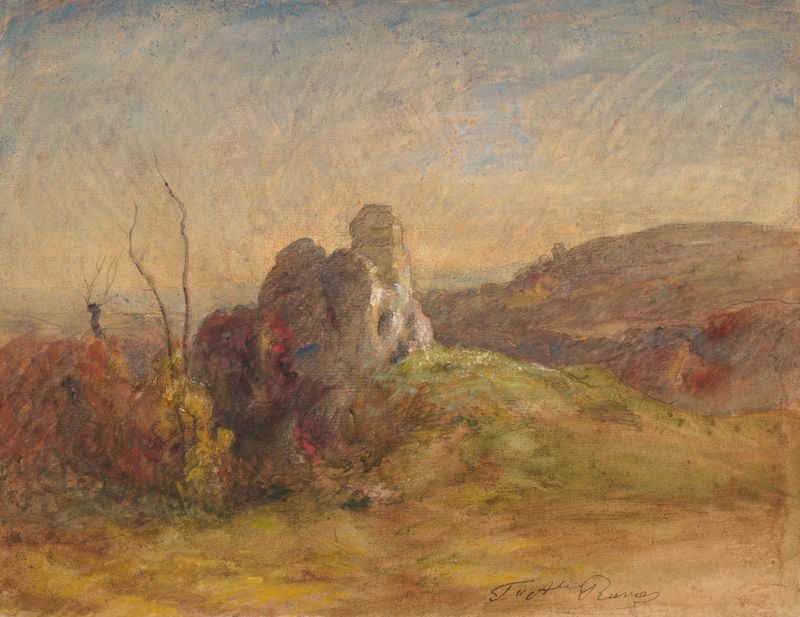
Landscape
François-Auguste Ravier
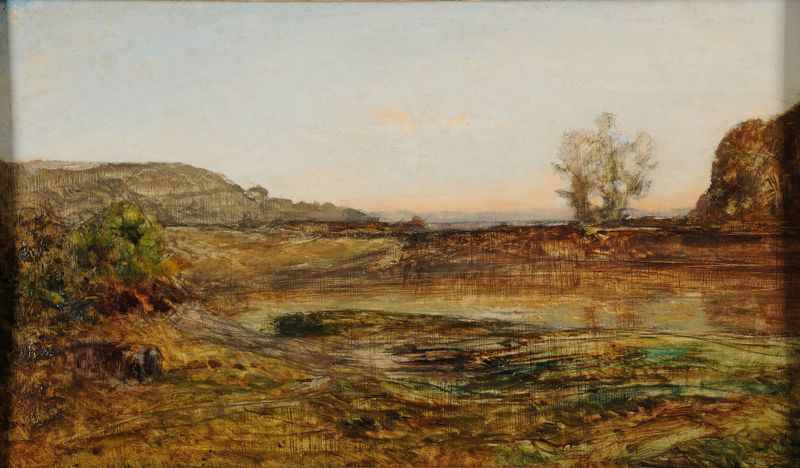
L’Étang d’Optevoz
François-Auguste Ravier
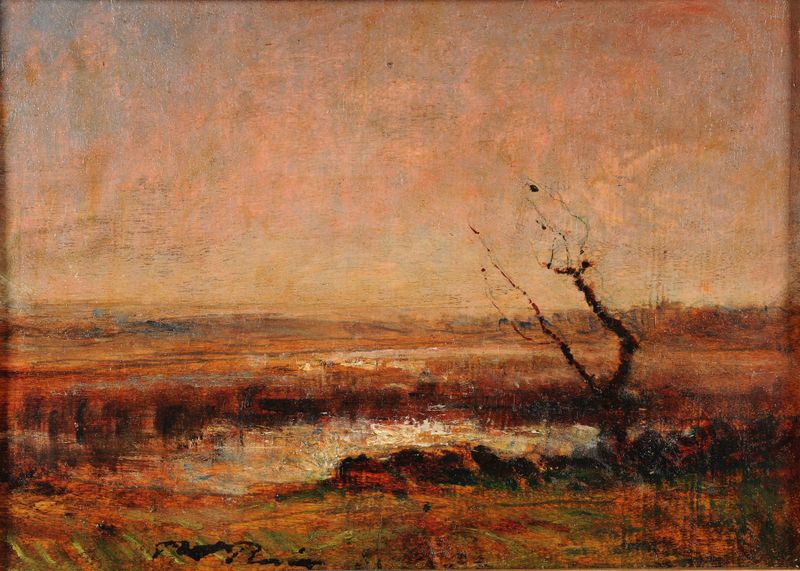
Étude de paysage
François-Auguste Ravier

Approaching Morestal
François-Auguste Ravier

Allée des Tilleuls à Crémieu
François-Auguste Ravier
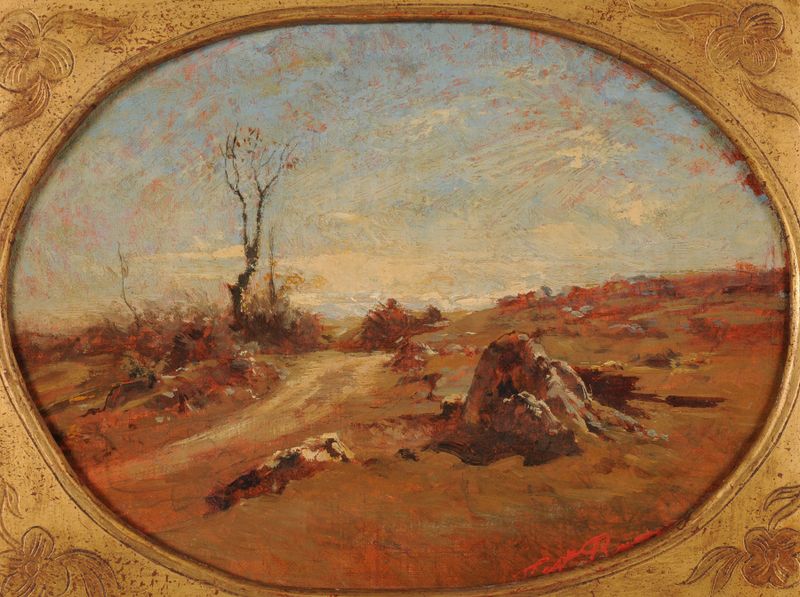
Automne. L’arbre
François-Auguste Ravier

Sunset over a Pond
François-Auguste Ravier





