
Charles I (1600-49) on Horseback — History & Facts
When Anthony van Dyck unveiled Charles I (1600-49) on Horseback in 1635, viewers were struck by its sheer audacity: never before had an English monarch been depicted with such imperial grandeur, towering above his court and subjects alike. This painting was not merely a portrait but a calculated piece of royal propaganda, commissioned at a time when Charles I’s authority was increasingly questioned by Parliament and the public. The king himself was deeply involved in the image he projected, and Van Dyck, his court painter, became the architect of his regal persona.
The impact was immediate—contemporaries remarked on the king’s “heroic aspect,” a visual assertion of divine right at a moment of growing political tension. Van Dyck chooses the moment when Charles I, mounted on a powerful white charger, surveys his domain with calm assurance. The king’s armor glints in the light, signaling both readiness for battle and the dignity of his office, while the baton in his hand is a symbol of command. The horse, reined in with effortless control, echoes the idea of a ruler who masters both nation and nature.
Behind him, a page holds his helmet, underscoring the king’s youth and the continuity of monarchy. Unlike the more martial equestrian portraits by Peter Paul Rubens, Van Dyck’s approach is less about conquest and more about serene authority—a king above the fray, yet prepared to act. The original painting was created for the royal collection at Whitehall Palace, where it hung as a testament to Charles I’s vision of kingship. After the king’s execution in 1649, many of his possessions were dispersed, but this portrait remained a touchstone for royalist sympathizers and later collectors.
Over centuries, the painting has been admired for its psychological insight and its role in shaping the iconography of monarchy. Today, Charles I (1600-49) on Horseback stands not only as a highlight of Van Dyck’s English period but also as a witness to the turbulent years leading to the English Civil War, its meaning deepened by the fate of the man it so gloriously depicts.
More Artworks by Anthony van Dyck

Portrait of a Man
Anthony van Dyck

Portrait of Anne, Lady Russell, later Countess of Bedford (1615-1684)
Anthony van Dyck

Portrait of Francisco de Moncada, Marqués de Aytona
Anthony van Dyck

Portrait of Charles I, King of the Great Britain (1600-1649)
Anthony van Dyck

Portrait of Sir Robert Howard, K.B. (1626-1698)
Anthony van Dyck

King Charles I of England (1600-1649), three-quarter portrait
Anthony van Dyck

An Equestrian Portrait of Charles I (1600–1649)
Anthony van Dyck

Equestrian Portrait of Charles I
Anthony van Dyck

Self-portrait with a Sunflower
Anthony van Dyck
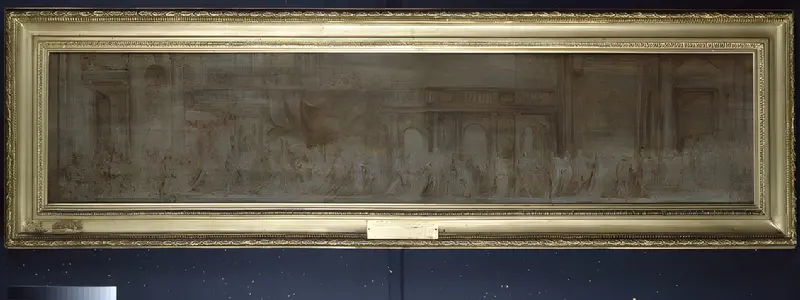
Charles I and the Knights of the Garter in Procession
Anthony van Dyck





