
Charles IV in the Uniform of a Colonel of the Royal Guard — History & Facts
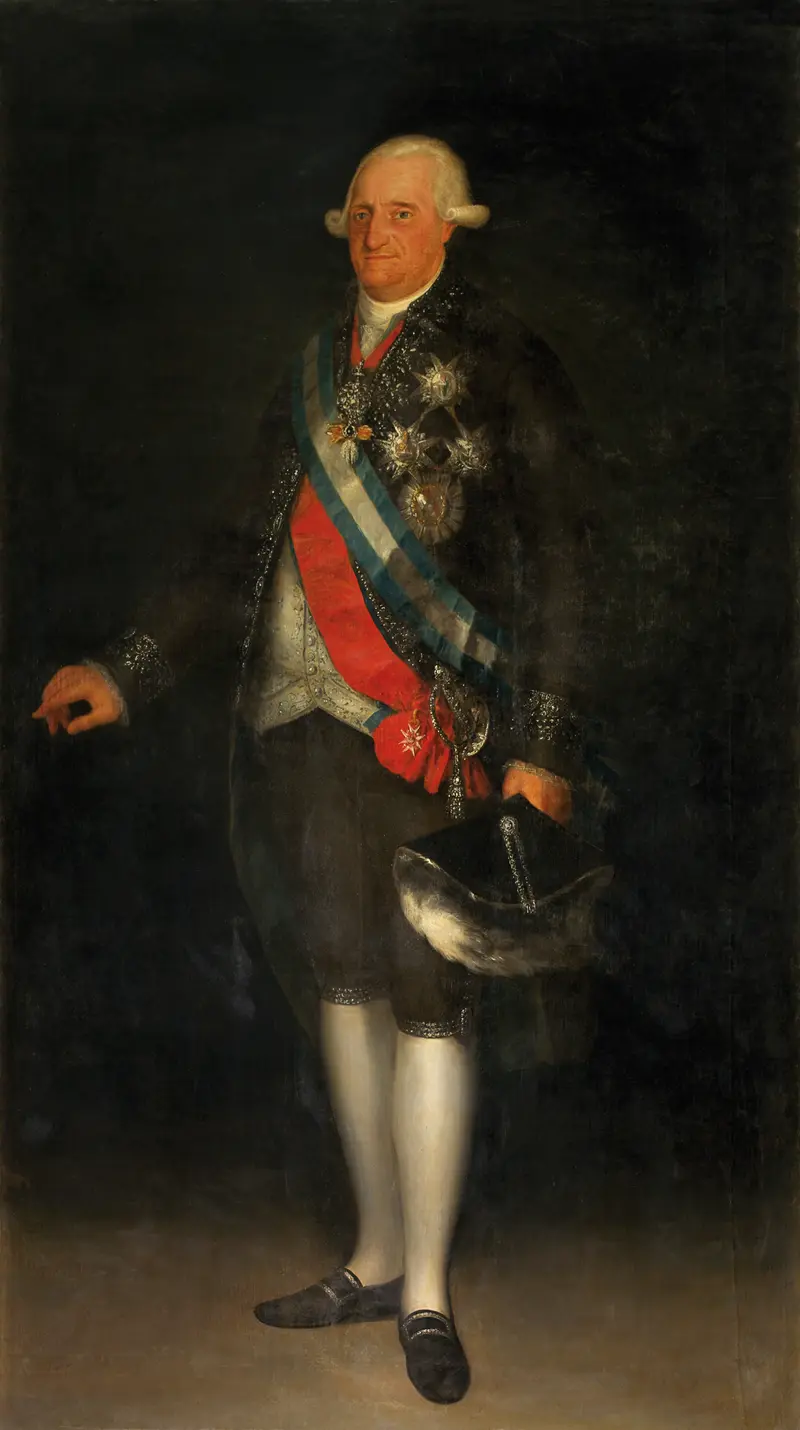
What first seizes the viewer in Charles IV in the Uniform of a Colonel of the Royal Guard is the quiet confidence radiating from the sitter’s stance, a presence built as much from the painter’s choices as from the man’s rank. The crisp red and blue of the uniform, gleaming with medals and sashes, draws the eye immediately to the chest—a catalogue of honors, each one a silent assertion of power and legitimacy. The king’s left hand holds a plumed hat, while his right rests on a cane, the gesture poised between ceremony and informality.
The dark, nearly featureless background pushes the figure forward, making every detail of his regalia and expression the true subject of the painting. There is no distraction: the sitter is alone, and the viewer is invited to study him as his court once did. This portrait belongs to a world where royal image was both shield and weapon, crafted to command loyalty and awe in an age of shifting allegiances. Painted between 1799 and 1800, at the close of a century that saw monarchies tested and toppled, such works were essential tools of statecraft.
In Spain, as across Europe, artists like Agustin Esteve y Marqués were called to fix the likeness of power, often for grand halls or official collections—today, this painting hangs in the Museo Nacional del Prado, Madrid. History has kept few traces of the specific journey of this canvas, but its purpose is clear: to present a king not as a distant myth, but as a living, decorated commander, steady under scrutiny. Look again at the face—there is calculation there, but also a trace of weariness, a reminder that even kings must stand for inspection.
More Artworks by Agustin Esteve y Marqués
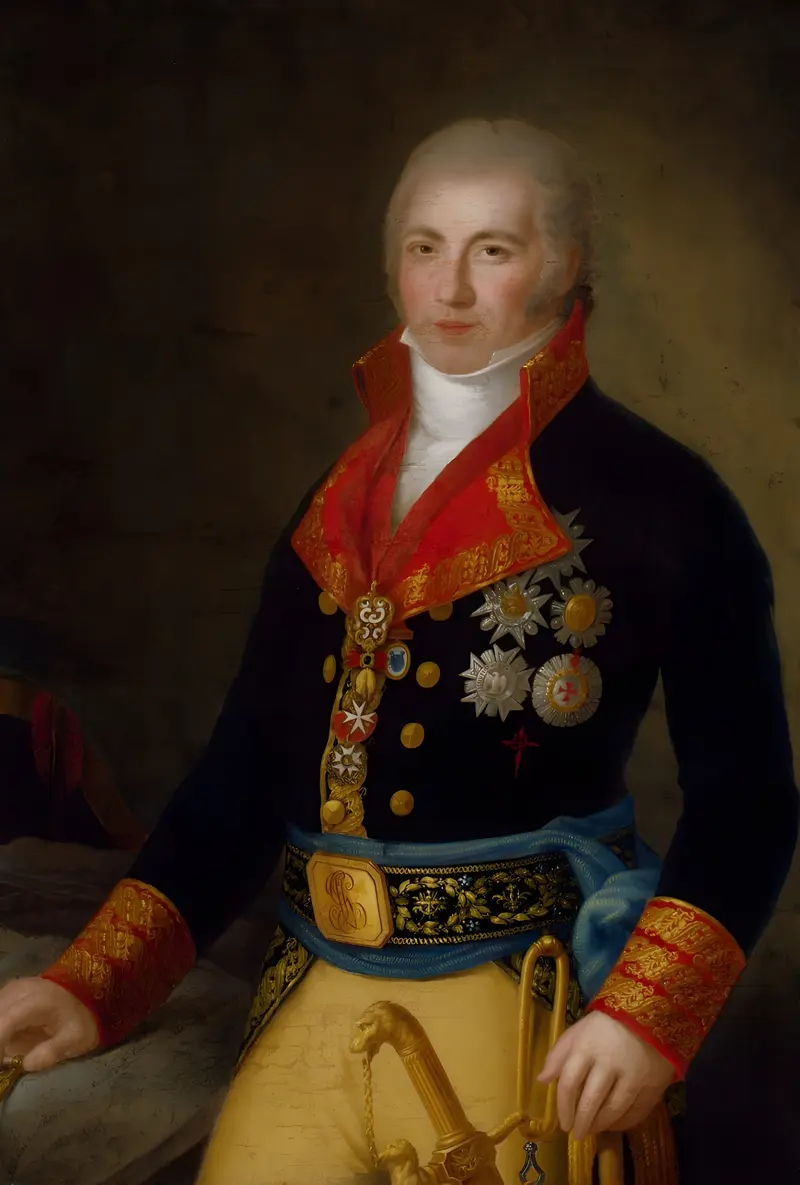
Manuel Godoy
Agustin Esteve y Marqués
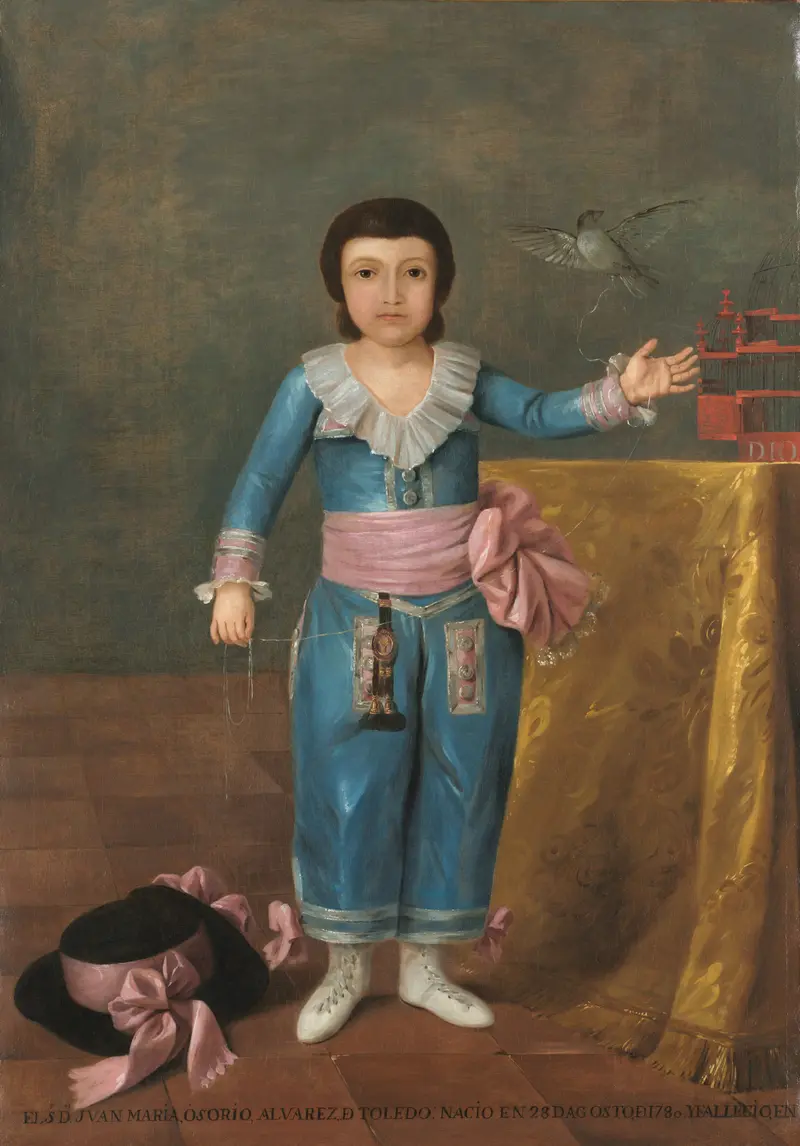
Portrait of Juan Maria Osorio
Agustin Esteve y Marqués
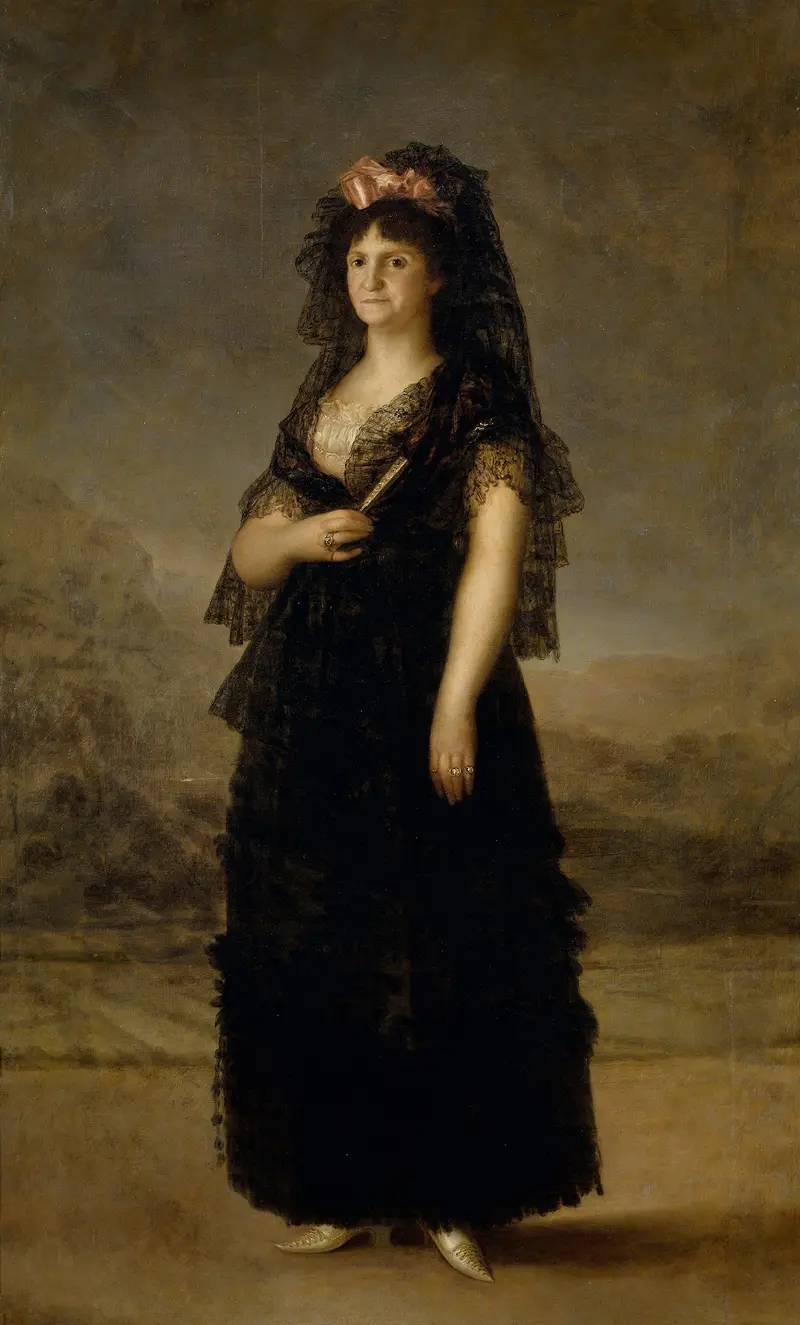
Queen María Luisa in a Mantilla
Agustin Esteve y Marqués
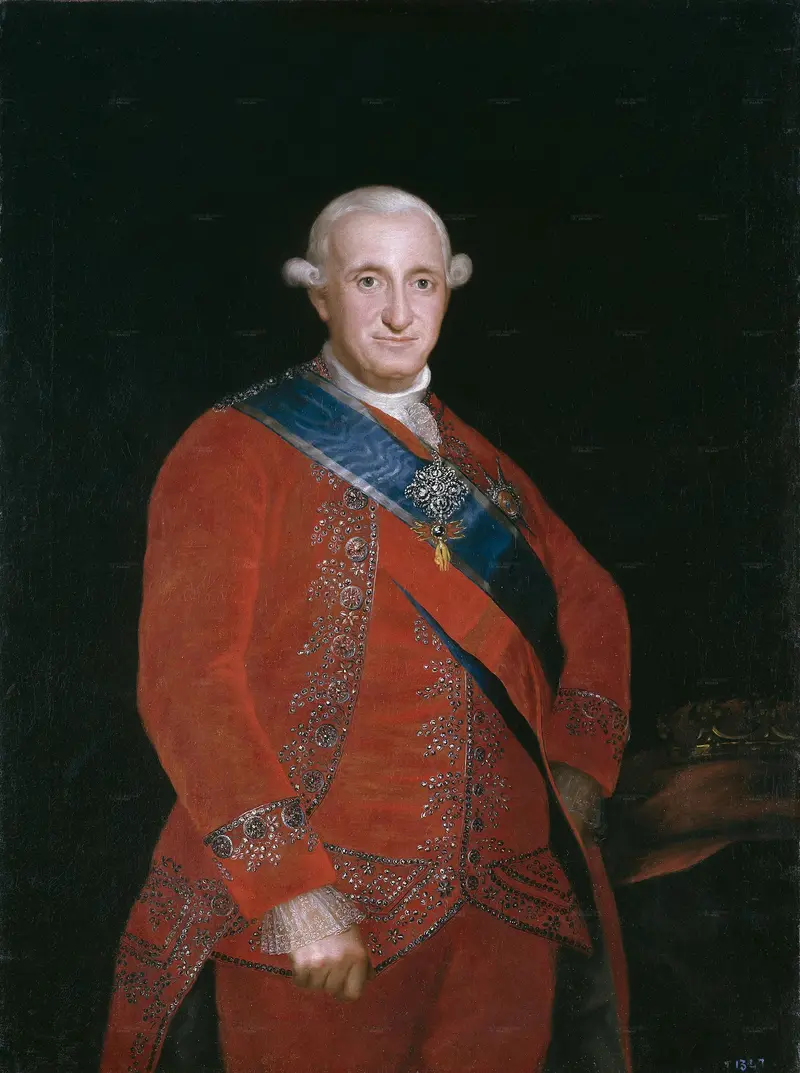
Charles IV, King of Spain
Agustin Esteve y Marqués
The Children
Agustin Esteve y Marqués
Carlos IV. Agustín Esteve y Marqués (atribución)
Agustin Esteve y Marqués
Martín Antonio Álvarez de Sotomayor y Soto-Flores, Count of Colomera
Agustin Esteve y Marqués





