
Chaumières Près De L’etang — History & Facts
In Chaumières Près De L’etang, a tranquil tableau emerges, inviting reflections on solitude and the passage of time. The stillness of the scene suggests hidden stories, leaving the viewer to ponder the life that might inhabit the modest cottages painted in this pastoral landscape. Look to the left at the gentle curve of the thatched roofs, their earthy tones blending seamlessly with the surrounding greenery. Focus on the interplay of light and shadow; sunlight filters through the trees, casting dappled patterns upon the ground.
The artist’s brushwork captures a delicate balance between realism and impression, where each stroke evokes the tactile quality of the landscape, creating an intimate connection to the natural world. Yet beyond the serene appearance, a deeper tension lies within the scene. The juxtaposition of the humble cottages against the expansive, reflective water hints at a duality of existence—comfort and isolation, presence and absence. The stillness of the water mirrors the emotional depth of the work, suggesting a longing for something just out of reach, an unfulfilled desire that resonates with the viewer. In the mid-19th century, Rousseau painted this work during a period of personal and artistic exploration, seeking to capture the essence of the French countryside.
The Barbizon School, to which he belonged, emphasized realism and the beauty of nature, reflecting a shift in the art world towards capturing everyday life. This painting exemplifies his commitment to viewing landscapes not just as scenery, but as intrinsic to the human experience.
More Artworks by Théodore Rousseau
Browse all →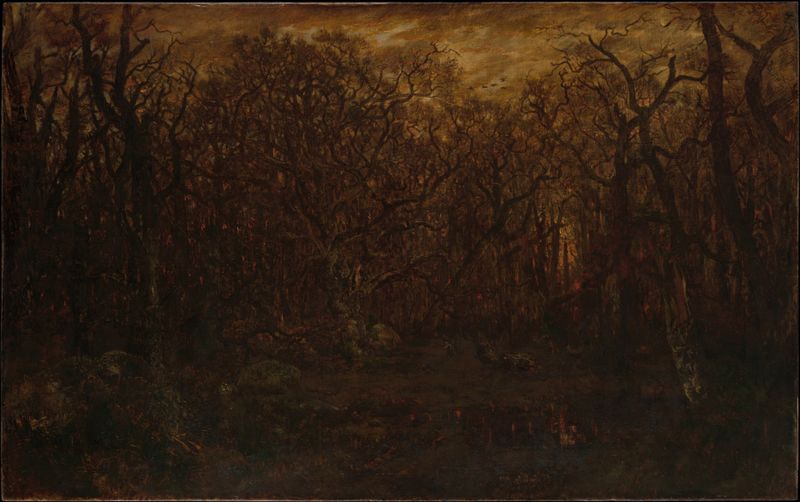
The Forest in Winter at Sunset
Théodore Rousseau
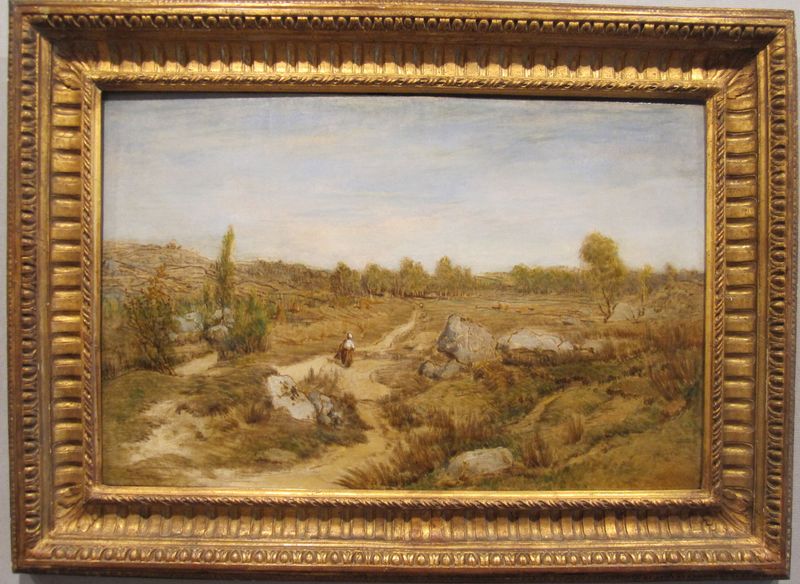
Valley of the Rouars in the Gorges d’Apremont
Théodore Rousseau
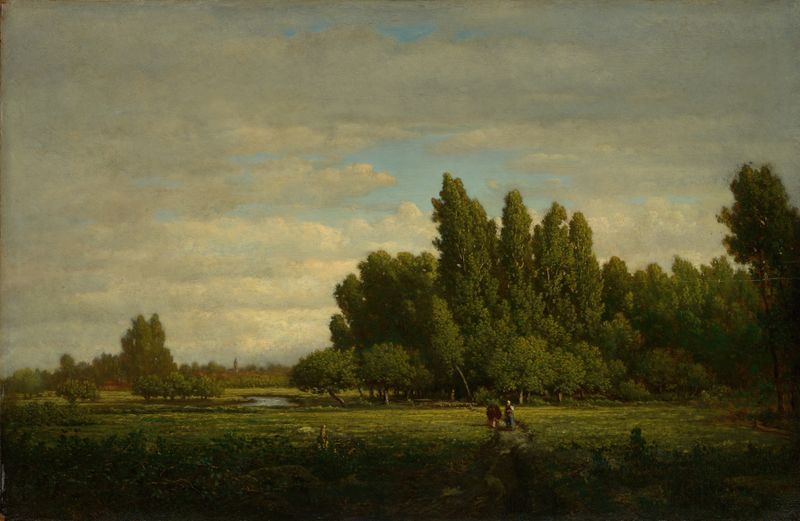
A Meadow Bordered by Trees
Théodore Rousseau
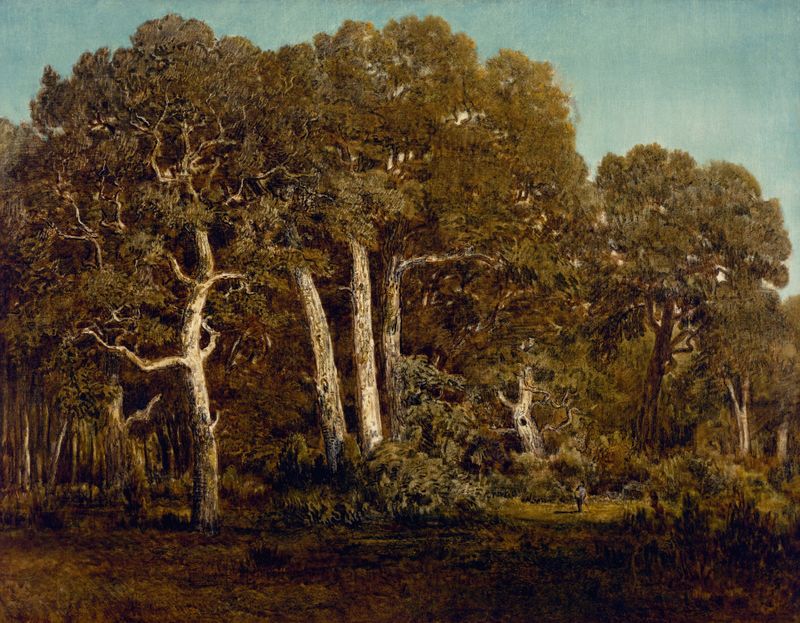
The Great Oaks of Old Bas-Bréau
Théodore Rousseau
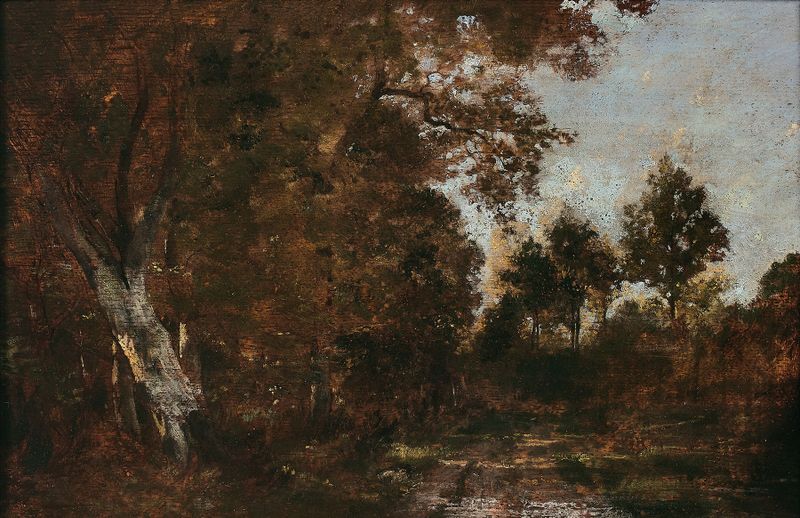
Paysage de sous-bois
Théodore Rousseau
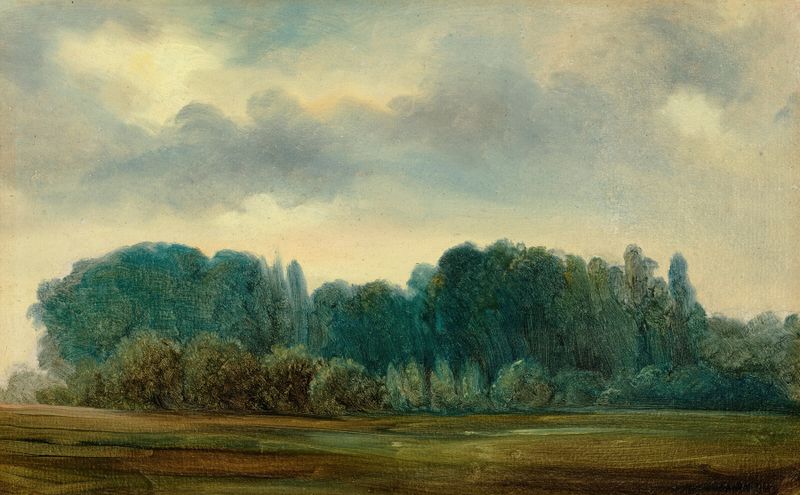
Paysage
Théodore Rousseau
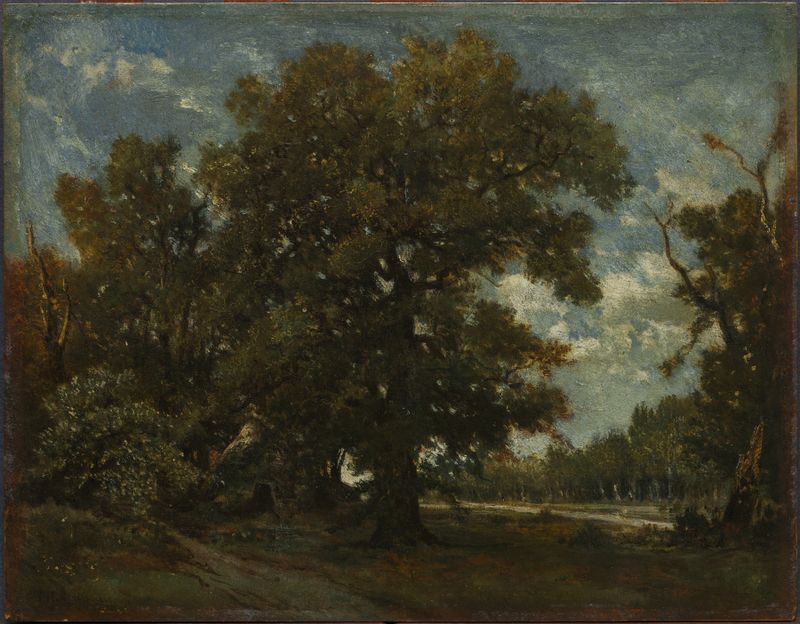
The Oak Tree
Théodore Rousseau
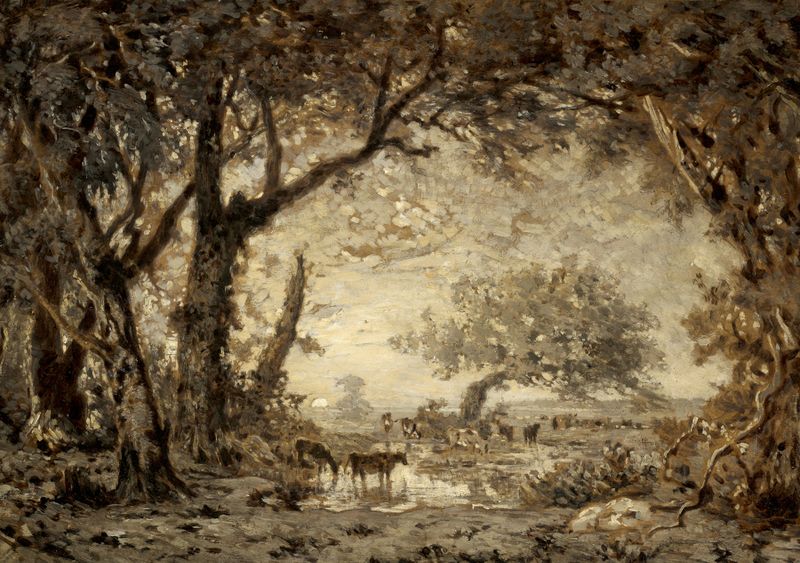
Sunset from the Forest of Fontainebleau
Théodore Rousseau
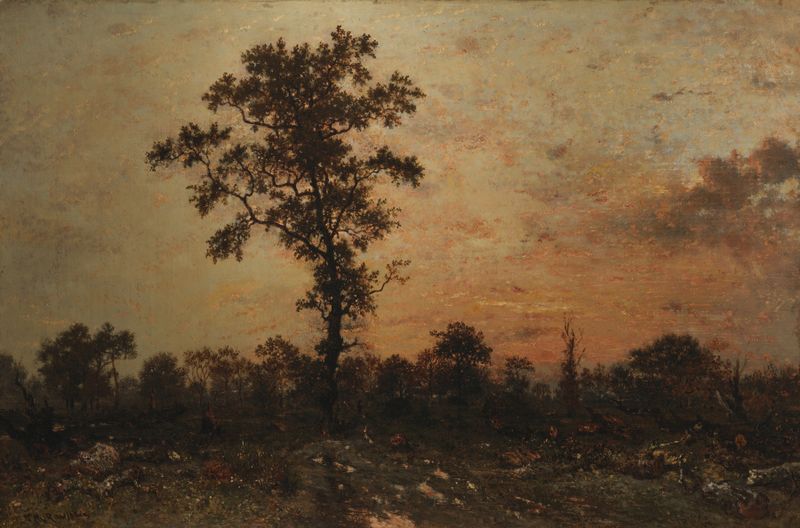
Edge of the Forest, Sun Setting
Théodore Rousseau
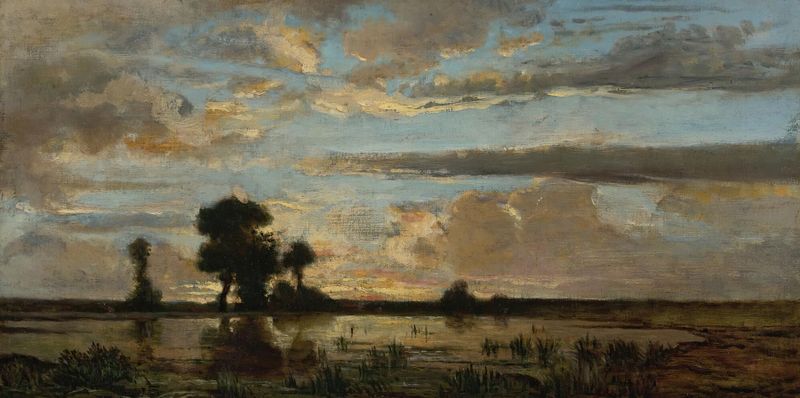
Soleil Couchant
Théodore Rousseau





