
Checkerboard and Playing Cards — History & Facts
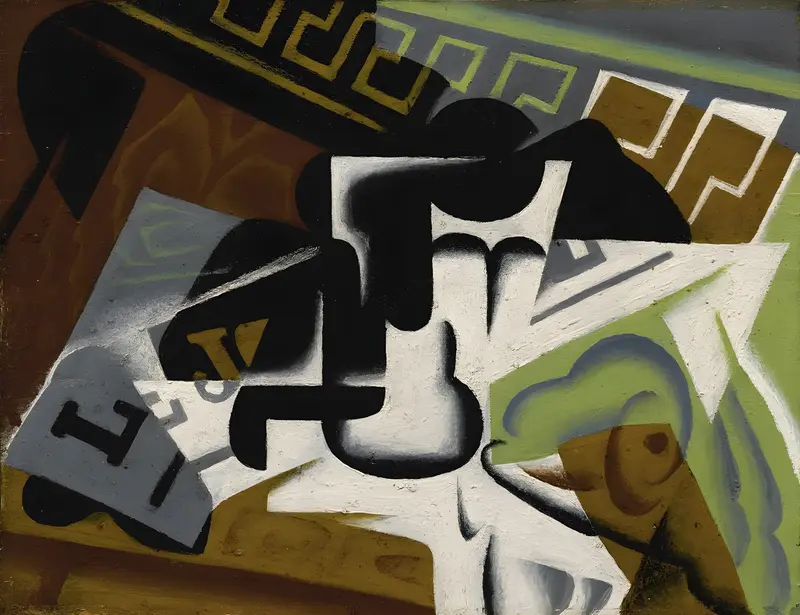
In Checkerboard and Playing Cards, Juan Gris employs a palette dominated by earthy tones and muted colors. The composition features a checkerboard and playing cards, arranged in a way that emphasizes geometric shapes. The objects are depicted with sharp angles and overlapping planes, characteristic of Cubism.
The background is abstract, enhancing the focus on the still life elements in the foreground. The painting is executed in oil on canvas, showcasing Gris's signature style of fragmented forms and interlocking shapes. The use of light and shadow creates depth, while the flatness of the colors reinforces the two-dimensionality typical of Cubist works. Viewers can observe the meticulous arrangement of the objects, which invites them to explore the relationships between the forms.
Gris's technique reflects his innovative approach to still life, moving away from traditional representation. Juan Gris was a prominent figure in the Cubist movement, known for his unique contributions to still life painting. This work, created around 1915, exemplifies his ability to blend everyday objects with abstract forms. An interesting fact about this painting is that it reflects Gris's interest in the interplay of light and shadow, which he often explored in his works.
His innovative style has influenced many artists and continues to be celebrated in modern art.
More Artworks by Juan Gris
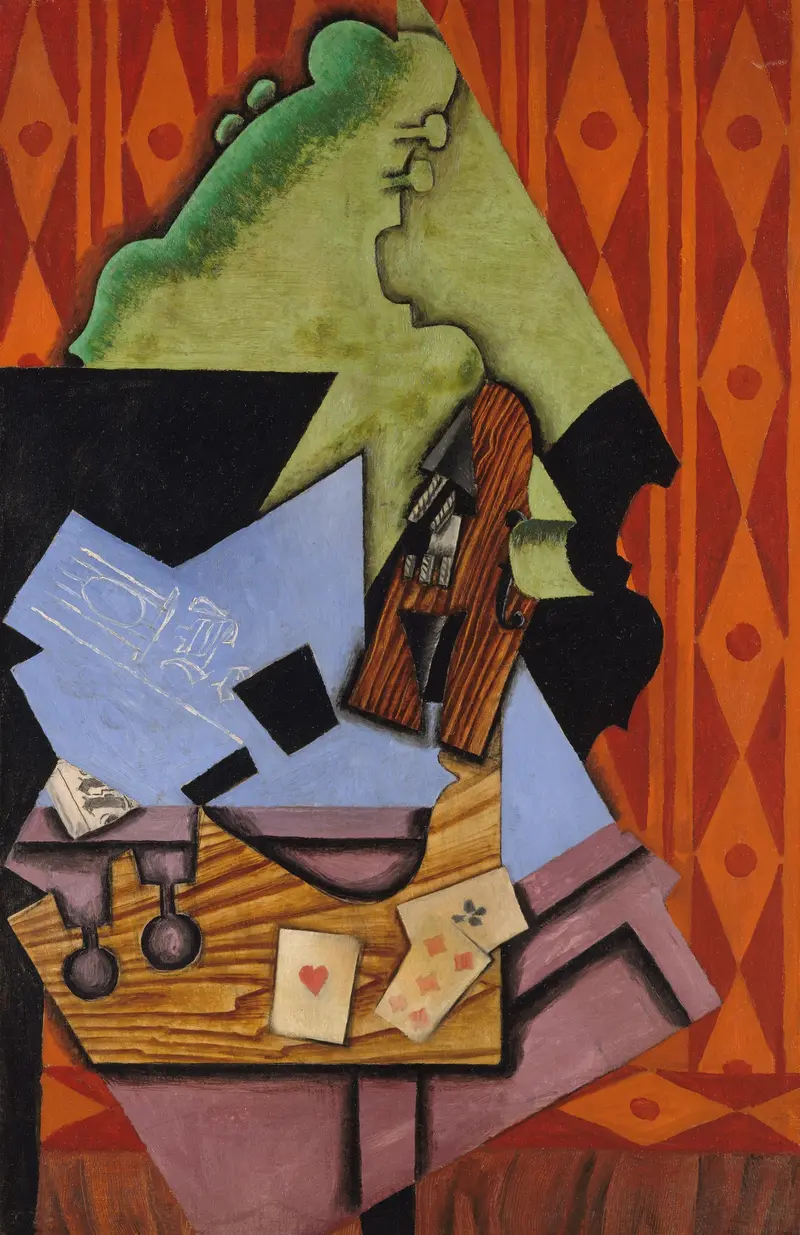
Violin and Playing Cards on a Table
Juan Gris

Portrait of Picasso
Juan Gris
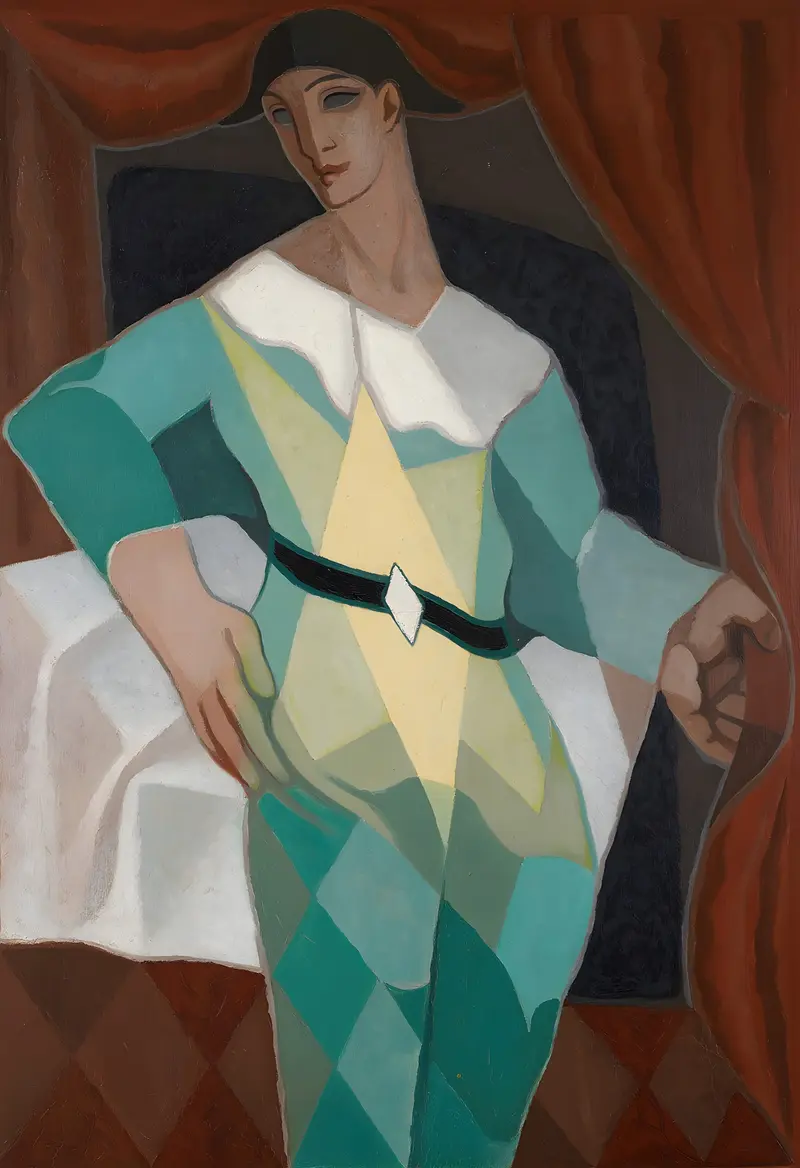
Arlequin
Juan Gris

A Guitar, Glasses and a Bottle
Juan Gris
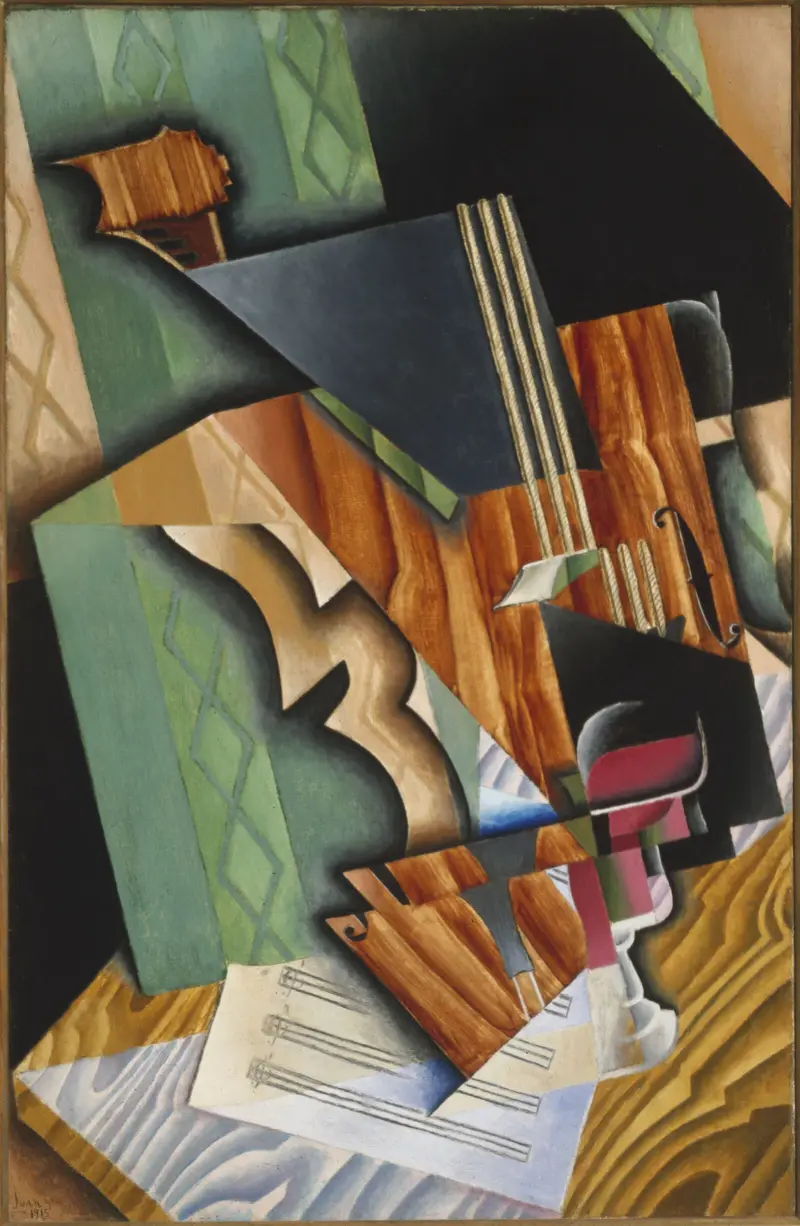
Violin and Glass
Juan Gris

Bottle and fruit bowl
Juan Gris
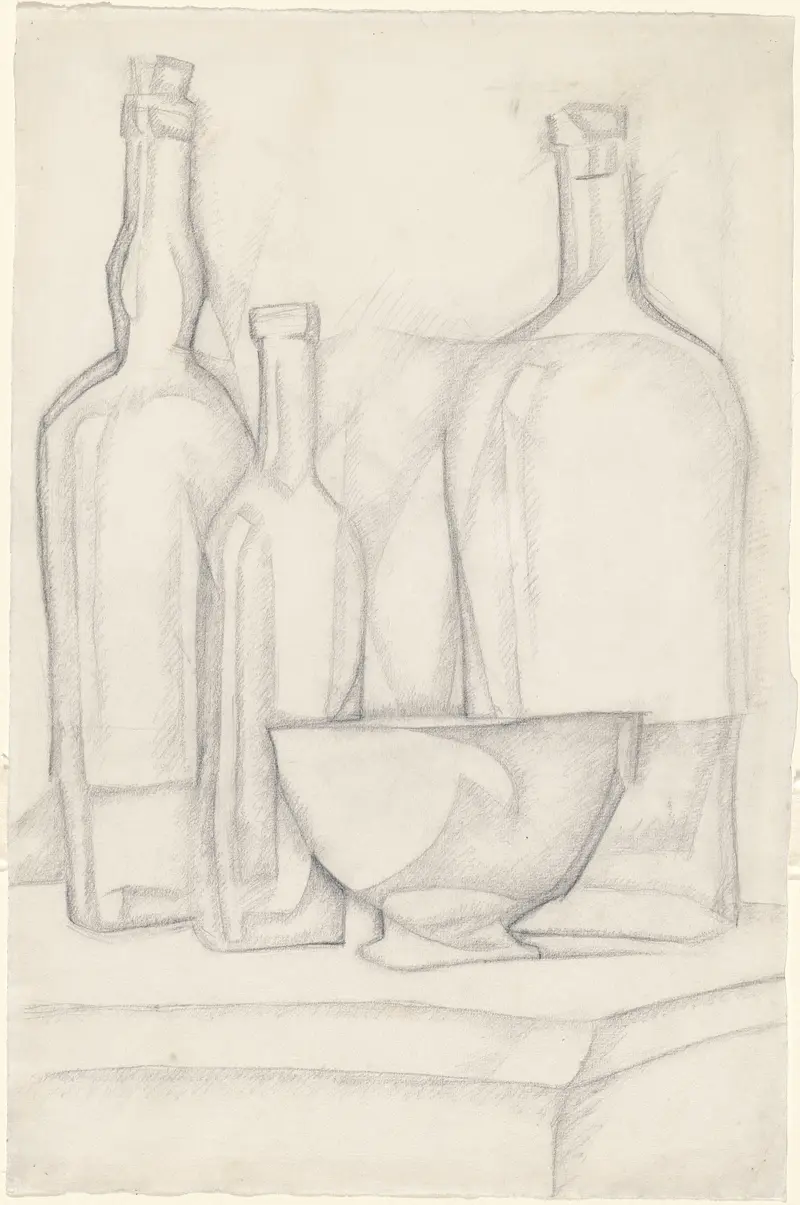
Bottles and Bowl
Juan Gris
Journal et compotier
Juan Gris
As a wife has a cow Pl.2
Juan Gris
Bottle of Rum and Newspaper
Juan Gris





