
Church of the Holy Cross in Wrocław — History & Facts
When did color learn to lie? The vibrant hues and intricate details in this piece speak of a yearning that transcends mere representation, inviting viewers to question their own desires. Look closely at the sweeping arches of the Church of the Holy Cross in Wrocław. Notice how the warm ochres and deep blues blend together to create a symphony of light, casting the structure in a divine glow. The brushes dance with meticulous care, drawing your gaze to the ornate stained glass windows, where light refracts into a kaleidoscope of color.
Each stroke whispers of both reverence and nostalgia, guiding your eye towards the delicate interplay of shadow and illumination that envelops the sacred space. The emotional tension within this work lies in the contrast between the structural solidity of the church and the fleeting, ethereal quality of the light. The juxtaposition of the firm stone edifice against the vibrant color palette evokes a sense of longing, suggesting both permanence and transience. Hidden details, such as the subtle depiction of individuals in prayer, add a layer of intimacy, inviting contemplation of both communal and personal desire for solace. Heinrich Otto Irmann painted this piece in 1903 during a time of significant cultural shifts across Europe.
Just as the art world was exploring new movements and breaking away from tradition, Irmann's work captured the essence of a city steeped in history while reflecting the evolving identity of Wrocław. Amidst the backdrop of an increasingly modern world, this artwork stands as a testament to the enduring spirit of faith and the complex emotions tied to sacred spaces.
More Artworks by Heinrich Otto Irmann
Browse all →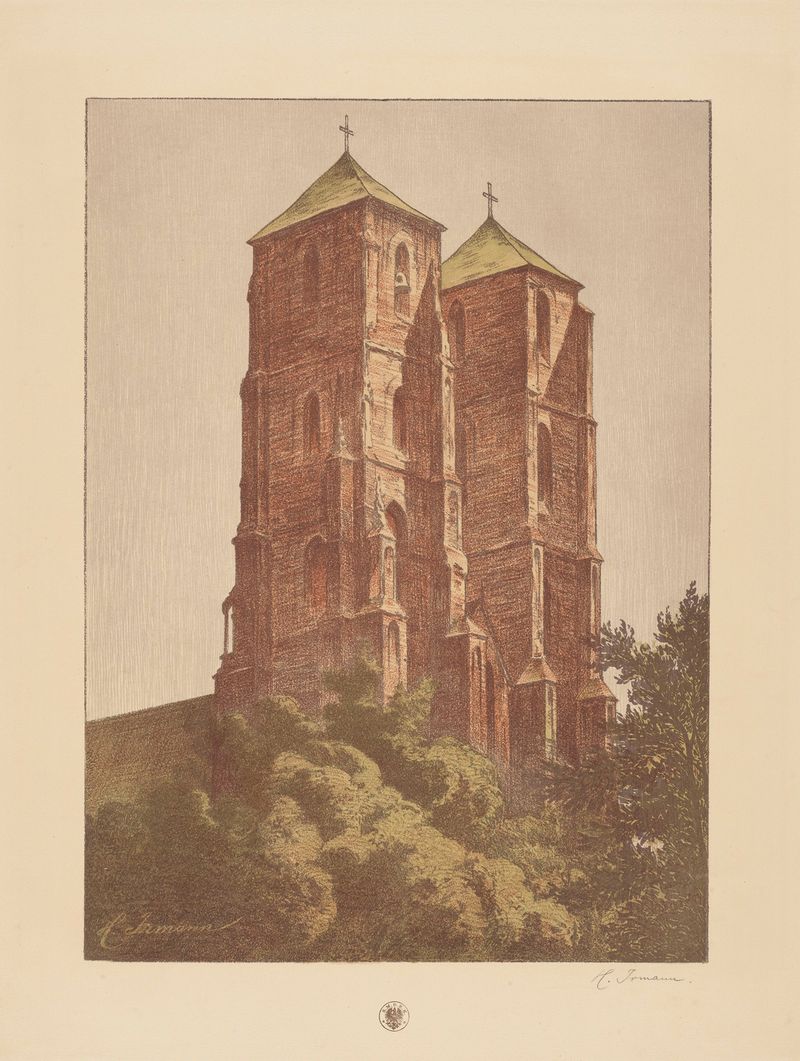


More Architecture Art
Browse all →
The statue of Liberty
Frédéric Auguste Bartholdi

View of Houses in Delft, Known as ‘The Little Street’
Johannes Vermeer

View of Houses in Delft, Known as ‘The Little Street’
Johannes Vermeer

The Cathedral in Rouen. The portal, Grey Weather
Claude Monet

The yellow house
Vincent van Gogh

The Church in Auvers-sur-Oise, View from the Chevet
Vincent van Gogh