
Church of the Holy Cross in Wrocław — History & Facts
In a world that constantly shifts, light becomes our anchor, illuminating both memory and meaning. Look closely at the intricate details of the Church of the Holy Cross in Wrocław. Focus on the warm glow spilling from the stained glass windows, casting colorful reflections across the stone floor. Notice how the artist uses soft, muted tones for the building’s exterior, contrasting with the vibrant hues inside, allowing the viewer to feel the interplay between the sacred space and the outside world.
The careful brushwork delineates every arch and stone, imbuing the structure with a sense of history and reverence. Deeper still, the painting transcends mere architecture; it reflects a dialogue between light and spirituality. The way sunlight dances through the stained glass hints at divine presence, suggesting that faith is both illuminated and shadowed by time. The muted exterior juxtaposed with the lively interior can also symbolize the hidden vibrancy of devotion that often lies beyond the surface of daily life. In 1903, when this piece was created, Heinrich Otto Irmann was immersed in a vibrant cultural climate in Wrocław.
The city was a hub of architectural innovation, reflecting the broader shifts in the art world as movements like Symbolism were gaining traction. This was a time when artists were increasingly exploring the emotional resonance of light and space, seeking to depict not just physical forms but also the ideas and feelings they evoke.
More Artworks by Heinrich Otto Irmann
Browse all →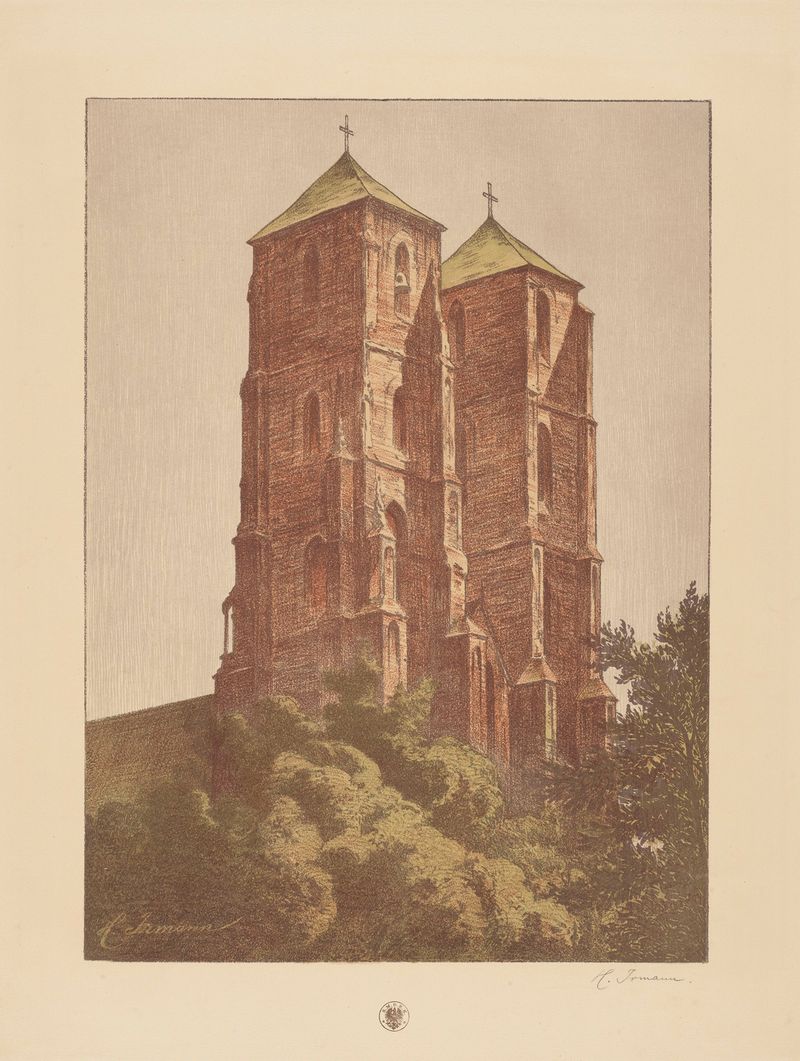


More Architecture Art
Browse all →
The statue of Liberty
Frédéric Auguste Bartholdi

View of Houses in Delft, Known as ‘The Little Street’
Johannes Vermeer

View of Houses in Delft, Known as ‘The Little Street’
Johannes Vermeer

The Cathedral in Rouen. The portal, Grey Weather
Claude Monet

The yellow house
Vincent van Gogh

The Church in Auvers-sur-Oise, View from the Chevet
Vincent van Gogh