
Książ Castle — History & Facts
In its stillness, it invites the viewer to uncover the depths of desire embedded within its layers. Focus on the majestic silhouette of Książ Castle, rising dramatically against the backdrop of a twilight sky. The artist’s careful brushwork brings life to the stone facade, while the interplay of warm and cool tones emphasizes the castle’s grandeur. The soft glow of the setting sun wraps the scene in a tender embrace, illuminating the lush greenery that surrounds the fortress, creating a striking contrast between the robust architecture and the fragile beauty of nature. Hidden within the composition are narratives of longing and solitude.
The castle, though imposing, hints at a history of dreams and aspirations—the desires of those who once inhabited its halls. Notice the slight erosion on the stones, perhaps a metaphor for time’s relentless passage and the yearning for permanence. Each element conveys a tension between stability and the inevitable decay, inviting contemplation about what it means to desire a place that exists in memory as much as in reality. Heinrich Otto Irmann painted this striking vision in 1902, during a period marked by a growing interest in Romanticism and heritage in art.
Living in Germany, he was influenced by the trends of his time, which sought to connect with the past through depictions of historical architecture. This work reflects not only his artistic aspirations but also the collective nostalgia of a society striving to preserve its cultural landmarks amidst rapid change.
More Artworks by Heinrich Otto Irmann
Browse all →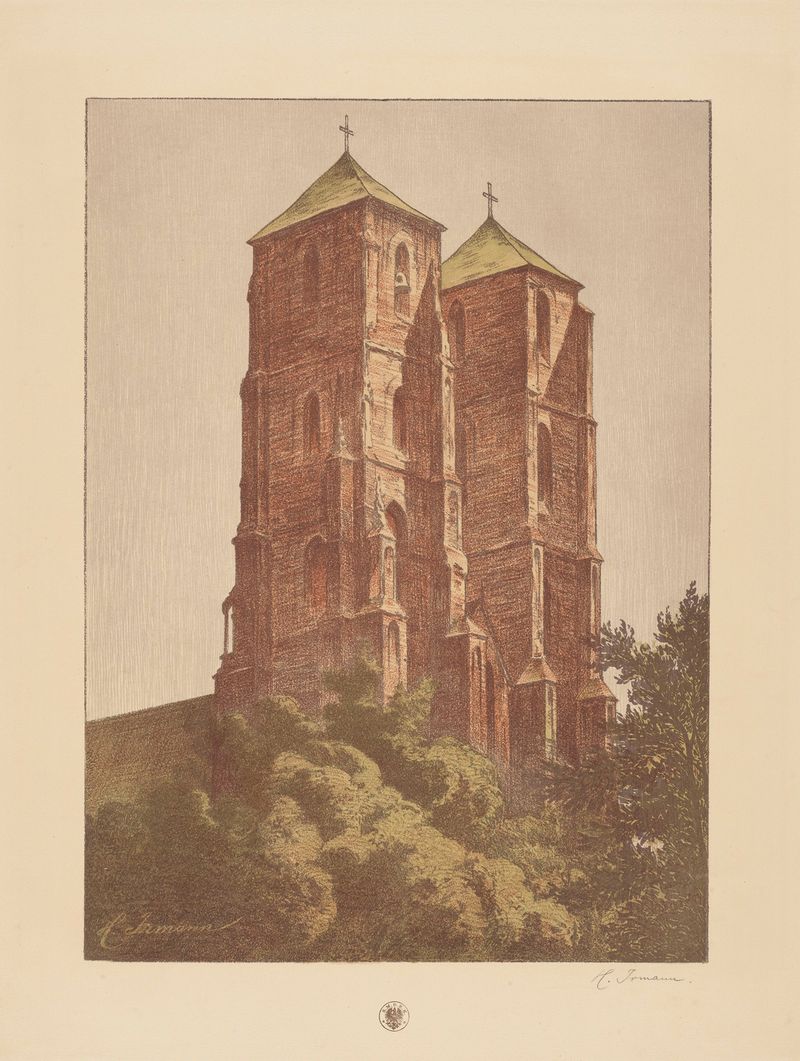
Towers of the Wrocław Cathedral
Heinrich Otto Irmann
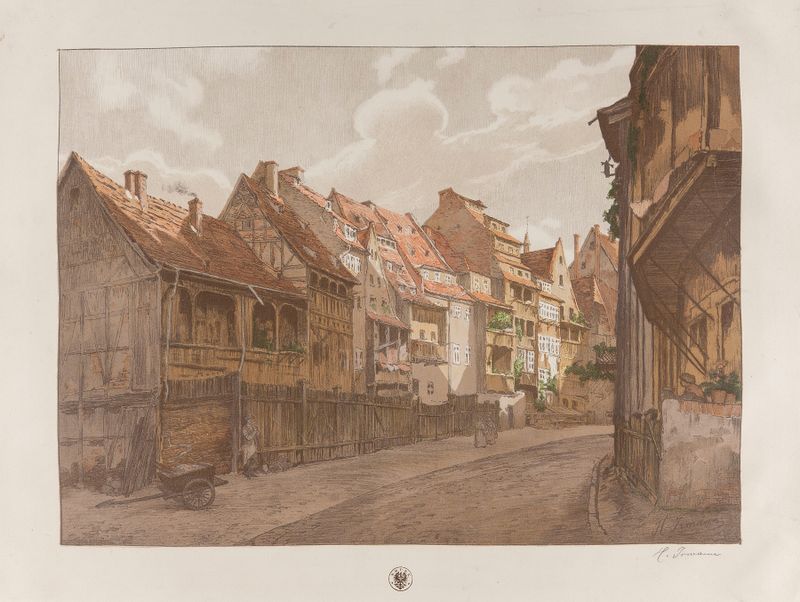
Oława Białoskórnicza
Heinrich Otto Irmann
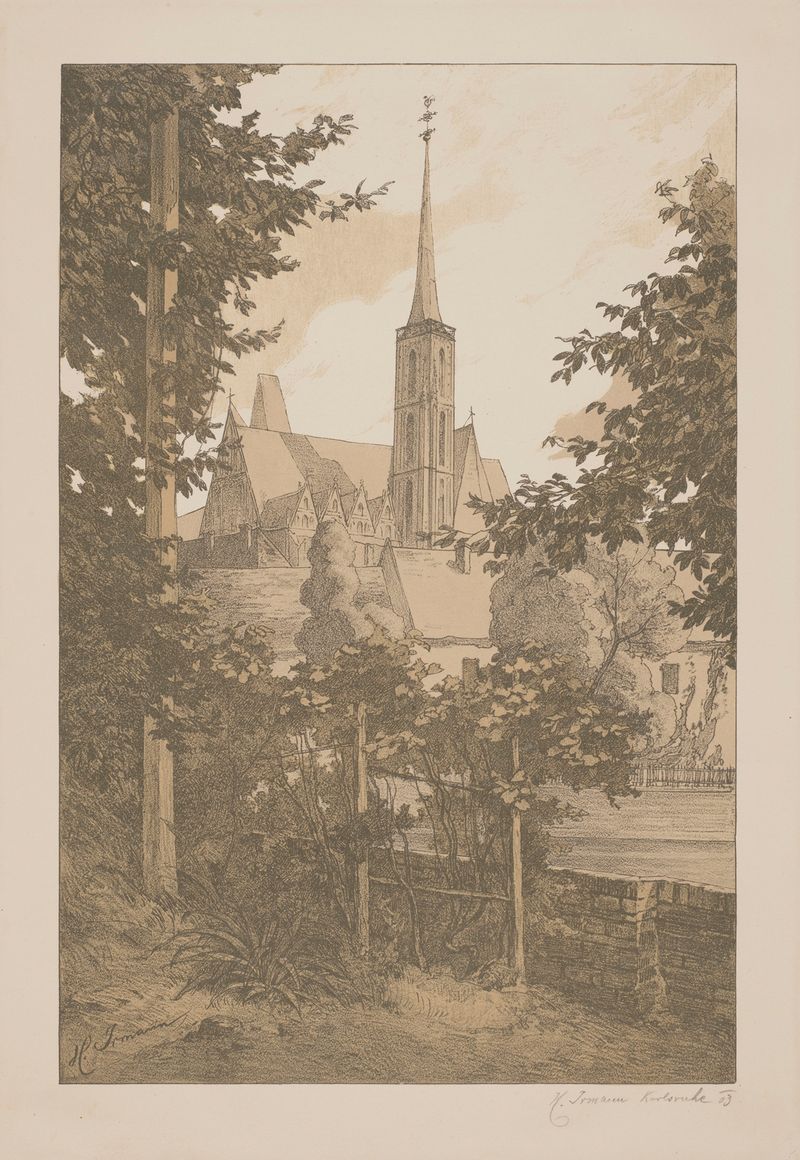
Church of the Holy Cross in Wrocław
Heinrich Otto Irmann
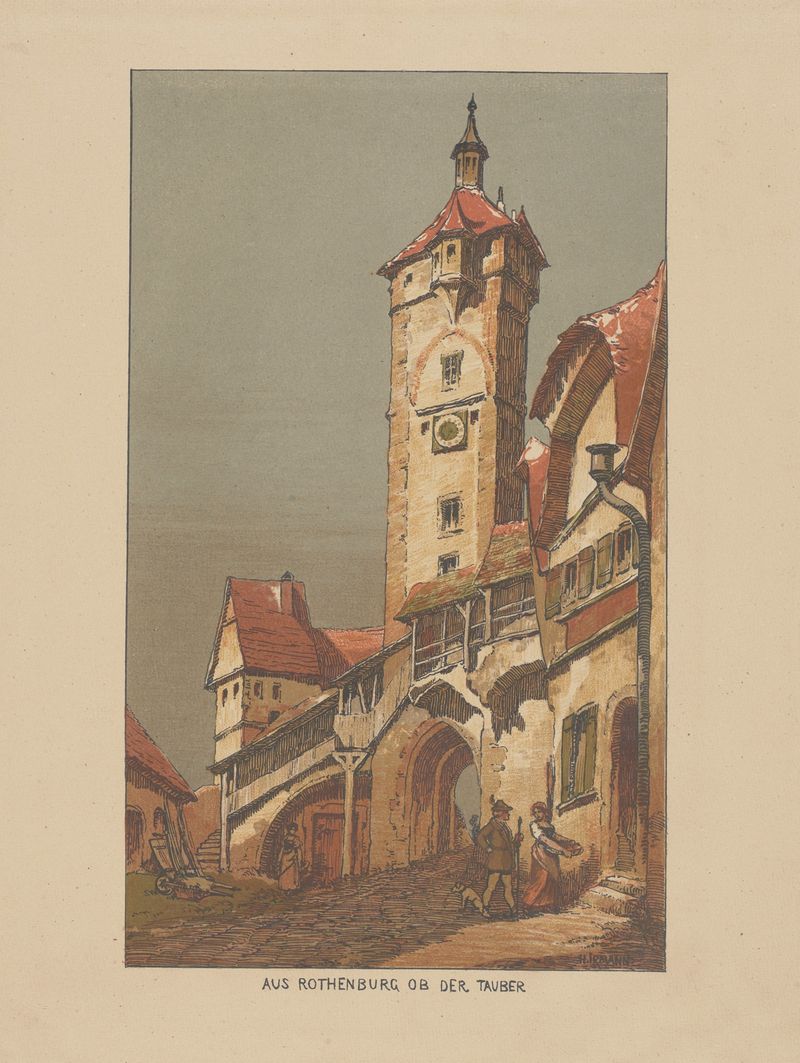
From Rothenburg
Heinrich Otto Irmann

Rural Motif from Baden
Heinrich Otto Irmann

Church of the Holy Cross in Wrocław
Heinrich Otto Irmann

Silesian Homestead
Heinrich Otto Irmann
More Architecture Art
Browse all →
The statue of Liberty
Frédéric Auguste Bartholdi

View of Houses in Delft, Known as ‘The Little Street’
Johannes Vermeer

View of Houses in Delft, Known as ‘The Little Street’
Johannes Vermeer

The Cathedral in Rouen. The portal, Grey Weather
Claude Monet

The yellow house
Vincent van Gogh

The Church in Auvers-sur-Oise, View from the Chevet
Vincent van Gogh