
Towers of the Wrocław Cathedral — History & Facts
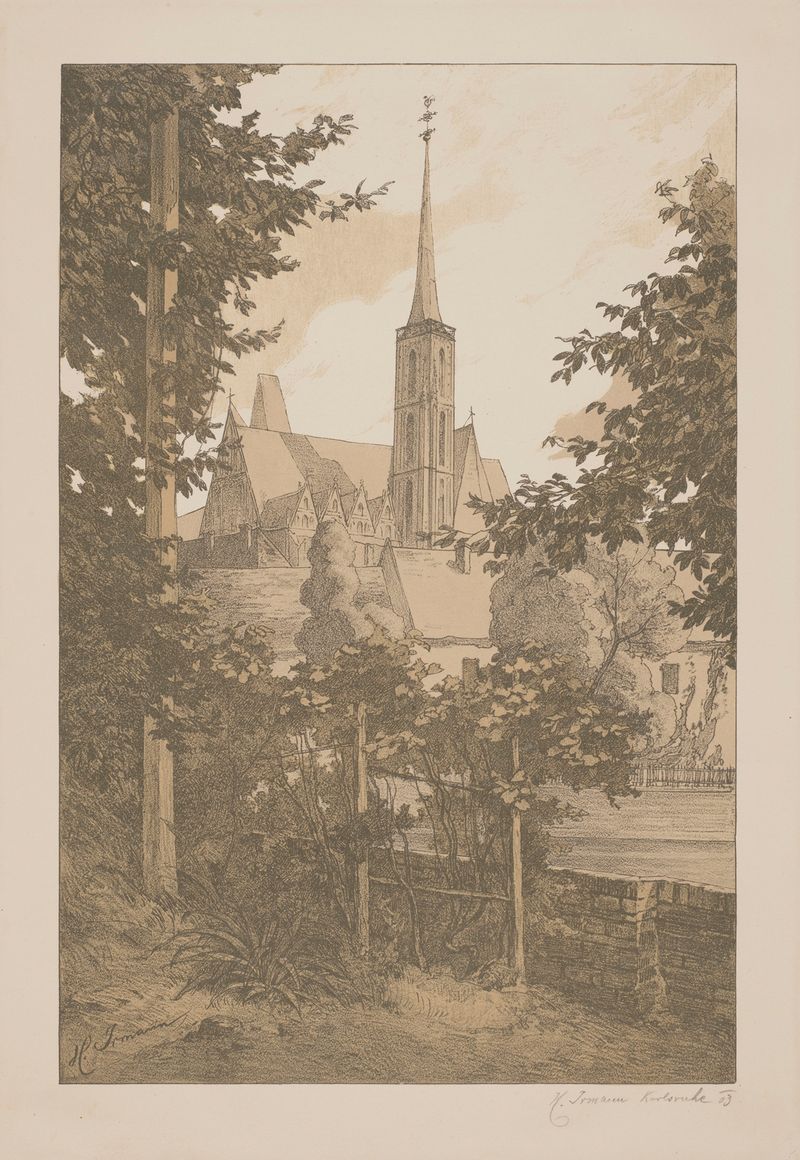
What if beauty was never meant to be finished? In Towers of the Wrocław Cathedral, a timeless embrace of grandeur and decay whispers this truth through its intricate details and lofty spires. The viewer is drawn into a moment suspended between the past and present, where the echoes of history resonate amid the cathedral's majestic architecture. Focus first on the towering spires that pierce the sky, drawing the eye upward with their delicate craftsmanship. Notice how the artist juxtaposes light and shadow; sunlight bathes the upper portions, illuminating the intricate stone carvings, while the lower sections loom in a subtle darkness that suggests the passage of time.
The palette balances warm earth tones with cool grays, evoking a sense of both stability and impermanence. Each element is arranged with intention, guiding your gaze through the atmospheric depth of the scene. Delve deeper into the emotional undercurrents of this work. The juxtaposition of the cathedral's towering aspirations against the encroaching shadows hints at the tension between human ambition and the inevitable decay of all things.
The crumbling stone in the foreground speaks to the passage of time, raising questions about what is left behind in the pursuit of beauty. This contrast between the permanent structures and the transient light serves as a reminder of the ephemeral nature of existence. Heinrich Otto Irmann painted this piece in 1903 while living in Wrocław, a city rich with history and architectural splendor. During this period, Europe was witnessing significant shifts in artistic expression, moving towards Modernism.
Irmann’s work reflects a connection to the Gothic past while also embracing the emergent styles of his time, capturing a pivotal moment in the evolution of art and architecture.
More Artworks by Heinrich Otto Irmann
Browse all →


More Architecture Art
Browse all →
The statue of Liberty
Frédéric Auguste Bartholdi

View of Houses in Delft, Known as ‘The Little Street’
Johannes Vermeer

View of Houses in Delft, Known as ‘The Little Street’
Johannes Vermeer

The Cathedral in Rouen. The portal, Grey Weather
Claude Monet

The yellow house
Vincent van Gogh

The Church in Auvers-sur-Oise, View from the Chevet
Vincent van Gogh