
Church of the Holy Sepulchre — History & Facts
The delicate brilliance of this artwork encapsulates a profound truth about the human experience, urging us to look beyond the surface. Focus on the intricate detailing of the Church’s architecture, where every column and arch invites your gaze to explore its hidden narratives. Notice how the artist expertly employs light—illuminating the golden hues that dance along the stone façade, casting shadows that reveal the church’s solemnity. The interplay of warm and cool tones evokes a sense of reverence, drawing you deeper into the sacred atmosphere. Yet, beneath this beauty lies an intricate web of contrasts.
The grandeur of the church can be seen as a testament to faith, yet it also serves as a reminder of conflict and struggle—the layers of history etched into every stone. The delicate brushwork highlights the tension between the sacred and the mundane, urging the viewer to contemplate the sacrifices made for belief and the voices that echo through its walls. Each detail invites reflection on the convergence of beauty and suffering, illustrating how creation often emerges from the depths of pain. In 1810, while painting this scene, the artist was navigating a world rife with political upheaval and artistic transformation.
Working in Rome, Mayer was influenced by the Neoclassical movement, which sought to revive the grandeur of antiquity amidst a backdrop of Romanticism’s emotional currents. This piece stands as a portrait of not just a structure, but of a period rich in cultural exchanges, embodying the complex relationships between faith, artistry, and history.
More Artworks by Luigi Mayer
Browse all →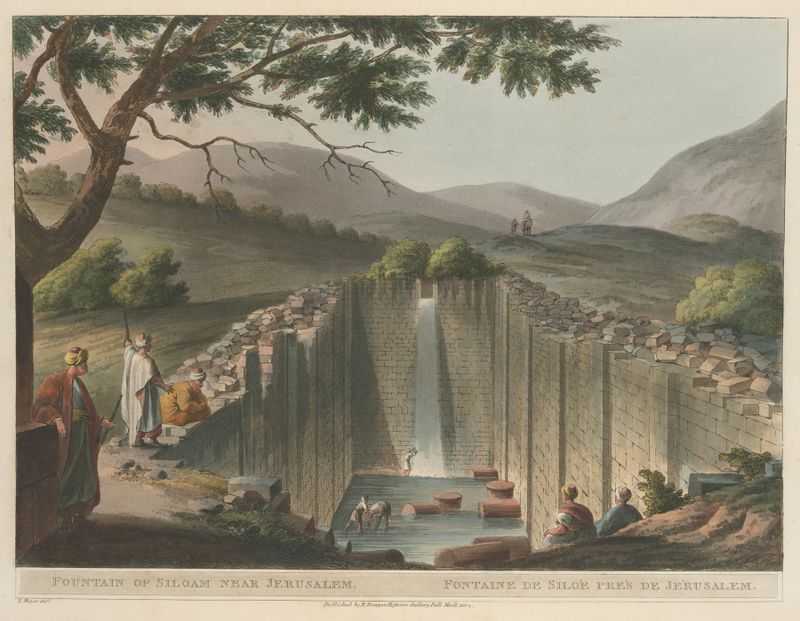
Fountain of Siloam Near Jerusalem
Luigi Mayer

View of the Dardanelles
Luigi Mayer
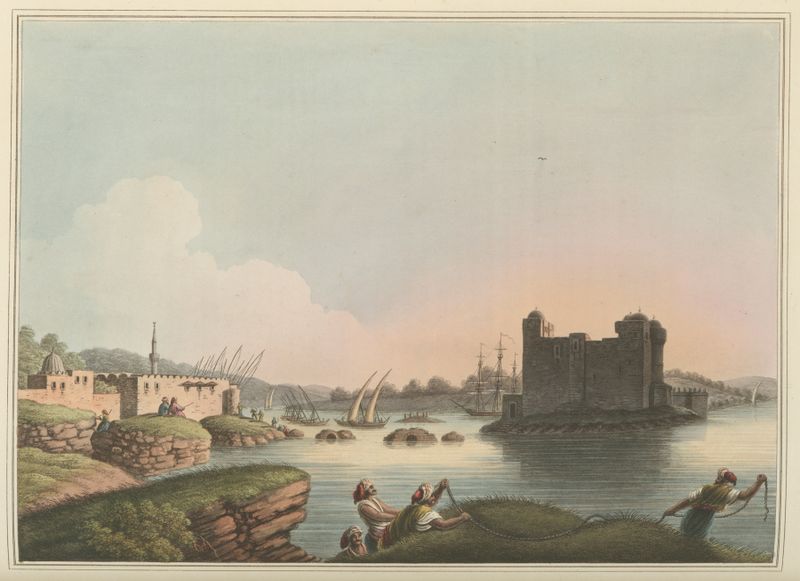
Port of Latachia
Luigi Mayer

Stadium at Ephesus
Luigi Mayer

Ancient Temples at Agrigentum
Luigi Mayer
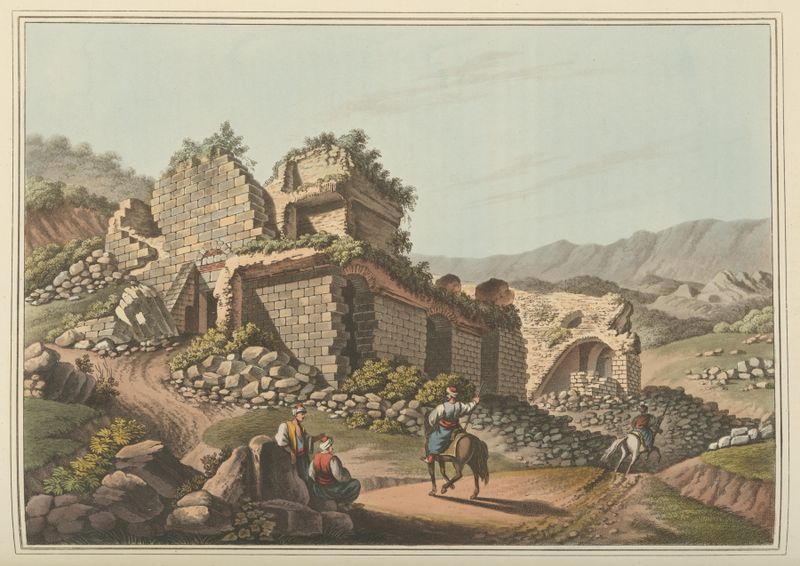
Theatre at Ephesus
Luigi Mayer
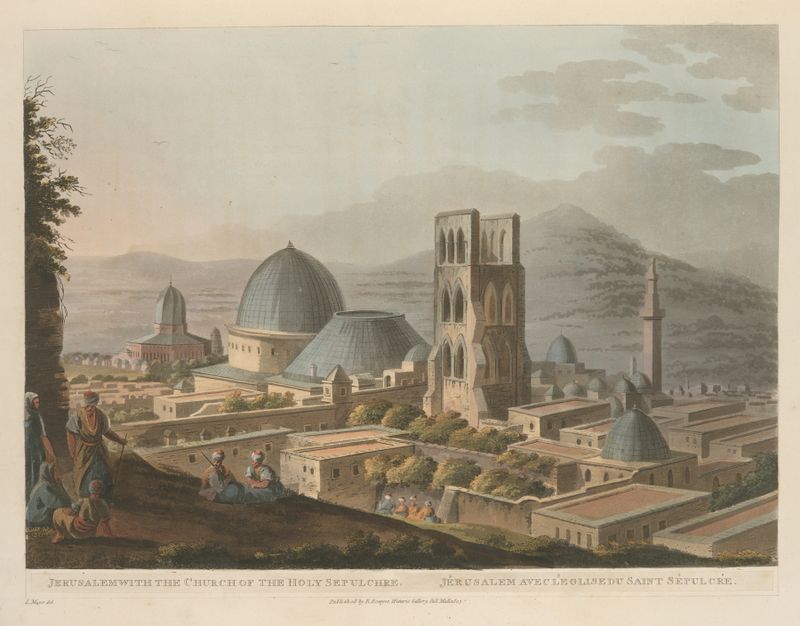
Jerusalem with the Church of the Holy Sepulchre
Luigi Mayer
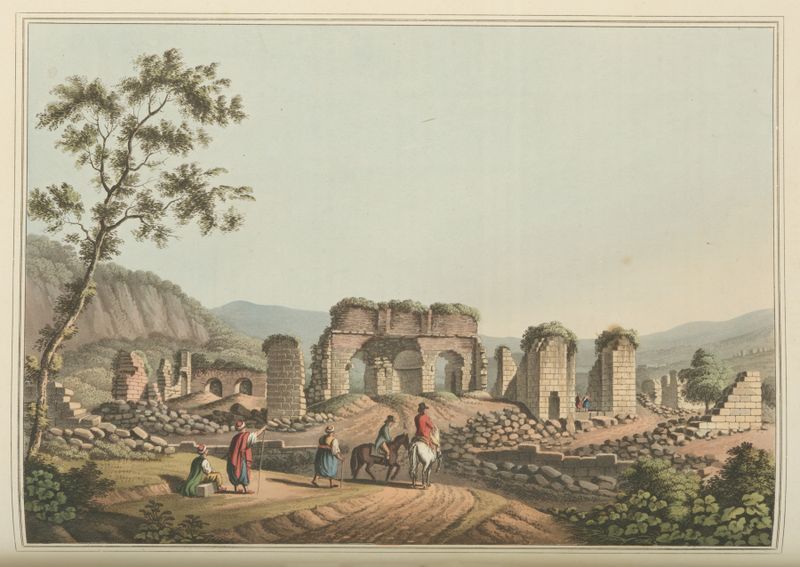
Ruins of the Temple of Diana at Ephesus
Luigi Mayer

Crater in the Island of Volcano
Luigi Mayer

Ruins of an ancient Temple in Samos
Luigi Mayer
More Architecture Art
Browse all →
The statue of Liberty
Frédéric Auguste Bartholdi

View of Houses in Delft, Known as ‘The Little Street’
Johannes Vermeer

View of Houses in Delft, Known as ‘The Little Street’
Johannes Vermeer

The Cathedral in Rouen. The portal, Grey Weather
Claude Monet

The yellow house
Vincent van Gogh

The Church in Auvers-sur-Oise, View from the Chevet
Vincent van Gogh