City Walls in Winter — History & Facts
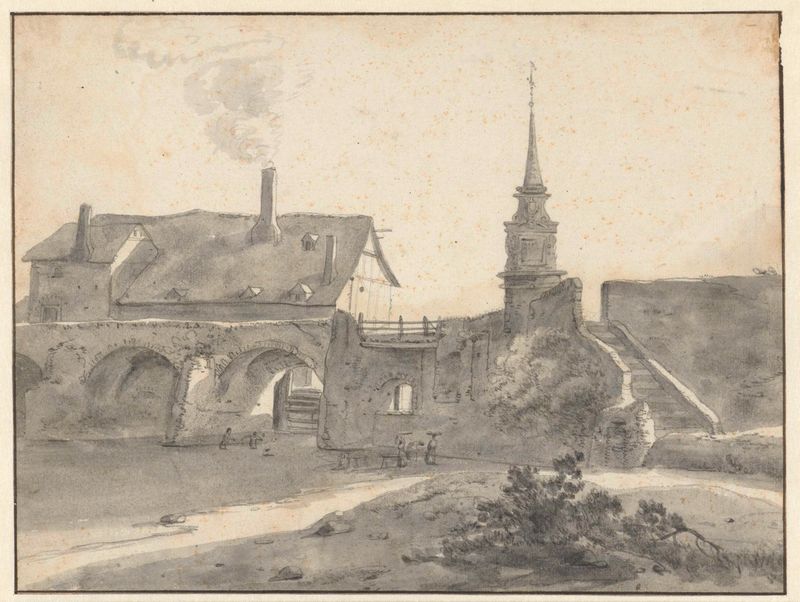
Did the painter know this moment would outlive them? As seasons shift and time flows, the essence of human experience is encapsulated in a winter scene, veiling the whispers of violence beneath its tranquil surface. Look to the foreground, where a blanket of snow delicately blankets the cobblestones, each flake seemingly suspended in time. Notice how the pale light shimmers against the stark, imposing city walls, drawing your gaze upwards to the silhouettes of figures traversing the scene. The muted palette of blues and grays conveys a chilling stillness, while the sharp lines of the architecture provide a stark contrast to the softness of the snow.
This careful interplay of light and shadow invites viewers to ponder the tension inherent in urban life, even amid winter's serene embrace. Beyond the immediate beauty lies a deeper narrative – the walls, formidable and unyielding, symbolize not only protection but also the potential for violence they harbor. The figures, bundled against the cold, evoke a sense of isolation amidst the bustling city, hinting at the struggles that underpin life in this place. The brisk wind carries an unspoken tension, as if the chilling air whispers of conflicts both past and present, reminding us that peace can often be a fragile facade. Painted in the mid-17th century, this work emerged during a time of socio-political upheaval in Europe, where the echoes of conflict loomed large.
Schellinks, active in the Dutch Golden Age, explored themes of urban life and landscape, often capturing the juxtaposition of beauty and strife. As he painted City Walls in Winter, the world around him was alive with the complexities of commerce and conflict, making his portrayal all the more poignant.