Italian Landscape with Classical Ruins — History & Facts
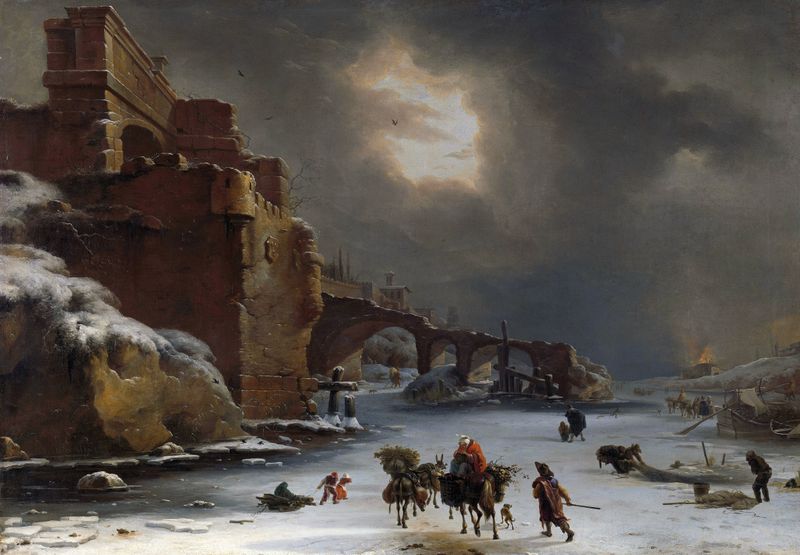
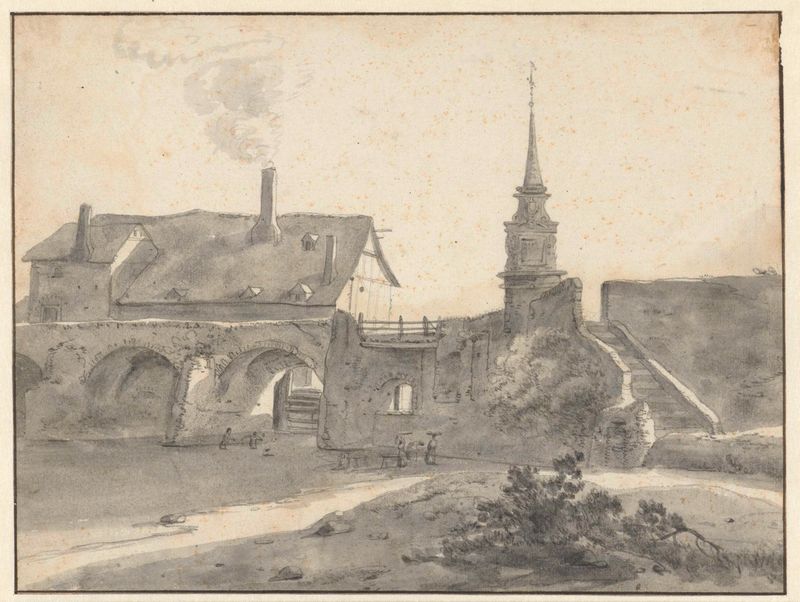
Where does light end, and longing begin? In the vast expanse of Italian Landscape with Classical Ruins, such questions linger, echoing the transformation of time and the fragile boundary between memory and reality. Look to the foreground, where the ruins stand as steadfast as they are crumbling, bathed in a soft, golden light that seems to breathe life into the stone. The carefully rendered details of ivy wrapping around columns guide your gaze upward toward the serene blue sky, dotted with wisps of white clouds. Notice how the artist employs a warm palette—earthy browns and lush greens juxtaposed against the coolness of the horizon, creating a sense of harmony while reflecting a world both vibrant and melancholic. Within this landscape, contrasts abound: the remnants of classical architecture whisper tales of a glorious past, while the encroaching natural elements remind us of nature's inevitable reclamation.
The gentle ripples in the water mirror the ruins, suggesting a dialogue between the past and the present, where beauty is tinged with loss. Every brushstroke invites the viewer into an emotional experience, revealing the tension inherent in the passage of time. Willem Schellinks produced this piece during the mid-17th century, a period marked by a growing fascination with classical antiquity in the Netherlands. As he painted, the art world was undergoing significant shifts, with the Dutch Golden Age flourishing and artists exploring themes of nostalgia and transformation.
This work reflects the artist's deep contemplation of history, nature, and humanity’s place within both.