
Burning of the English Fleet near Chatham (19-24 June 1667) — History & Facts
In Burning of the English Fleet near Chatham, vibrant hues envelop a moment of chaos, where mortality and destruction dance amid the splendor of flames. The juxtap of light and dark evokes a visceral response, pulling viewers into a realm where beauty and tragedy intertwine. Look to the center of the canvas, where billowing smoke spirals into the sky, its ashen tendrils mingling with the fiery glow of the burning ships. The contrast between the deep, ominous blues of the water and the intense oranges and yellows of the conflagration captures the viewer’s attention immediately.
Notice how the artist employs dynamic brushstrokes to convey the tumultuous movement of the scene, bringing to life the urgency and chaos of the moment, while soft, intricate details in the background suggest a serene landscape, seemingly untouched by the turmoil. This painting presents a profound tension between the fleeting nature of beauty and the permanence of loss. The burning fleet stands as a poignant metaphor for mortality—once proud vessels now reduced to ash, symbolizing the brevity of human endeavor. The juxtaposition of the fiery destruction against the tranquil backdrop hints at the duality of existence: within chaos lies an unyielding beauty, and within beauty, the inevitability of its demise. In 1667, Willem Schellinks painted this work during a time of political upheaval and naval warfare, reflecting the turbulent atmosphere of the Second Anglo-Dutch War.
The burning of the English fleet marked a significant event in this conflict, and Schellinks, engaged with the artistry of capturing history, sought to immortalize this moment on canvas. As the art world was evolving through the Baroque period, his work contributed to the growing interest in depicting dramatic scenes filled with both emotion and narrative depth.
More Artworks by Willem Schellinks
Browse all →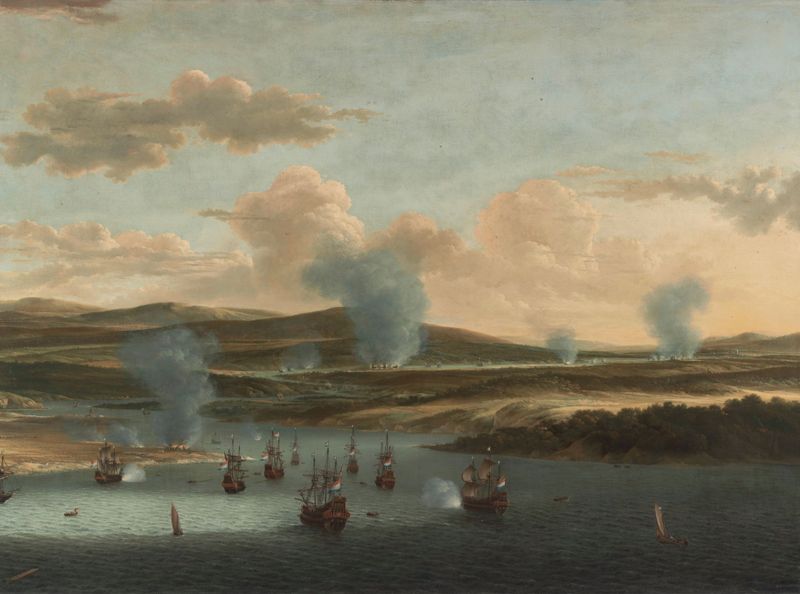
More Historical Art
Browse all →
The Night Watch Militia Company of District II under the Command of Captain Frans Banninck Cocq
Rembrandt van Rijn

Lincoln Memorial
Henry Bacon

The Third of May 1808
Francisco de Goya

Isaac and Rebecca, Known as ‘The Jewish Bride’
Rembrandt van Rijn

The Charge of the Mamelukes (1814)
Francisco de Goya

De vier ruiters van de apocalyps
Albrecht Dürer