
Battle of Medway — History & Facts
The sun hangs low, casting a golden haze over the churning waters of the Medway. Ships, their sails taut and fluttering, clash like titans amid the chaos, while soldiers maneuver with a blend of valor and desperation. The air crackles with the tension of impending loss, the cries of combatants merging with the roar of the waves in a haunting symphony. Look to the left, where the vibrant colors of the ships dominate the scene, their hulls captured in rich blues and fiery reds.
The artist’s brushstrokes convey both the fury of battle and the tumultuous sea, creating a rhythmic flow that draws the eye across the canvas. Notice how the light dances on the water's surface, mirroring the chaos above, while the figures, though dynamic, are often positioned as if caught in a moment of stillness, reflecting the weight of their plight. In this tumult lies a profound contrast: victory and despair intertwine, as the valiant efforts of one side clash with the looming threat of defeat. The soldiers' expressions, strained with fear and determination, reveal an emotional depth that transcends the physical struggle.
Among the ships, details like the splintering wood and billowing smoke speak to the impermanence of glory, capturing a fleeting moment where valor meets the inevitability of loss. Willem Schellinks painted Battle of Medway around 1668 during his time in England, where he was influenced by the political climate and the ongoing naval conflicts. This period saw England grappling with its maritime identity and asserting dominance, reflecting a world in flux. As a noted landscape painter and an observer of social scenes, Schellinks skillfully intertwines history and emotion in this dramatic portrayal of a pivotal moment.
More Artworks by Willem Schellinks
Browse all →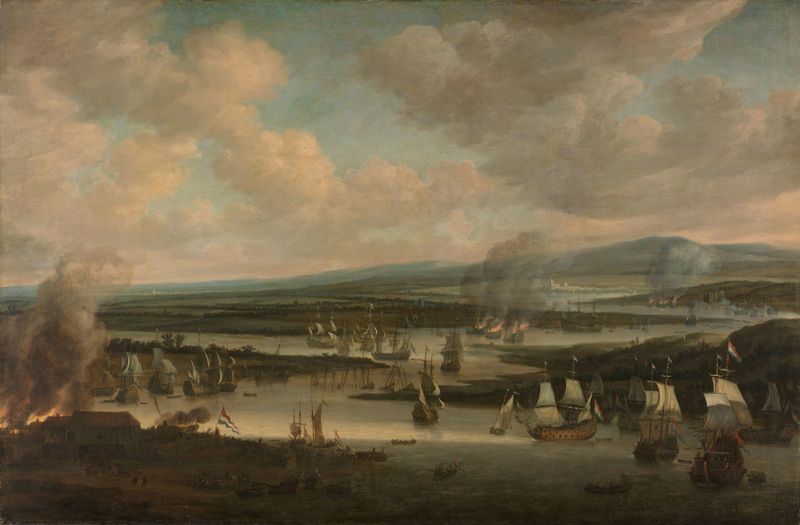
More Historical Art
Browse all →
The Night Watch Militia Company of District II under the Command of Captain Frans Banninck Cocq
Rembrandt van Rijn

Lincoln Memorial
Henry Bacon

The Third of May 1808
Francisco de Goya

Isaac and Rebecca, Known as ‘The Jewish Bride’
Rembrandt van Rijn

The Charge of the Mamelukes (1814)
Francisco de Goya

De vier ruiters van de apocalyps
Albrecht Dürer